
WELCOME TO ZHEJING ZHUHONG!
e945ab7861e8d49f342bceaa6cc1d4b

10 Pump Motor Buying Tips for Global Buyers

A pump motor can look suitable on a specification sheet and still disappoint in the field. The mismatch may appear only after installation: a motor overheats, a pump vibrates, or energy use climbs during long operating hours. For global buyers, choosing well means checking how the motor and pump will work together, not comparing prices alone.

Pump engineer Igor J. Karassik’s published work offers a useful reminder, paraphrased here rather than presented as a verbatim quotation: “Reliable pump selection starts with understanding the system it must serve.” That principle matters when duty point, fluid properties, operating cycle, and site conditions vary between projects. A motor rated for one installation may be poorly suited to another. Small details count. A nameplate, connection diagram, or test report can answer questions that a product photo cannot.

This guide presents 10 practical Pump Motor buying tips for international purchasers. It covers power and speed, efficiency, protection, materials, documentation, supplier support, and total operating cost. Buyers should also confirm that stated performance matches their actual requirements and request clarification when specifications are incomplete. There is no universal best motor. A checklist helps, but it cannot replace a careful review of the application; even experienced teams can overlook a detail when schedules are tight.
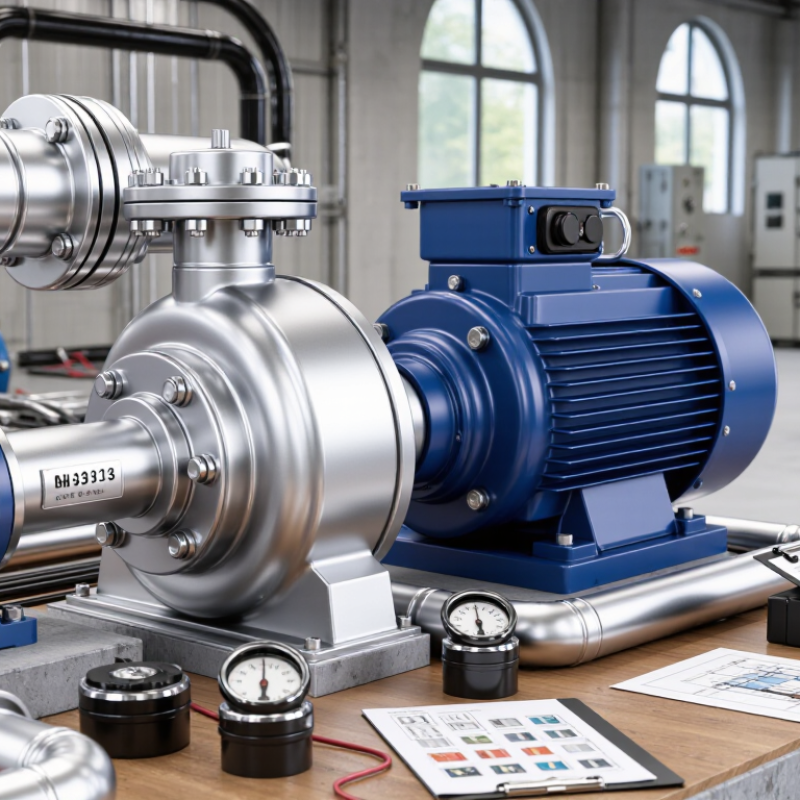
10 Pump Motor Buying Tips for Global Buyers

Identify the Pump Motor Type and Application Requirements

Identify the pump motor type before comparing prices. A centrifugal pump usually needs a motor matched to its required flow and head. A positive-displacement pump may face changing torque as pressure rises. Check the pump curve, expected fluid, and operating schedule together. Water, viscous liquids, and fluids with suspended solids can place very different demands on the drive. Small details matter. Confirm voltage, frequency, phase, mounting, and enclosure requirements at the installation site.

Tips: Record the required flow rate, total head, and hours of operation. Note how often the pump starts and whether it runs continuously. Compare these conditions with the motor’s rated power and duty rating. If the system handles hot, dusty, or damp surroundings, verify the motor’s protection and cooling arrangements. Keep a photo of the pump nameplate; it can prevent avoidable sizing errors.

Do not select a motor by horsepower alone. An oversized unit may waste energy, while an undersized one can overheat under real operating loads. Ask for efficiency data at the expected working point, not only at peak performance. Check whether a variable-speed drive is needed for changing demand, and confirm compatibility before ordering. A tidy specification sheet can still miss site conditions, so review it against actual piping, ambient temperature, and available electrical supply.
Match Motor Power, Speed, and Torque to the Pump

Match Motor Power, Speed, and Torque to the Pump

A pump motor should suit the pump’s actual operating point, not just its largest listed capacity. Check the required flow and head against the pump curve, then identify the motor speed that delivers them. A speed mismatch can reduce flow or push the pump outside its efficient range. More power is not automatically better. An oversized motor may cost more to run and can place extra stress on the system.

Tip: Confirm the pump’s operating point, shaft power, and rated speed before choosing a motor. Check startup torque too. A pump handling thick liquid or starting under load may need more torque than one moving clean water. Review the motor’s torque data and follow the pump maker’s sizing guidance. Small details matter, though real installations do not always behave exactly like a chart.

For variable-speed operation, verify that the motor and control system can run safely across the intended speed range. Lower speed can reduce flow, but it may also affect cooling and pump performance. Leave an appropriate power margin based on operating conditions, not guesswork. Measure the load if practical. I would recheck the selection after commissioning; assumptions made during purchasing can miss pressure losses, fluid changes, or frequent starts.

Check Voltage, Efficiency, Protection, and Environmental Ratings

A pump motor may match the pipework and still be a poor fit for the site. Compare its nameplate voltage and phase with the actual supply, then check frequency; a 50 Hz motor may not deliver the same speed or performance on a 60 Hz system. For a long cable run, ask an electrician to check voltage drop. Small mismatches matter.

Tips: Compare efficiency at the expected operating load, not just the motor’s rated power. Check the enclosure’s IP rating against dust and water exposure, and confirm ambient-temperature and altitude limits. A high IP rating does not automatically mean resistance to salt, chemicals, or corrosion. Verify those conditions separately.

A datasheet is useful, but it cannot describe every installation. Ask the supplier to confirm the motor’s duty cycle, starting method, and permitted operating range for your pump. If the room gets hot or humid, record those conditions before selecting a motor. One easy oversight: buyers may focus on efficiency figures and miss protection details. A tidy comparison sheet can miss them, too. Keep the installation requirements beside the motor specifications, and have a qualified technician check any uncertain supply or site conditions.

Verify Standards, Documentation, and Supplier Reliability

Before ordering a pump motor, match its rating and construction to the project specification and destination-market requirements. Ask which standards apply, such as relevant IEC or ISO documents, and confirm the edition and scope in writing. A certificate alone is not enough; its model, voltage, frequency, enclosure, and issuing body should match the offered unit. Details matter. Compare the motor nameplate draft with the quotation, especially for 50/60 Hz operation, insulation class, ingress protection, and duty rating.

Request a document pack before making a deposit: datasheet, outline drawing, routine test report, wiring diagram, installation instructions, and warranty terms. Check model references across documents, along with test values and dates. Check the dates. If a report appears generic, ask for one tied to the same motor configuration, then confirm which documents will arrive with the shipment. Paperwork can look complete while one line is missing; that is easy to overlook.

Supplier reliability needs evidence, not confident emails. Ask who performs testing, how nonconforming units are handled, and whether spare parts and technical support remain available after delivery. Clear answers supported by drawings and measurable data are more useful than promises. A factory visit or independent inspection may help with larger orders, though it adds cost and time. No checklist removes all risk; use it to challenge assumptions before they become costly.

Pump Motor Buying Tip: Check the Insulation Thermal Class

Thermal class limits defined by IEC 60085 for electrical insulation systems

The class temperature is a thermal rating for the insulation system, not a guaranteed operating temperature for the motor. Confirm the required class and operating conditions in the motor’s technical documentation.

Compare Total Ownership Costs and Confirm After-Sales Support

A pump motor’s purchase price is only the visible part of its cost. Compare energy use, installation, maintenance, spare parts, and expected downtime across its service life. The IEA’s 2011 report, Energy-Efficiency Policy Opportunities for Electric Motor-Driven Systems, estimates that motor-driven systems use about 46% of global electricity. This figure is not pump-specific, but it shows why efficiency deserves a place in the bid comparison. The U.S. Department of Energy’s Improving Pumping System Performance sourcebook notes that pumping can account for 25–50% of energy use in some industrial facilities. Small differences add up. Ask for motor efficiency and duty-point data, then estimate energy costs using your actual operating hours and electricity tariff. Those hours are often guessed, not measured; that weakens the comparison.

After-sales support can change the real cost of ownership. Ask who handles commissioning, how quickly technical support responds, and where common replacement parts are stocked. Request warranty terms in writing, including exclusions for harsh operating conditions or incorrect installation. Check whether troubleshooting is available in your time zone and language. A low-cost motor may become expensive if a failed bearing means a long wait for parts. Compare support promises with practical details: named service contacts, response-time targets, parts lead times, and access to repair documentation. Some details may remain uncertain before purchase. Record the assumptions anyway, and revisit them after installation.

10 Pump Motor Buying Tips for Global Buyers — Compare Total Ownership Costs and Confirm After-Sales Support
No. Buying tip What to compare or verify Practical check Ownership-cost or support impact
1 Match the motor to the pump duty Confirm required shaft power, speed, torque, operating hours, and duty cycle using the pump curve and system conditions. Check whether the application is continuous duty (for example, S1) or involves frequent starts, stops, or variable loads. An unsuitable motor may use more energy, overheat, or require premature replacement.
2 Check the electrical supply Compare rated voltage, frequency, phase, full-load current, starting method, and permitted voltage variation with the site supply. Specify the actual supply, such as 400 V, 50 Hz, three-phase, rather than relying on a general “international” rating. A mismatch can require additional electrical equipment or cause unreliable operation.
3 Compare efficiency at the real load Request efficiency data at the expected operating point and check the applicable efficiency standard and local regulations. Compare like-for-like motors with the same output, speed, supply, and duty; do not compare efficiency classes alone. Energy use over the operating life can exceed the purchase price, especially in high-hour applications.
4 Calculate total cost of ownership Include purchase price, energy, installation, maintenance, spare parts, downtime, and disposal over the planned service period. Use: annual energy cost = input kW × operating hours per year × electricity price per kWh. A transparent life-cycle comparison can reveal whether a higher-efficiency or higher-priced option pays back.
5 Assess speed control and starting Confirm whether the pump needs a variable-frequency drive, soft starter, or direct-on-line starting, and check motor compatibility. For variable-speed operation, verify the permitted speed range, cooling method, insulation suitability, and bearing protection requirements. Correct control can reduce throttling losses, but drive equipment and installation add cost and maintenance needs.
6 Select protection for the installation environment Check enclosure protection, ambient temperature, humidity, dust, washdown, corrosion, and hazardous-area requirements. Specify an IP rating appropriate to the actual exposure; IP ratings describe protection against ingress and do not by themselves guarantee corrosion resistance. Suitable protection can reduce failure risk; excessive specification may add cost without practical benefit.
7 Verify mechanical fit and construction Confirm frame size, mounting arrangement, shaft dimensions, coupling, rotation, bearing arrangement, and available space. Compare the motor drawing and nameplate data with the pump and foundation before placing the order. Checking fit before shipment can avoid adapters, rework, installation delays, and alignment problems.
8 Review quality records and test documents Request the nameplate specification, routine test report, applicable conformity documents, and traceable serial-number records. Ensure documents match the supplied motor’s rating, voltage, frequency, protection, and destination-market requirements. Complete records help with commissioning, compliance checks, warranty claims, and future replacement.
9 Confirm warranty and after-sales support in writing Clarify warranty duration, start date, covered parts and labor, exclusions, claim procedure, and responsibility for shipping. Ask for written service response targets, local service coverage, technical contact details, and escalation steps; treat these as contract terms, not assumptions. Clear terms reduce uncertainty about repair costs and the time needed to resolve a failure.
10 Check spare-parts and delivery planning Confirm availability and lead times for bearings, fans, seals where applicable, terminal-box components, and replacement motors. Request a recommended critical-spares list and verify shipping terms, packaging, documentation, and delivery schedule for the destination. Planned spares and realistic lead times can reduce downtime and emergency freight expense.

Illustrative energy-cost example: For a 15 kW shaft-output motor operating 4,000 hours per year at $0.12/kWh, a measured efficiency of 92% gives an estimated input of 16.30 kW; at 93%, estimated input is 16.13 kW. The difference is about 700 kWh, or $84 per year, before considering load variation, tariff changes, or other ownership costs. Actual results depend on the motor, operating point, supply, and site conditions.