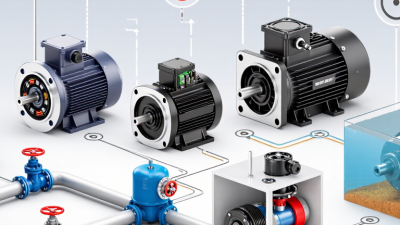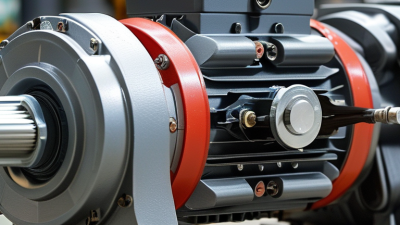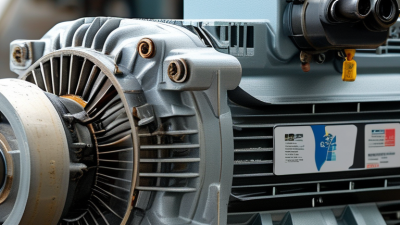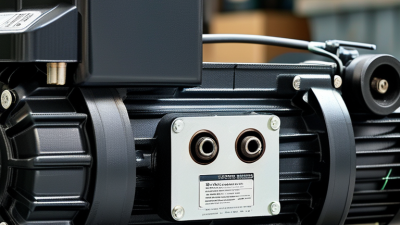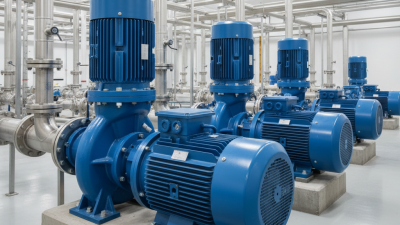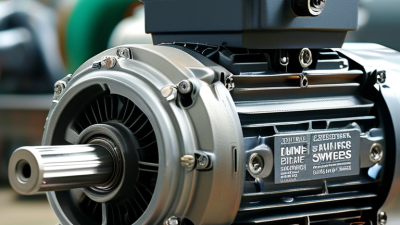

Choosing the right Pump Motor starts with the work it must do, not simply its horsepower rating. A pump moving clean water through a short pipe faces different demands from one handling hot liquid, solids, or changing flow rates. The U.S. Department of Energy’s Improving Pumping System Performance: A Sourcebook for Industry reports that pumping systems use nearly 20% of global electrical energy demand. It also notes they can account for 25–50% of energy use in some industrial operations. Those figures make motor selection more than a purchasing detail. A poor match can waste power, run hot, or wear components faster. Small details matter.
Start with the pump’s required flow and head, then check the liquid, operating hours, supply voltage, and starting method. Consider whether demand stays steady or varies across a shift. A properly selected variable-speed drive may help when flow requirements change, but it is not automatically the best answer. The system curve, pump design, and control settings still matter. Check the motor’s efficiency, service factor, enclosure, and duty rating against actual site conditions. Dust near a grain-handling line or moisture around a washdown station can affect enclosure choice. So can ambient temperature and ventilation. No match is perfect. In practice, records may be incomplete, and assumptions deserve a second look. Compare the nameplate with measured operating data where possible, and confirm recommendations with a qualified engineer or supplier. This guide explains how to weigh those factors and choose a Pump Motor that fits the application, rather than one that merely looks adequate on paper.
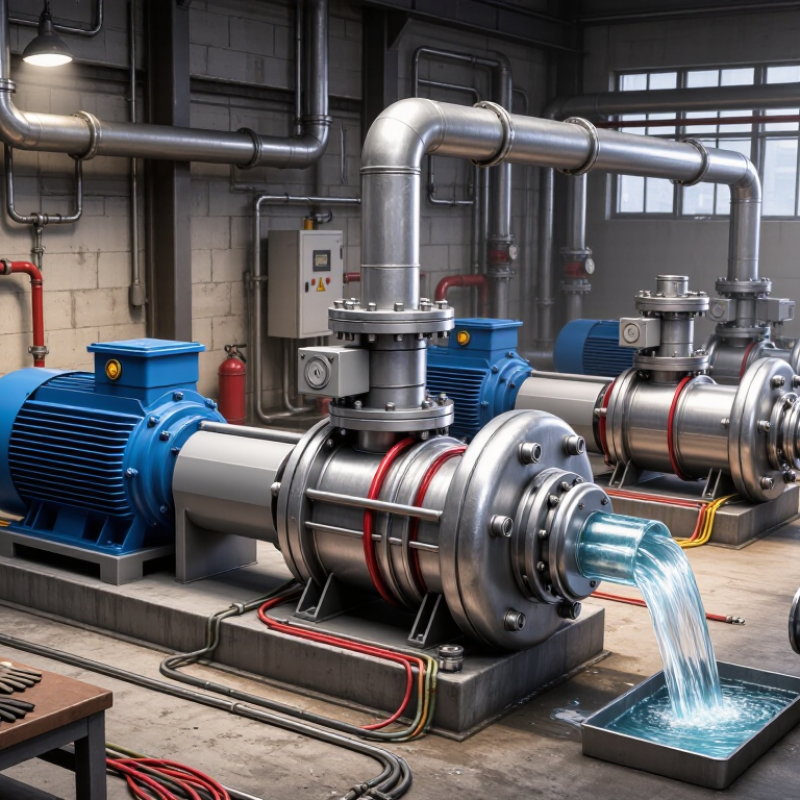
A pump’s design determines what its motor must deliver. Centrifugal pumps usually need steady rotation and perform best near their intended flow range. Positive-displacement pumps move a fixed volume with each cycle, so they can demand higher starting torque. A motor that suits one type may struggle with another. Small details matter.
Submersible pumps need motors designed for wet installation and effective heat transfer through the surrounding liquid. Diaphragm pumps may require a motor suited to repeated starts or a pulsing load. Check the required flow, pressure, liquid temperature, and operating hours before selecting motor power. Also confirm voltage, phase, speed, and whether a variable-speed drive is appropriate. Oversizing is not automatically safer; it can waste energy or push the pump beyond its useful range. A sizing chart helps, but real operating conditions can differ.
Tips: Compare the pump curve with the system’s actual flow and head. Check the motor nameplate and installation manual. Note how often the pump starts. If those details are uncertain, pause and verify them with a qualified technician. The right choice is not always obvious.
Understand pump types and their motor requirements
The chart shows representative shaft speeds, not fixed requirements. Centrifugal pumps commonly run faster, while gear and progressive-cavity pumps often use slower speeds to handle viscous fluids or provide controlled flow. Submersible centrifugal pumps may run at higher speeds. Select a motor based on required flow and head, fluid properties, starting torque, duty cycle, and the pump manufacturer's performance curve.
A pump motor should be selected around the system’s real duty point, not the largest flow or pressure printed on a specification sheet. Record the required flow rate and the pressure the equipment needs at that flow. Include static lift, pipe length, bends, valves, and filters; these all affect total head. Measure it twice.
Check the fluid and the way the system runs. Water at room temperature behaves differently from a warm, viscous liquid. Note the fluid’s temperature, viscosity, and any suspended particles. Also record suction conditions, daily operating hours, and how often the pump starts. A system that runs continuously may need a different motor choice than one that cycles every few minutes.
Use measured data where possible, and label estimates clearly. Early numbers are often imperfect; a pressure gauge reading during normal operation can reveal a mismatch between calculations and reality. Compare the expected flow and head with the pump’s performance curve, then confirm the motor can handle the required load without overheating. Leave room for reasonable variation, but avoid oversizing “just in case.” Too much capacity can waste energy or create unstable operation. If the operating conditions change seasonally, capture those ranges before choosing.
Estimate power from the flow and total dynamic head, not pressure alone. Include elevation lift, pipe friction, and losses through valves or filters. For water, pump shaft power in kilowatts is approximately 9.81 × flow in cubic metres per second × head in metres, divided by pump efficiency. Use efficiency at the intended operating point. Small errors matter. For example, 12 cubic metres per hour at 25 metres of head, with 68% pump efficiency, requires about 1.2 kW at the shaft. The motor’s rated output must cover that demand, with suitable allowance for the actual duty and starting conditions. Avoid oversizing by guesswork; a large motor does not fix a poor pump selection.
Choose speed by checking the pump curve against the system’s required flow and head. A higher rotational speed can increase flow and head, but it can also raise power demand sharply. For the same impeller, affinity laws offer useful estimates: flow varies roughly with speed, head with speed squared, and power with speed cubed. These are approximations, not a substitute for the manufacturer’s curve. Confirm the motor’s rated speed and frequency, and check that the pump can operate efficiently at the chosen point. Variable-speed control may help when demand changes, but it cannot make an unsuitable pump suitable. Recheck the figures after installation; real pipe losses are often different from the tidy assumptions on paper.
How to Choose the Right Pump Motor
Compare Efficiency, Voltage, and Control Options
Efficiency matters most near the pump’s normal operating point, not just on a motor label. Check the pump curve and estimate how many hours it will run each day. A slightly more efficient motor may save meaningful energy in a continuous-duty system. For occasional use, the purchase premium may take years to recover. Check the details.
Voltage must match the available supply and the motor’s nameplate. Confirm phase, frequency, and voltage before ordering; a mismatch can cause poor starting or overheating. Also check the circuit’s capacity for the motor’s starting current. A technician can verify wiring and protection settings, especially when supply voltage fluctuates. I would not guess from the plug shape alone.
Control choice affects both operation and motor life. Simple on-off control may suit a small system with steady demand. A variable-frequency drive can adjust speed when flow needs change, but it must be compatible with the motor and pump. Low-speed operation may reduce motor cooling, while frequent starts can stress components. Test the actual duty cycle. It is easy to overlook. Record the required flow, pressure, and start frequency before comparing control options; real operating conditions often differ from the neat figures on a specification sheet.
How to Choose the Right Pump Motor
Check Compatibility, Safety, and Maintenance Needs
A motor can fit the pump physically and still be a poor match. Compare the pump’s required flow and pressure with the motor’s rated power and speed. Check voltage, phase, mounting dimensions, and shaft size against the site’s supply and pump assembly. Small details matter. If the motor runs outside its intended duty range, it may overheat or consume more energy than expected. When specifications conflict, confirm them with the pump or motor documentation rather than guessing from appearance.
Safety checks should include suitable overload protection, secure wiring, and a stable, guarded installation. Keep the motor away from standing water, dust buildup, and blocked ventilation openings. During a test run, listen for unusual rattling and check for excess vibration or heat. Stop the system before inspecting moving parts or electrical connections. A quick glance is not enough; some problems appear only after the motor has run under load.
Maintenance needs depend on the environment and operating schedule. A dusty workshop may require more frequent cleaning than a clean indoor plant room. Check bearings, fasteners, cooling passages, and cable condition at intervals recommended by the manufacturer. Record temperature, noise, and service dates; patterns can reveal wear early. I would not rely on memory here. It is easy to postpone a small inspection, then discover that access is awkward once the motor is installed.
| Selection factor | What to check | Practical guidance | Why it matters |
|---|---|---|---|
| Pump duty and motor power | Required flow rate, total head, fluid density, and pump efficiency. | Use the pump performance curve and manufacturer’s motor-sizing guidance. Hydraulic power is calculated as fluid density × gravity × flow rate × head; the motor must also account for pump losses. | An undersized motor may overload; excessive oversizing can increase cost and may reduce operating efficiency. |
| Speed and frequency | Pump’s required shaft speed and the supply frequency: commonly 50 Hz or 60 Hz. | For induction motors, synchronous speed is 3,000 rpm for a 2-pole motor and 1,500 rpm for a 4-pole motor at 50 Hz; at 60 Hz, the corresponding speeds are 3,600 and 1,800 rpm. Actual operating speed is lower due to slip. | Incorrect speed can move the pump away from its intended operating point and affect flow, head, and power demand. |
| Electrical supply | Rated voltage, single- or three-phase supply, frequency, full-load current, and starting method. | Match the motor nameplate to the available supply and verify that wiring and protection are suitable. Have electrical work performed by a qualified person. | A supply mismatch or unsuitable starting arrangement can cause failure to start, overheating, or electrical damage. |
| Mechanical fit | Mounting arrangement, frame dimensions, shaft diameter and length, coupling, and rotation direction. | Compare motor and pump drawings or nameplates. Confirm coupling compatibility and alignment using the equipment manufacturer’s tolerances. | Poor fit or misalignment can cause vibration, noise, bearing wear, and seal damage. |
| Duty and operating conditions | Continuous or intermittent operation, starts per hour, ambient temperature, ventilation, and moisture or dust exposure. | Select a duty rating and enclosure suitable for the installation. Check the motor documentation for permitted ambient conditions and any required derating. | Frequent starts, restricted cooling, or unsuitable environmental protection can shorten motor life. |
| Protection and safety | Overload and short-circuit protection, grounding, disconnecting means, and suitability for any hazardous location. | Size and install protective devices according to the motor nameplate, applicable electrical codes, and equipment instructions. Use certified equipment where a hazardous-area classification requires it. | Correct protection helps reduce risks from electric shock, overheating, fire, and ignition in classified areas. |
| Fluid compatibility | Fluid temperature, viscosity, corrosiveness, solids content, and compatibility with pump seals and wetted materials. | Check the pump and seal material limits for the actual fluid and operating temperature. Confirm that the motor is protected from the site environment. | The pump’s materials and operating limits—not motor power alone—determine whether the assembly can safely handle the fluid. |
| Maintenance needs | Bearing and seal service requirements, lubrication intervals, access for inspection, and availability of replacement parts. | Follow the manufacturer’s maintenance schedule. Keep cooling passages clear, check for unusual vibration or noise, and isolate and lock out power before servicing. | Planned maintenance can identify wear early and reduce unexpected downtime. |
Final selection should be verified against the pump and motor nameplates, performance data, installation conditions, and applicable local codes.
0086-13586199782