What Are the Top Pump Motor Types in 2026?
Choosing a Pump Motor in 2026 is not just a matter of comparing horsepower. The motor must match the pump, fluid, duty cycle, and control strategy. A unit pushing water steadily through a factory line faces different demands from one starting repeatedly in a compact booster station. That distinction affects energy use, heat, noise, and maintenance.
The International Energy Agency’s Energy Efficiency 2023 report estimates that electric motor systems use about 53% of global electricity. That figure covers many applications, not pumps alone, but it shows why motor selection matters. The U.S. Department of Energy’s Improving Pumping System Performance sourcebook also emphasizes matching pumps and system controls to operating conditions. In practice, a correctly sized induction motor may suit a constant-duty installation, while permanent-magnet, brushless DC, or synchronous-reluctance designs may fit other efficiency and control needs. Submersible motors bring a different priority: reliable operation inside a wet well. The categories can overlap, and product labels do not always make comparisons easy. A higher efficiency rating alone cannot tell you how a motor will perform against a throttled valve or changing demand. Small details matter. This guide compares the leading pump motor types for 2026, explains where each is commonly used, and highlights the specifications buyers should verify before choosing. It also flags a limitation: real-world savings depend on system design and operating hours, not the motor nameplate alone.
How Pump Motors Work and How Their Main Types Are Classified
Pump motors turn electrical energy into shaft rotation. The shaft drives an impeller, which accelerates liquid and creates flow. In centrifugal pumps, pressure rises as liquid leaves the impeller; displacement pumps move defined volumes through repeated chamber changes. That distinction matters.
Classification typically follows power supply and operating principle. AC induction motors are common in fixed-speed duties: their rotors turn slightly below the magnetic field’s synchronous speed. Synchronous motors track that field, while permanent-magnet motors can offer high efficiency and precise speed control with suitable drives. DC motors, including brushless designs, allow straightforward speed regulation, but their controls and duty requirements differ. The U.S. Department of Energy’s 2006 Improving Pumping System Performance sourcebook estimates that pumping systems use nearly 20% of global electrical energy demand.
Motor choice depends on the load curve, fluid, starts per hour, speed range, enclosure, and service conditions—not the type name alone. Variable-frequency drives can match motor speed to changing demand, though poor sizing or settings may erase expected savings. I would not treat an efficiency rating as a guarantee: pump wear, throttling, and oversized equipment still matter. Check operating data at the duty point, not just the motor nameplate.
Which Pump Motor Types Are Widely Used in 2026
In 2026, three-phase induction motors remain a common choice for industrial pumps. Their rugged construction, broad service support, and predictable starting behavior suit water supply, irrigation, and process systems. They are not automatically the most efficient option at every load. The International Energy Agency’s Energy Efficiency 2023 report estimates that electric motor-driven systems use about 53% of global electricity. That figure covers many applications, not pumps alone, but it underscores why motor efficiency and operating hours matter. For pumps running steadily, a correctly sized motor can reduce wasted energy. Check the duty point, not just the nameplate.
Permanent-magnet synchronous motors are increasingly used where compact size and variable-speed control are valuable, including some HVAC and packaged pump installations. Synchronous-reluctance motors offer another efficient option, particularly in systems designed around an appropriate drive. Smaller pumps may use brushless DC motors, while single-phase induction motors remain familiar in homes and light-duty equipment. The best fit depends on flow, head, starts per hour, and maintenance skills available on site. A variable-frequency drive can help match speed to demand, but it adds setup and compatibility considerations. Easy to overlook. One imperfect habit is choosing by purchase price alone; lifecycle energy use and service conditions deserve equal attention.
How AC, DC, and Specialized Pump Motors Differ
What Are the Top Pump Motor Types in 2026?
How AC, DC, and Specialized Pump Motors Differ
AC motors remain a common choice for fixed installations and long operating cycles. They connect to standard power systems and can handle steady workloads in homes, farms, and industrial facilities. When flow needs to change, a compatible variable-frequency drive can adjust motor speed. That adds control, but also requires careful setup. Not every pump or motor responds well to speed changes.
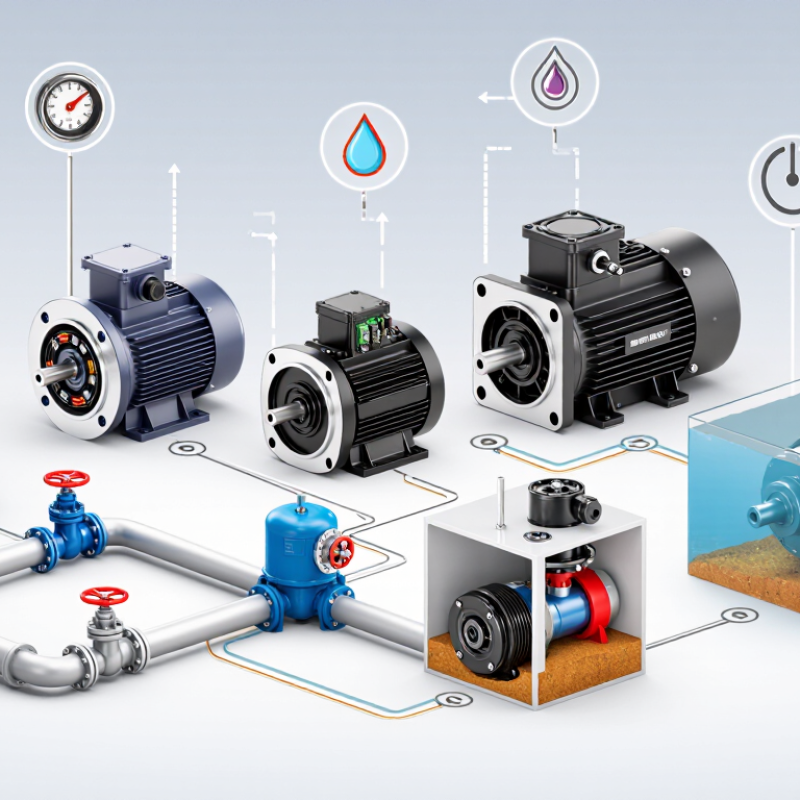
DC motors suit battery-powered equipment and systems that need responsive speed control. Brushed models are relatively simple, though their brushes wear and need inspection. Brushless DC motors avoid that wear point, but rely on electronic controls. Specialized motors address particular conditions: submersible designs operate underwater, while sealed or corrosion-resistant models can suit demanding fluids. “Specialized” is not automatically better. The fluid, temperature, duty cycle, and installation space all matter, and a poor match can shorten service life.
Tips: Check the pump’s operating curve, supply voltage, and expected daily run time before choosing a motor. Look for heat buildup near the housing after a normal operating cycle. A quick check helps, but it cannot replace proper sizing. It is easy to focus on efficiency ratings and miss maintenance access or startup current. Those details deserve a second look.
How Efficiency and Speed Control Vary Across Motor Types
Induction motors remain common in pumps because they are robust and straightforward to maintain. At fixed speed, however, they can waste energy when a valve throttles flow. Adding a variable-frequency drive lets the motor slow as demand falls. The U.S. Department of Energy’s Improving Motor and Drive System Performance guide identifies speed control as an important way to improve motor-system performance, though actual savings depend on the pump and operating profile. That difference matters.
Permanent-magnet synchronous motors can deliver high efficiency, especially across changing loads, but their drive electronics and controls add complexity. A standard induction motor paired with a drive may be easier to service in some plants. IEC 60034-30-1 classifies motor efficiency from IE1 through IE4; the class helps compare motors, but does not predict the efficiency of the entire pump system. The IEA’s 2011 report, Energy-Efficiency Policy Opportunities for Electric Motor Systems, estimated that motor systems used about 46% of global electricity. Pump selection is not a small detail.
A common design trap is sizing for peak flow, then running far below it for most of the day. A correctly selected motor and drive can reduce needless speed, heat, and throttling. Still, this is not a clean ranking: a drive adds cost and needs proper setup. Check the real duty cycle, fluid, and maintenance capacity before choosing a motor type.
How to Match a Pump Motor to Its Operating Requirements
What Are the Top Pump Motor Types in 2026?
How to Match a Pump Motor to Its Operating Requirements
Choosing a pump motor starts with the duty point, not the catalog label. Record required flow, total head, fluid temperature, viscosity, and daily run hours. A motor moving clean water at steady flow faces different demands from one handling thick liquid or frequent starts. Small details matter. For variable demand, an AC induction motor with a variable-frequency drive can adjust speed instead of throttling flow. Permanent-magnet motors may suit compact systems where efficiency at changing loads matters, but they need compatible controls and careful cost comparison.
The U.S. Department of Energy’s Improving Pumping System Performance sourcebook reports that pumping systems account for nearly 20% of global electricity demand and can use 25–50% of energy in some industrial operations. That makes system matching more than a motor-selection exercise. Check the pump curve against the real operating range, then consider motor efficiency, drive losses, cooling, and service access. A high-efficiency motor cannot rescue a badly oversized pump. This is easy to miss.
For continuous, stable loads, a correctly sized induction motor is often a practical choice. Where speed must vary, confirm the motor and drive can handle low-speed cooling, harmonics, and repeated starts. The International Energy Agency’s Energy-Efficiency Policy Opportunities for Electric Motor-Driven Systems estimates motor-driven systems use about 45% of global electricity. Treat that figure as context, not a promise of savings at one site. Measure actual load and operating hours; field conditions rarely behave perfectly.