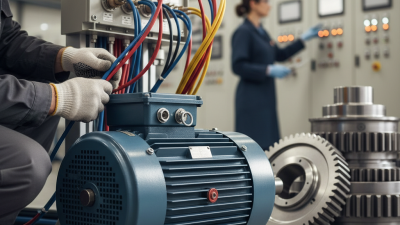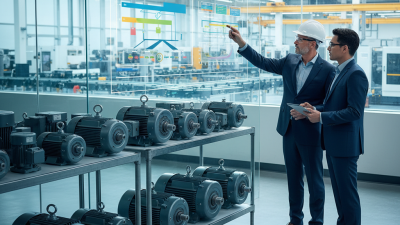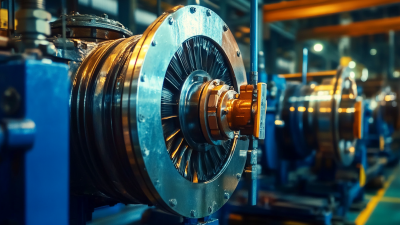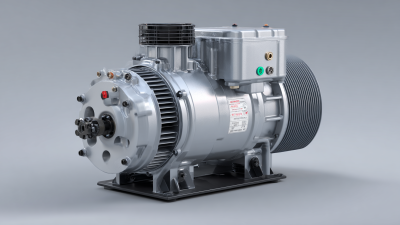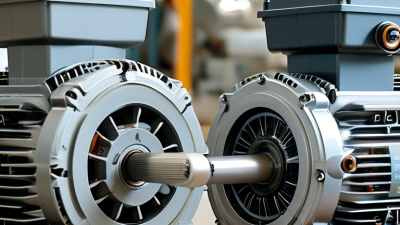

Choosing the right Induction Motor in 2026 requires more than comparing prices, power ratings, and supplier promises. Global buyers must examine efficiency, starting torque, enclosure design, voltage compatibility, maintenance access, and operating temperature. A motor running beside a dusty conveyor needs different protection from one installed in a clean packaging plant. Small details matter.
Nikola Tesla, whose inventions shaped alternating-current machinery, described the induction motor as “the simplest, most reliable, and most economical motor.” That view still influences modern purchasing decisions. However, reliability is never automatic. A squirrel-cage motor may suit pumps, fans, and compressors, while a wound-rotor design can help demanding applications requiring controlled starting torque. Slip-ring motors remain useful in selected heavy-duty systems, although their maintenance burden deserves honest attention. Synchronous-reluctance and high-efficiency hybrid options also challenge traditional choices.
This guide examines the top Induction Motor types for international buyers in 2026. It connects technical design with real purchasing conditions, including grid differences, certification expectations, spare-part availability, and after-sales support. Efficiency classes may reduce long-term energy costs, but the cheapest purchase can still become expensive. That lesson is easy to overlook.
No ranking fits every factory. A motor’s success depends on the driven load, duty cycle, installation environment, and local service capability. Buyers should verify performance data with manufacturers, independent test reports, and qualified engineers before ordering. The recommendations ahead are practical, but they are not flawless. Real sites can always expose assumptions that looked convincing on paper.
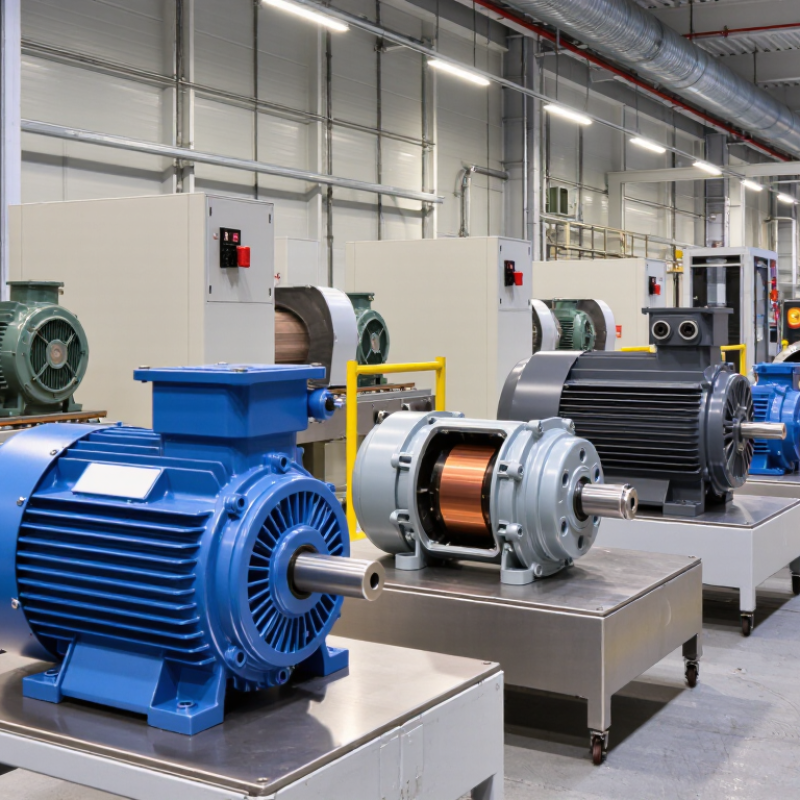
An induction motor converts electrical energy into mechanical rotation without a direct electrical connection to its rotor. In most industrial models, alternating current enters stationary stator windings. These windings create a rotating magnetic field inside the motor. The rotor responds to that moving field. It never quite catches it. That difference, called slip, produces the current and torque needed for rotation. No brushes are required in the common squirrel-cage design. This usually improves durability in dusty factories and busy pump rooms.
A three-phase induction motor is widely used for conveyors, fans, compressors, and machine tools. Its torque is smooth, and its construction is compact. A single-phase motor suits smaller equipment, such as ventilation units or workshop pumps. However, it needs a starting method. Capacitors, shaded poles, or auxiliary windings can provide that initial push.
The operating principle remains similar: changing magnetic fields induce rotor current, and their interaction creates force. I have seen motors run quietly at rated load, then overheat quickly when ventilation is blocked. The sound may seem normal. Temperature often tells the truth earlier.
Selecting the right type requires more than checking horsepower. Buyers should examine voltage, frequency, duty cycle, starting torque, enclosure rating, insulation class, and installation altitude. Squirrel-cage motors are dependable, yet high-inertia loads may demand controlled starting. Wound-rotor designs can offer better starting control, though they require more maintenance. Efficiency also changes with load. An oversized motor may waste energy during light operation. Manufacturer test data and independent inspection records deserve careful review. One detail is easy to miss: supply imbalance can raise winding temperature, even when the motor still appears to run normally.
In 2026, global buyers can choose from several main induction motor types.
Three-phase squirrel-cage motors remain the standard for pumps, fans, compressors, conveyors, and general factory equipment. Their simple rotor design supports reliable operation, modest maintenance, and competitive lifetime costs. High-efficiency versions can reduce energy losses during continuous duty, especially in large industrial facilities.
Wound-rotor, or slip-ring, motors suit heavy-starting applications such as crushers, hoists, mills, and loaded conveyors. External resistance can provide stronger starting torque and smoother acceleration. However, their brushes and rings require more inspection.
Single-phase induction motors serve smaller machines, ventilation units, workshop tools, and household-scale equipment. Common designs include capacitor-start and capacitor-run motors. They are practical, but usually offer less starting power than three-phase alternatives. Selection mistakes still happen.
Tips: Match the motor to voltage, frequency, duty cycle, load torque, ambient temperature, and installation altitude. Check the enclosure rating and cooling method before ordering. Confirm efficiency data under your actual operating conditions, not only catalog ratings. Ask for test reports, wiring diagrams, dimensional drawings, and spare-parts support. Regional standards and documentation requirements may differ, so verify them with a qualified engineer or local inspection body. A variable-frequency drive can improve speed control, but the motor must be suitable for inverter operation. There is no perfect type; a cheaper purchase may create higher maintenance or energy costs later.
For global buyers, the practical choice often begins with starting conditions, not nameplate power. A squirrel-cage motor uses solid rotor bars and has no brushes or slip rings. Its construction is compact, efficient, and durable in dusty plant rooms. It suits pumps, fans, compressors, and conveyors with moderate starting demand. During site inspections, this simpler design usually means fewer service interruptions. It still needs correct overload protection, cooling, and voltage selection.
A wound-rotor motor uses insulated rotor windings connected through slip rings. External resistance can limit starting current and deliver high starting torque. That matters for loaded crushers, hoists, mills, and conveyors that resist motion at zero speed. Operators can adjust acceleration more gently. The trade-off is real: brushes wear, rings collect dust, and resistance equipment loses energy as heat. Maintenance teams need access, spare parts, and safe inspection routines. It is powerful, but not maintenance-free.
Buyers comparing suppliers should request starting-current curves, torque data, efficiency at actual load, enclosure ratings, and service intervals. A wound-rotor specification may look stronger on paper. Yet a lightly loaded application can waste its advantage. Conversely, choosing a squirrel-cage unit for a high-inertia load may cause nuisance trips and mechanical stress. In field reviews, I have seen decisions lean too heavily on purchase price. That shortcut can age badly. Local grid frequency, ambient temperature, altitude, and technician skill deserve equal attention.
2026 Top Induction Motor Types for Global Buyers
How to Match Motor Types With Industrial Applications
Choosing an induction motor starts with the machine’s daily work, not its catalogue label. Record load torque, starting frequency, speed range, enclosure needs, and available power. Small details matter. A centrifugal pump or ventilation fan often suits a squirrel-cage motor because it offers simple construction and dependable operation. For conveyors, mixers, and compressors, check starting torque carefully. A standard selection may struggle when material begins moving under a full load.
Wound-rotor motors can support demanding starts, especially in crushers, hoists, and heavy process equipment. Their external resistance can improve starting control, but maintenance requirements are higher. Smaller workshops may prefer single-phase capacitor-start motors for light machines and auxiliary equipment. Match the motor’s phase, voltage, frequency, and rated speed with the site supply. A 50 Hz system should not be treated like a 60 Hz system without checking performance.
Field experience shows that heat, dust, and poor ventilation often shorten service life faster than expected. Select the enclosure and insulation system for the actual environment. Measure shaft alignment, vibration, and current during commissioning. Do not trust the nameplate alone. A neat selection rule can fail when loads change seasonally. Recheck duty cycles and starting conditions with real operating data before purchase.
Application-oriented comparison of common induction motor designs, operating characteristics, and selection considerations
| Motor Type | Typical Phase and Supply | Representative Power Range | Typical Speed Range at 50 Hz | Starting Torque | Speed Regulation | Key Advantages | Typical Industrial Applications | Primary Selection Considerations | Common Standards or Classifications |
|---|---|---|---|---|---|---|---|---|---|
| Three-Phase Squirrel-Cage Induction Motor | Three-phase AC; commonly 200–240 V, 380–415 V, 440–480 V, or 575–600 V depending on the region | Approximately 0.12 kW to 1,000+ kW | About 720–2,970 rpm, depending on pole count and slip | Moderate; commonly suitable for standard starting loads | Typically 1–5% slip from no-load to rated load | Simple construction, high reliability, low maintenance, broad global availability, and good compatibility with variable-frequency drives | Pumps, fans, compressors, conveyors, machine tools, mixers, blowers, and general factory equipment | Check rated load, service factor, starting method, enclosure, cooling method, duty cycle, ambient temperature, and local voltage/frequency | IEC 60034 series; NEMA MG 1 classifications; efficiency classes such as IE2, IE3, and IE4 where applicable |
| High-Efficiency Squirrel-Cage Motor | Three-phase AC; fixed-frequency supply or inverter-fed operation | Approximately 0.75 kW to 1,000+ kW | About 750–2,980 rpm at 50 Hz, depending on pole count and load | Moderate to high, depending on the design and efficiency class | Usually similar to or slightly better than standard-efficiency designs | Lower electrical losses, reduced operating cost, and improved lifecycle efficiency for equipment running many hours per year | Continuous-duty pumps, HVAC fans, compressors, water-treatment systems, process lines, and energy-intensive production equipment | Compare efficiency at the actual operating load, not only at rated load; verify part-load performance, payback period, and applicable energy regulations | IEC efficiency classes IE2, IE3, and IE4; regional minimum energy performance requirements may differ |
| Wound-Rotor (Slip-Ring) Induction Motor | Three-phase AC stator supply with rotor winding connected through slip rings and external resistance during starting | Approximately 100 kW to several megawatts | About 500–2,950 rpm at 50 Hz, depending on pole count and operating slip | High | Speed can be adjusted over a limited range by rotor-resistance control; efficiency falls when resistance is used continuously | High starting torque with controlled starting current; suitable for high-inertia loads that are difficult to start directly | Large crushers, mills, hoists, cranes, conveyors with heavy starting loads, mine winders, and large fans with high inertia | Requires brush and slip-ring maintenance; modern variable-frequency-drive solutions may offer lower maintenance for many new installations | IEC 60034 series and applicable national motor standards; starting equipment must be matched to rotor and load requirements |
| Single-Phase Capacitor-Start Induction Motor | Single-phase AC; commonly 100–127 V or 200–240 V, 50 or 60 Hz | Approximately 0.12 kW to 3.7 kW | About 2,800–3,600 rpm at 50/60 Hz for two-pole designs, with load-dependent slip | High | Not intended for precise speed control; speed decreases as load increases | Good starting torque from an auxiliary winding and capacitor; practical where only single-phase power is available | Small compressors, pumps, workshop machinery, conveyors, fans with starting resistance, and agricultural equipment | Verify capacitor type, starting frequency, thermal protection, duty cycle, direction of rotation, and available single-phase voltage | IEC 60034 series, NEMA MG 1, and relevant local electrical safety requirements |
| Single-Phase Permanent-Split-Capacitor Motor | Single-phase AC; commonly 100–127 V or 200–240 V, 50 or 60 Hz | Approximately 0.025 kW to 1.5 kW | About 1,400–3,600 rpm at 50/60 Hz, depending on pole count and load | Low to moderate | Suitable for relatively stable loads; not designed for accurate speed control | Quiet operation, simple construction, low cost, and good suitability for continuous fan or blower duty | Ventilation fans, air handlers, small blowers, evaporator fans, light-duty pumps, and office or commercial equipment | Avoid applications requiring high breakaway torque; check capacitor rating, airflow, temperature rise, and continuous-duty suitability | IEC 60034 series and applicable national or regional appliance and motor safety requirements |
| Two-Value Capacitor Single-Phase Motor | Single-phase AC with a starting capacitor and a running capacitor | Approximately 0.25 kW to 7.5 kW | About 1,400–3,600 rpm at 50/60 Hz, depending on pole count | Very high | Moderate for fixed-frequency operation; load-dependent like other induction motors | Combines strong starting performance with improved running power factor and efficiency compared with many basic single-phase designs | Air compressors, refrigeration compressors, larger pumps, woodworking machines, and equipment with frequent or demanding starts | Confirm starting frequency, capacitor replacement requirements, overload protection, and whether the motor can tolerate the machine's starting inertia | IEC 60034 series, NEMA MG 1, and local electrical installation requirements |
| Brake Induction Motor | Usually three-phase squirrel-cage; may also be available in single-phase versions for smaller equipment | Approximately 0.12 kW to 250 kW | About 750–2,980 rpm at 50 Hz, depending on pole count | Moderate to high, depending on the motor design | Induction-motor speed regulation; stopping time depends on brake torque and load inertia | Integrated electromagnetic braking enables rapid stopping and load holding without a separate mechanical brake assembly | Hoists, cranes, conveyors, packaging machines, machine tools, elevators, and indexing equipment | Specify brake torque, stopping time, braking duty, manual release, fail-safe behavior, allowable inertia, and brake protection against dust or moisture | IEC 60034 series; machine safety and lifting-equipment requirements may also apply |
| Explosion-Protected Induction Motor | Usually three-phase squirrel-cage; supply voltage and frequency selected according to the installation | Approximately 0.12 kW to 1,000+ kW | About 750–2,980 rpm at 50 Hz, depending on pole count | Moderate to high, subject to certified design and starting method | Comparable to a standard induction motor of the same design and rating | Designed to limit ignition risk in hazardous areas through certified enclosure, temperature, construction, and protection methods | Oil and gas facilities, chemical plants, refineries, grain handling, paint processes, pharmaceutical production, and wastewater areas with classified hazards | Area classification must be confirmed before selection; verify gas or dust group, temperature class, equipment protection level, ingress protection, cable entries, and certification validity | IEC 60079 series, IECEx, ATEX, NEC, or other jurisdictional hazardous-area certification systems as applicable |
| Medium-Voltage Squirrel-Cage Induction Motor | Three-phase medium-voltage AC; commonly above 1 kV, with the exact voltage selected for the facility distribution system | Approximately 200 kW to several megawatts | About 500–2,980 rpm at 50 Hz, depending on pole count | Moderate to high; starting current and system impact require detailed engineering | Typically stable under normal operation; speed control generally requires a suitably rated medium-voltage drive | Efficient transmission of high power over industrial distribution systems with lower current than low-voltage alternatives | Large pumps, compressors, fans, mills, conveyors, crushers, power-generation auxiliaries, and process plants | Evaluate insulation system, starting method, short-circuit level, protection coordination, harmonic impact, cooling, altitude, and maintenance access | IEC 60034 series, NEMA MG 1, and applicable medium-voltage switchgear and installation standards |
| Inverter-Duty Induction Motor | Usually three-phase AC supplied by a variable-frequency drive | Approximately 0.12 kW to 1,000+ kW | Application-dependent; commonly from near zero to above base speed when the motor and drive are correctly selected | Drive-controlled; high starting torque is possible with suitable vector control and motor design | Good controllability with an appropriate drive, feedback method, and operating range | Variable-speed operation, process control, soft starting, energy savings in variable-torque loads, and reduced mechanical stress | Variable-flow pumps and fans, extruders, conveyors, mixers, winders, compressors, machine tools, and automated production lines | Check voltage spikes, dv/dt, bearing-current protection, minimum cooling speed, constant-torque or variable-torque duty, overload capacity, speed range, and cable length | IEC 60034 series, NEMA MG 1 inverter-fed motor guidance, and drive manufacturer installation requirements |
Buyer note: Actual performance depends on rated load, pole count, supply frequency, voltage, enclosure, cooling method, ambient conditions, altitude, duty cycle, power quality, and the selected starting or drive system. The ranges above are representative selection values rather than universal limits.
Global buyers often compare squirrel-cage, wound-rotor, and inverter-duty induction motors. Squirrel-cage designs remain the practical default for pumps, fans, and compressors. Wound-rotor motors suit demanding starting conditions, but their slip-ring maintenance adds labor. Inverter-duty motors support variable-speed drives and frequent starts.
Efficiency deserves early attention. The International Energy Agency reports that electric motor systems consume over 40% of global electricity. A small efficiency difference can become a large operating expense. IEC 60034-30-1 classifies motors from IE1 to IE5. Buyers should request tested efficiency, not only catalog claims. The U.S. Department of Energy estimates energy can represent about 97% of a motor’s lifetime cost, while purchase price may represent only 2%. The figures vary by duty cycle, but the warning is clear.
Standards must match the destination market. Check IEC ratings, local energy rules, voltage, frequency, ingress protection, insulation class, and temperature rise. A 50 Hz motor may not suit a 60 Hz installation without careful review. Maintenance also changes the real cost. TEFC motors protect windings in dusty areas, yet blocked cooling fins still raise temperature. Ask for bearing life, grease intervals, spare-part availability, and vibration limits. Field inspections often reveal alignment problems before electrical faults. I have found that buying the cheapest unit is rarely the cheapest decision. Still, premium efficiency is not automatically sensible for short, seasonal operation. A simple load profile can prevent an expensive mistake.
0086-13586199782