
WELCOME TO ZHEJING ZHUHONG!
e945ab7861e8d49f342bceaa6cc1d4b

Why Choose a Mining Motor for Heavy Duty Operations?

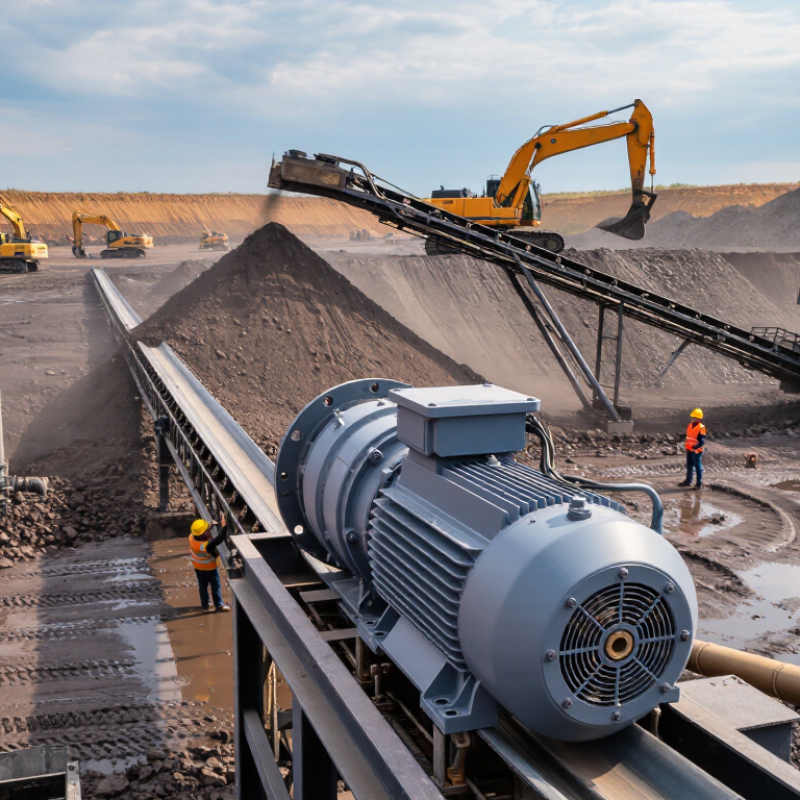
Mining sites demand equipment that keeps working when conditions become unforgiving. Dust fills the air, moisture enters confined spaces, and sudden loads test every component. A Mining Motor is designed for this pressure, delivering dependable torque across crushers, conveyors, pumps, and ventilation systems. It must tolerate vibration, heat, and long operating hours without sacrificing efficiency.

The right choice begins with the duty cycle, not the catalog headline. Engineers examine starting torque, load variation, enclosure protection, cooling method, and available power. They also study the installation environment. A motor near a wet processing area needs stronger protection than one in a dry workshop. Dust is relentless. Even a small seal weakness can increase maintenance demands and shorten service life.

Field experience shows that reliability depends on more than motor construction. Correct alignment, clean airflow, suitable lubrication, and scheduled inspections matter just as much. Maintenance teams can use vibration readings, temperature checks, and service records to identify problems before failure stops production. However, no specification guarantees perfect performance. Poor installation, neglected cleaning, or an underestimated load can defeat an otherwise excellent design. This guide considers practical selection, operating safety, energy use, and lifecycle value. It draws on engineering principles and real maintenance concerns, while recognizing that every mine has different risks. The best Mining Motor is not simply the strongest option. It is the one matched carefully to the work.
Why Choose a Mining Motor for Heavy Duty Operations?

Mining Motor Basics: S1 Continuous Duty, 6.6–11 kV, and 90%+ Efficiency

Why Choose a Mining Motor for Heavy Duty Operations?

Mining motors face long shifts, high loads, dust, vibration, and limited maintenance access. S1 continuous-duty classification under IEC 60034-1 means the motor can operate continuously at a steady load. Its temperature can reach thermal stability without repeated overload cycles. This matters on conveyors, pumps, crushers, and ventilation systems running day and night. In practice, correct cooling and alignment still matter. A strong rating cannot repair poor installation.

Medium-voltage motors rated at 6.6–11 kV can reduce current in large-power applications. Lower current generally means smaller cable losses and more manageable distribution equipment. The U.S. Department of Energy reports that motor-driven systems consume more than half of industrial electricity in many facilities. Efficiency therefore affects both operating cost and site emissions. A motor above 90% efficiency may save substantial energy, especially under continuous operation. Yet the nameplate figure is not the whole story. Real performance changes with load, voltage imbalance, altitude, and maintenance quality.

Field checks should include vibration readings, bearing temperature, insulation resistance, and cooling airflow. Small deviations often appear before a shutdown. A 90% motor is not automatically efficient in service. Oversizing can lower part-load efficiency and reduce power factor. That detail is easy to miss. Engineers should compare measured duty profiles with IEC test data, energy assessments, and the latest mine operating records.

Rugged Protection: IP66 Enclosures and 40–50°C Ambient Operation

Why Choose a Mining Motor for Heavy Duty Operations?

Rugged Protection: IP66 Enclosures and 40–50°C Ambient Operation

Mining motors face dust, water spray, vibration, and long operating hours. An IP66 enclosure keeps harmful dust out and resists powerful water jets from any direction. This protection matters near crushers, conveyors, pumps, and outdoor processing equipment.

However, IP66 is not a license to ignore maintenance. Seals can age, cable glands can loosen, and washdown practices may exceed the enclosure’s design limits. A motor rated for 40–50°C ambient operation also needs careful thermal planning. High temperatures reduce cooling efficiency and may shorten insulation life. Correct ventilation, clean air paths, and suitable overload protection remain essential.

Heat changes performance.

Experienced maintenance teams should check bearing temperature, current draw, vibration, and terminal tightness during scheduled inspections. Confirm the motor’s duty rating, insulation class, starting method, and mounting arrangement before installation. Cable selection deserves attention too, especially where dust and mechanical movement are common. A small installation mistake can create a large failure.

Tips: Keep cooling surfaces free from compacted dust. Use thermal sensors where production cannot stop easily. Record readings over time, not only after a fault. Also, verify IP66 claims against technical documentation and applicable site requirements. In practice, the strongest motor is not always the best choice; correct sizing and realistic service conditions matter more.

Torque Performance: 2–3× Rated Torque for Crushers and Conveyors

Why Choose a Mining Motor for Heavy Duty Operations?

A mining motor must start heavy loads without stalling. Crushers can begin against trapped rock, while conveyors may restart with material still on the belt. For these conditions, a correctly specified motor can provide 2–3 times its rated torque for short periods. This torque reserve helps overcome sudden resistance and reduces nuisance trips. It is not magic. The actual result depends on voltage, inertia, starting method, and cooling.

The U.S. Department of Energy’s Motor Systems Market Assessment reports that motor-driven equipment uses about 68% of industrial electricity. Efficiency matters, but reliability matters equally underground or at dusty transfer points. A high-torque motor with a suitable enclosure can handle repeated starts more confidently. IEC 60034-12 also classifies starting performance, giving engineers a useful reference when matching motors to demanding loads. I would still verify the duty cycle carefully. A motor surviving one hard start may overheat after twenty.

Tips: Check locked-rotor torque, pull-up torque, thermal capacity, and restart frequency. Measure belt loading, not only nameplate power. Keep ventilation paths clean. A variable-frequency drive can control acceleration, but it cannot fix an undersized motor. Record temperature during real production cycles; field data often exposes assumptions that calculations miss.

Why Choose a Mining Motor for Heavy-Duty Operations?

Mining motors are designed to deliver high starting and overload torque for demanding equipment such as crushers, conveyors, and feeders. The chart compares rated torque with representative peak torque requirements of 2–3× rated torque.

Peak torque values are shown as multiples of rated torque. This additional torque capacity helps equipment start under load, overcome material jams, and handle short-duration resistance increases without stalling.

Thermal Reliability: Class F Insulation with Class B Temperature Rise

Why Choose a Mining Motor for Heavy Duty Operations?

In heavy-duty mining, motors face dust, vibration, frequent starts, and limited cooling space. Class F insulation is designed for winding temperatures up to 155°C under applicable standards. Yet this motor uses a Class B temperature rise, typically limited to 80 K above ambient conditions. The difference creates valuable thermal headroom during demanding operation. Heat still matters. If ambient temperature reaches 40°C, an 80 K rise can bring windings near 120°C. That remains below the insulation limit, but poor ventilation or overload can quickly reduce the margin.

This design supports longer insulation life when the motor is correctly selected and maintained. Lower operating stress can also reduce premature winding deterioration and unplanned stoppages. In practice, technicians should inspect cooling passages, terminal connections, bearings, and current readings. A thermal camera can reveal hot spots that ordinary touch inspections miss. However, insulation class alone is not a guarantee. Incorrect voltage, repeated overloading, blocked airflow, or high-altitude operation may still cause excessive heat. That is an easy detail to overlook.

Tips: Check the motor’s actual load profile before installation. Record ambient temperature and winding temperature during peak production. Keep ventilation paths clear, and compare readings over time. If temperatures rise unexpectedly, investigate alignment, bearing condition, supply imbalance, and starting frequency before changing protection settings. A careful record often explains failures better than assumptions.

Safety and Compliance: IEC 60079 Protection for Hazardous Mine Zones

Why Choose a Mining Motor for Heavy Duty Operations?

Safety and Compliance: IEC 60079 Protection for Hazardous Mine Zones

Mining motors face dust, vibration, moisture, heavy starting loads, and long operating hours. A suitable heavy-duty motor must deliver steady torque without overheating in confined underground spaces. Its enclosure also needs protection against impact, dust entry, and difficult maintenance conditions. Small design weaknesses can become serious problems.

IEC 60079 provides a framework for electrical equipment used in explosive atmospheres. In mines, methane, coal dust, and other combustible materials may create hazardous zones. Motor selection should match the required equipment group, protection method, temperature limits, and equipment protection level. Certification alone is not enough. Installation quality matters just as much.

Check the cable glands, terminal box, earthing connections, and cooling passages during commissioning. Keep records of inspections and thermal measurements. A blocked cooling path may raise winding temperatures beyond safe limits. A damaged seal may weaken the enclosure’s protection. Maintenance teams often discover that rushed installation causes more trouble than motor failure itself. That lesson deserves attention.

The motor must also comply with applicable local mining rules and site procedures. IEC 60079 documents should be reviewed alongside the motor certificate and technical drawings. Conditions can change after installation. Gas monitoring, dust buildup, and repeated overloads may require a fresh risk assessment. No checklist replaces careful judgment at the working face.

Why Choose a Mining Motor for Heavy Duty Operations? - Safety and Compliance: IEC 60079 Protection for Hazardous Mine Zones

Evaluation Dimension Relevant Requirement or Classification Why It Matters in Heavy-Duty Mining Operations Recommended Verification Point
Hazardous-area identification Classify the location before selecting the motor. Gas and vapour areas use Zones 0, 1 and 2; combustible-dust areas use Zones 20, 21 and 22. The motor protection concept must match the actual probability and duration of an explosive atmosphere. Confirm the area classification in the site risk assessment and hazardous-area dossier.
Underground mining classification IEC 60079 equipment Group I is intended for mines susceptible to firedamp. Equipment Protection Levels include Ma and Mb. Underground coal and similar mines may present methane and combustible-dust hazards that require mining-specific certification and construction. Check that the certificate identifies the applicable mining group and EPL, rather than relying only on a general industrial gas certification.
Gas protection level Ga is associated with Zone 0, Gb with Zone 1, and Gc with Zone 2, subject to the complete equipment marking and certificate conditions. Correct EPL selection helps ensure that ignition-risk controls are appropriate for the expected hazardous atmosphere. Compare the motor’s Ex marking with the zone, gas group, temperature class and ambient-temperature range specified for the installation.
Combustible-dust protection level Da is associated with Zone 20, Db with Zone 21, and Dc with Zone 22, subject to the complete equipment marking and certificate conditions. Dust layers and suspended dust clouds can create ignition hazards and can also obstruct cooling surfaces. Verify the dust group, maximum surface temperature and enclosure or protection method stated on the certificate.
Protection concepts IEC 60079 includes protection concepts such as flameproof enclosure “d”, increased safety “e”, pressurization “p”, intrinsic safety “i” and protection by enclosure “t” for dust applications. Each concept controls ignition risk in a different way; the correct choice depends on motor construction, environment and installation method. Use only the protection concept covered by the motor certificate and follow its special conditions of use.
General Ex construction IEC 60079-0 specifies general requirements for construction, testing and marking of explosive-atmosphere equipment. Standardized marking and construction requirements make it possible to verify whether the motor is suitable for the intended hazardous location. Review the nameplate, certificate number, Ex marking, ambient range and permitted installation conditions.
Installation and wiring IEC 60079-14 covers the design, selection, installation and initial inspection of electrical installations in explosive atmospheres. Even a correctly certified motor can become unsafe if cable glands, terminals, earthing, clearances or protective devices are incorrectly installed. Ensure installation is completed and inspected by competent personnel in accordance with the applicable edition of IEC 60079-14 and local regulations.
Inspection and maintenance IEC 60079-17 covers inspection and maintenance of electrical installations in explosive atmospheres. Mining vibration, dust ingress, moisture, thermal cycling and mechanical impact can degrade Ex protection over time. Establish a documented inspection schedule covering enclosure condition, cable entries, fasteners, earthing, temperature protection and signs of overheating.
Repair and overhaul IEC 60079-19 provides requirements and guidance for repair, overhaul, reclamation, installation and reuse of Ex equipment. Unauthorised machining, rewinding or replacement parts can compromise flame paths, clearances or certified thermal performance. Use an appropriately competent repair facility and retain repair records, test results and confirmation of continued certification compliance.
Thermal protection The motor’s certified temperature class or maximum surface temperature must remain within the limits for the hazardous atmosphere. Overload, blocked ventilation, high ambient temperature or frequent starting can raise the surface temperature above the permitted limit. Check overload protection, embedded temperature sensors, starting duty, ambient temperature and the declared maximum surface temperature.
Ingress protection IP ratings are defined by IEC 60529 and indicate protection against solid objects and water; an IP rating does not replace Ex certification. Water, mud and conductive dust can reduce insulation performance and accelerate corrosion in harsh mine environments. Select an IP rating suitable for the site conditions and verify that the complete motor, glands and terminal enclosure maintain the required protection.
Mechanical durability Specify the required mechanical protection, bearing arrangement, shaft configuration and vibration limits for the driven equipment. Conveyors, crushers, pumps and fans can impose high starting torque, shock loads, radial loads and continuous vibration. Compare the motor duty, torque curve, mounting arrangement, bearing load capacity and vibration limits with the driven machine requirements.
Duty and starting conditions Define the duty cycle, starts per hour, acceleration time, load inertia, supply characteristics and permissible temperature rise. Heavy starting loads and repeated starts can produce excessive heating even when the continuous running load appears acceptable. Verify the motor’s rated duty, starting capability, protection settings and compatibility with the mine power system.
Electrical supply quality Confirm rated voltage, frequency, phase, voltage variation, frequency variation and, where applicable, variable-frequency-drive requirements. Voltage imbalance, harmonics and incorrect drive parameters can cause overheating, torque reduction and premature insulation failure. Check the motor data sheet, power-quality limits, drive compatibility and requirements for screened cables or output filters.
Documentation and traceability Maintain the certificate, declaration or approval documents, installation instructions, inspection records and maintenance history. Traceable documentation supports regulatory audits, safe maintenance and confirmation that modifications have not invalidated the Ex protection. Keep the motor nameplate information and all applicable certificates accessible throughout the equipment life cycle.
The applicable hazardous-area classification, national mining regulations, equipment certificate and manufacturer’s instructions always take precedence over a general selection table.