2026 Top Single Phase AC Motor Types You Should Know?
Understanding the various types of single phase AC motors is essential for anyone working in electrical engineering or related fields. These motors are widely used in residential and light commercial applications. Their unique design allows them to operate efficiently on standard household electricity.
Single phase AC motors are straightforward and versatile, making them a popular choice. Yet, there might be more to these motors than meets the eye. Factors like power ratings and application types significantly impact their performance. Without proper knowledge, one may struggle to select the right motor for a specific task.
In this exploration of single phase AC motor types, we will delve deeper into their functionalities and characteristics. This journey aims to provide insights that are both practical and thought-provoking. While many options exist, not all are suitable for every application. Therefore, understanding the strengths and weaknesses of each type is crucial.
Overview of Single Phase AC Motors and Their Applications
Single phase AC motors are prevalent in many applications. They typically support low power requirements, making them ideal for residential and light commercial use. According to a report by the International Energy Agency, over 44% of motors globally are of the single-phase type, particularly used in household appliances, fans, and small machines.
These motors operate on a single-phase power supply, which is common in many regions. Applications range from small washing machines to ceiling fans and pumps. Their simplicity in design allows for easy installation and lower production costs. However, single phase AC motors can exhibit lower efficiency compared to their three-phase counterparts. The average efficiency rating reported is about 75% to 85%, which suggests room for improvement.
Challenges also arise with torque production. Starting torque is often a limitation, making them less efficient in applications requiring high initial power. This aspect can prevent full functionality in demanding tasks, prompting some users to reevaluate their needs. Potential upgrades might involve investing in more advanced motor types for better performance.
2026 Top Single Phase AC Motor Types and Their Applications
This bar chart illustrates the number of applications for different types of single phase AC motors in 2026. It highlights the versatility of these motors across various use cases. Capacitor start motors lead in applications, followed closely by shaded pole motors.
Types of Single Phase AC Motors: Induction vs. Synchronous
Single-phase AC motors come mainly in two types:
induction and synchronous.
Induction motors use electromagnetic induction to generate motion. They are simple and reliable. They're also easier to maintain than synchronous models.
Induction motors are found in many everyday appliances, from fans to washing machines. Their efficiency is generally high, making them popular in residential settings.
Synchronous motors operate at a constant speed. They require a separate source to provide the magnetic field. This extra complexity can lead to increased costs. However, synchronous motors are more efficient when running at higher loads. They deliver better performance in industrial applications. Industries often use them in precision tasks.
Tip: Consider the application before choosing a motor type. Induction motors may be sufficient for simple tasks. For applications needing precise control, opt for synchronous motors.
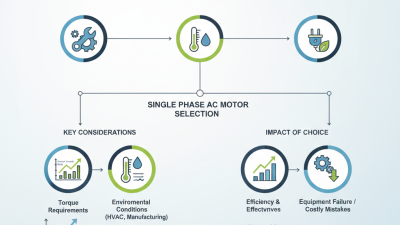
Choosing the right motor can feel overwhelming. Each type has pros and cons. Evaluate the specific requirements of your project.
Deep understanding helps avoid costly mistakes, especially for new users.
Always research and consult with experts when uncertain.
Key Features and Benefits of Single Phase AC Motors
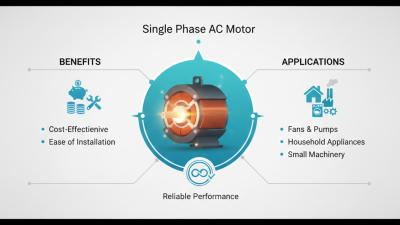
Single phase AC motors are essential in many applications. They are widely used in household appliances and small machinery. Their design is simple, providing reliable operation. This reliability makes them a preferred choice for users needing consistency in performance.
One key feature of single phase AC motors is their ease of installation. Most models come ready to use, requiring minimal setup. This is particularly beneficial for homeowners or small business owners who may not have extensive technical skills. They are also lightweight compared to other motor types, facilitating quick transportation and installation.
Furthermore, these motors often operate quietly. Many users appreciate this feature in residential settings. However, it's worth noting that while they are user-friendly, certain models can be less efficient under heavy loads. Regular maintenance can enhance their lifespan, but not all users prioritize this. Overall, understanding these aspects is crucial for making informed decisions about single phase AC motors.
Common Uses and Industries for Single Phase AC Motors
Single phase AC motors are widely used in various industries. They power many common household and commercial appliances. According to the U.S. Department of Energy, these motors account for about 30% of the electric motors used in the United States. Their simplicity and efficiency make them ideal for light-duty applications.
In residential settings, single phase motors are often found in fans, pumps, and garage door openers. The HVAC sector frequently relies on these motors for air conditioning units. In fact, single phase motors represent roughly 40% of the motors used in HVAC systems, underscoring their importance. Their relatively low cost and ease of maintenance contribute to their popularity.
Despite their advantages, single phase motors face challenges. They may struggle with starting torque compared to three phase motors. This limitation can hinder some industrial applications. Additionally, as technology advances, the need for more energy-efficient motors grows. Industries are beginning to explore alternatives that meet higher efficiency standards. Transitioning may take time, but innovation is essential for sustainability.
Future Trends in Single Phase AC Motor Technology
Single-phase AC motors are evolving rapidly. Their efficiency and design are crucial for many applications. The shift towards energy efficiency is a major trend. Manufacturers are focusing on reducing energy consumption while enhancing performance. This is vital as industries seek sustainable solutions.
Another significant trend involves smart technology integration. Modern motors now include IoT features. These allow for remote monitoring and diagnostics. This capability leads to improved maintenance practices. However, this also raises questions about cybersecurity risks. As more motors connect online, securing these systems becomes essential.
Moreover, the demand for compact and lightweight designs is increasing. Space-saving solutions are necessary in many applications. Yet, achieving this requires balancing performance and durability. There can be trade-offs, which companies must critically assess. Continuous innovation is not just an advantage; it is a necessity in the competitive landscape. The journey towards advanced single-phase AC motors is complex and requires careful evaluation at every stage.
2026 Top Single Phase AC Motor Types You Should Know
| Motor Type |
Power Rating (hp) |
Efficiency (%) |
Typical Applications |
Future Trends |
| Capacitor Start |
1/4 - 5 hp |
80 - 90% |
Pumps, Fans |
Enhanced materials for better thermal management |
| Permanent Split Capacitor (PSC) |
1/6 - 2 hp |
75 - 85% |
Compressors, Blowers |
Integration with IoT for real-time monitoring |
| Shaded Pole |
1/12 - 1/2 hp |
60 - 70% |
Fans, Small Appliances |
Use of machine learning for energy efficiency optimization |
| Split Phase |
1/4 - 3 hp |
70 - 80% |
Geared Motors, Conveyors |
Increased focus on durability and service life |
| Universal Motor |
1/20 - 1 hp |
65 - 75% |
Power Tools, Appliances |
Adoption of smart control technologies |