Top 10 Ac Electric Motors for Global Buyers to Consider?
The global demand for AC electric motors has risen significantly, driven by various industry applications. According to a recent report by Allied Market Research, the AC motor market is projected to reach $130 billion by 2027, growing at a CAGR of 6.4%. This remarkable growth underscores the importance of reliable AC electric motors in diverse sectors, including manufacturing, automotive, and HVAC.
Businesses seeking efficient performance can benefit from understanding the nuances of AC electric motors. Each type, whether synchronous or asynchronous, offers specific advantages and applications. For instance, induction motors are widely used in industrial applications due to their robustness, while synchronous motors excel in precision timing requirements. Nonetheless, buyers must recognize their unique needs to choose the right motor, as not all AC electric motors fit every application perfectly.
Also, while the benefits are significant, potential weaknesses exist. Performance may vary based on operating conditions or required power ratings. Buyers must consider these factors carefully. The ideal motor should blend efficiency, durability, and cost-effectiveness while addressing user requirements. Understanding the intricacies can make a substantial difference in selecting the right AC electric motor for global buyers.
Key Features to Consider When Choosing AC Electric Motors
When selecting AC electric motors, certain key features stand out. Efficiency is crucial. Look for motors that meet high efficiency standards. Energy costs can accumulate quickly. Choosing energy-efficient models can substantially lower operational expenses. Another essential factor is the power-to-weight ratio. A high ratio means better performance in a compact size. Smaller motors can fit into tight spaces, making them versatile in various applications.
Additionally, consider the motor's reliability during operation. Industrial settings demand machines that can withstand heavy usage. Motors with durable components ensure longer life and less downtime, which is critical for maintaining productivity. Noise levels are also important. Some applications require quieter operation to avoid disrupting work environments. Upgrading to low-noise models can significantly enhance workplace conditions.
Finally, take note of the environmental impact. Eco-friendly options are increasingly available. Selecting materials with lower environmental footprints is beneficial. However, the challenge remains in balancing performance and sustainability. Not every user prioritizes these aspects, leading to potential oversights. Therefore, reflecting on how these features align with specific needs can prevent costly mistakes. Understanding what to prioritize can lead to informed decisions in motor selection.
Top Brands to Look Out for in the AC Electric Motor Market
In the competitive AC electric motor market, selecting top brands is crucial for buyers. Many factors influence your decision, from durability to energy efficiency. Buyers should prioritize motors that have proven reliability over time. Not all manufacturers are equal; some focus on innovative designs while others emphasize cost-effectiveness.
Research indicates that quality is often tied to brand reputation. Established companies have a track record of providing reliable products. However, new players can offer cutting-edge technologies that improve performance. Buyers need to weigh these options carefully. What works for one application may not suit another.
Additionally, customer service and support are vital. A brand that provides excellent after-sales service can make a difference. It’s also important to consider warranty terms. Sometimes, longer guarantees signal confidence in product longevity. Explore user reviews carefully; they can provide valuable insights. Some potential concerns arise when a brand has inconsistent feedback. Reflecting on these considerations is essential for making an informed choice.
Top 10 AC Electric Motors Performance Comparison
Applications of AC Electric Motors Across Different Industries
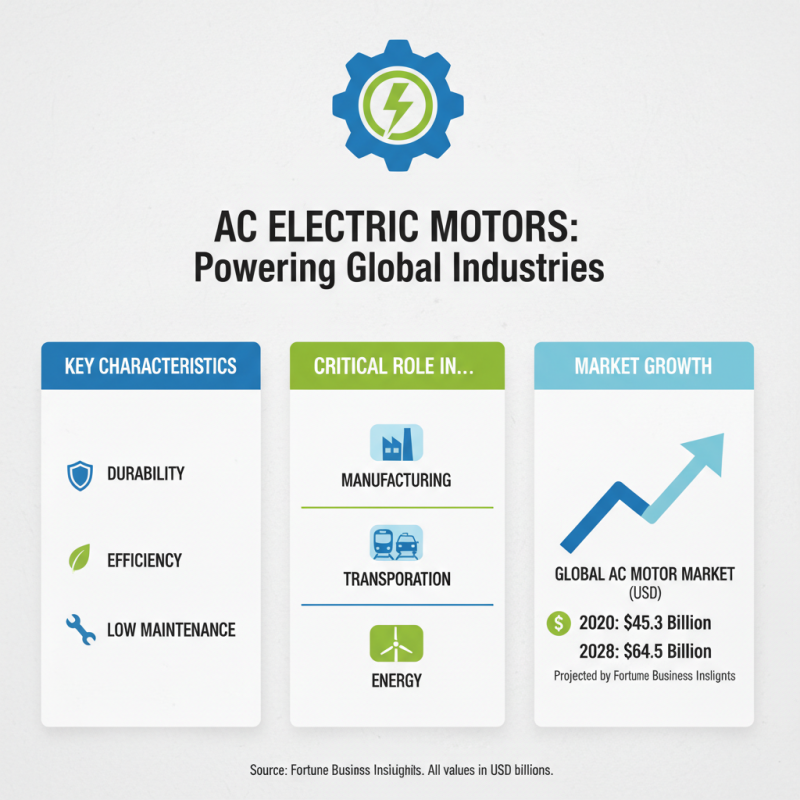
AC electric motors play a critical role in various industries, including manufacturing, transportation, and energy. According to a report by Fortune Business Insights, the global AC motor market is projected to grow significantly, reaching a valuation of $64.5 billion by 2028. These motors are favored for their durability, efficiency, and low maintenance requirements.
In the manufacturing sector, AC motors drive equipment like conveyor belts and mixers. Their reliability is crucial as any downtime can lead to significant losses. Similarly, the HVAC industry relies on AC motors for efficient heating, ventilation, and cooling solutions. They help maintain optimal conditions in buildings while minimizing energy consumption.
Tips: When selecting an AC motor, consider the application environment. Factors like temperature, humidity, and potential contamination can affect performance. It’s essential to analyze these conditions for optimal motor longevity.
In transportation, AC motors have transformed electric vehicles, enhancing performance and sustainability. However, the transition faces challenges, such as high initial costs and infrastructure limitations. Investing in research and development can alleviate these issues and drive future growth.
Maintenance Tips for Prolonging the Life of AC Electric Motors
When it comes to AC electric motors, proper maintenance is key to extending their lifespan. According to recent industry reports, over 30% of motor failures are due to inadequate maintenance practices. Regular checks can prevent costly downtimes.
Tip 1: Prioritize routine inspections. Inspect brushes, bearings, and windings regularly. Look for signs of wear or overheating. A small issue can escalate quickly if not addressed.
Vibration analysis is crucial as well. It identifies potential problems such as imbalance or misalignment. Studies show that motors monitored by vibration analysis can last up to 50% longer.
Tip 2: Cleanliness matters. Dust and debris can impact motor efficiency. Keep the motor and surrounding areas clean. Use compressed air to remove buildup. Regular cleaning can improve performance and reduce energy costs significantly.
After all, even minor oversights can lead to significant problems. Reflect on maintenance habits often. Each motor presents unique challenges, requiring tailored solutions. Careful attention to these details will ensure your AC electric motors operate effectively for years.
Top 10 AC Electric Motors for Global Buyers to Consider
| Motor Type |
Power Rating (kW) |
Efficiency (%) |
Voltage (V) |
Maintenance Tips |
| Induction Motor |
5 |
90 |
400 |
Regularly check bearings and lubrication |
| Synchronous Motor |
15 |
95 |
230 |
Check rotor alignment and clean regularly |
| Brushless AC Motor |
3 |
92 |
480 |
Inspect electronic components and connections |
| Permanent Magnet Motor |
10 |
94 |
230 |
Ensure proper cooling and ventilation |
| Single Phase Motor |
1.5 |
85 |
220 |
Lubricate bearings and avoid overload |
| Three Phase Motor |
20 |
91 |
380 |
Monitor for vibrations and heat |
| Servo Motor |
2 |
96 |
230 |
Calibrate controls and maintain cleanliness |
| Reversible Motor |
7.5 |
88 |
440 |
Ensure proper gear alignment |
| High Voltage Motor |
50 |
90 |
6600 |
Regular insulation resistance checks |
| Explosion Proof Motor |
30 |
89 |
600 |
Inspect seals and environmental protection |
Future Trends in AC Electric Motor Technology and Design
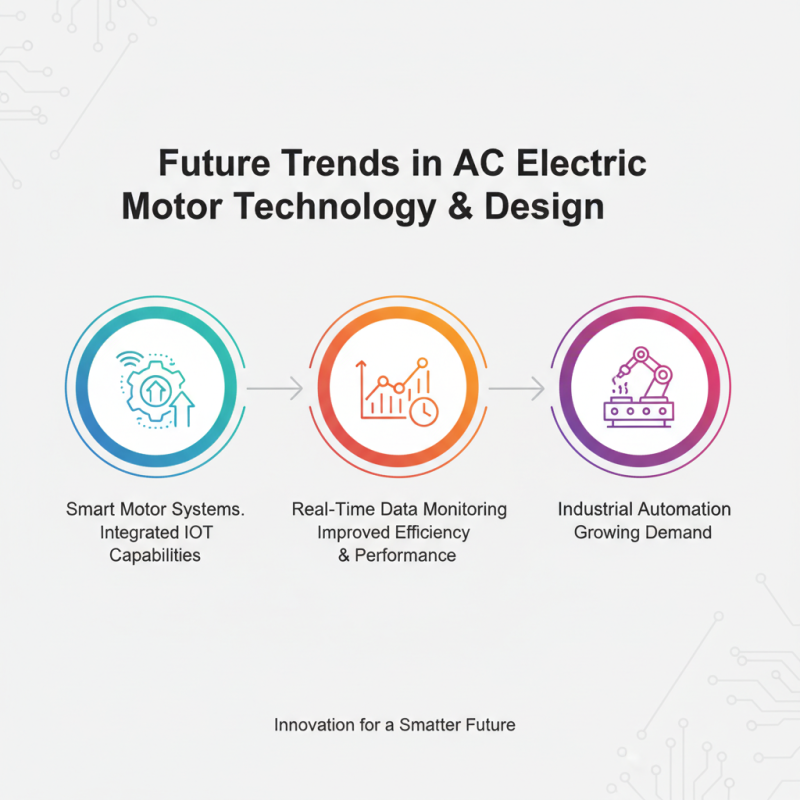
The future of AC electric motors looks promising, driven largely by innovation in technology and design. Smart motor systems that integrate IoT capabilities are on the rise. These systems offer real-time data monitoring, leading to improved efficiency and performance. As industries shift to automation, the demand for these intelligent solutions will grow.
Design trends are leaning towards compact and lightweight motors. This shift allows for installation in tighter spaces, making them ideal for varied applications. Enhanced materials and manufacturing processes also contribute to lighter designs without sacrificing strength. Advances in cooling technologies are improving thermal management, increasing motor lifespan.
**Tips:** Focus on energy efficiency when selecting motors. An investment in high-efficiency AC electric motors can lead to significant cost savings. Regular maintenance is essential for optimal performance. This often-overlooked step can prevent larger issues down the line. As you consider new technologies, ensure your choice aligns with current trends and future demands. Seek out expert guidance if you're uncertain; the world of AC electric motors can be complex.