Top Exhaust Fan Motor Manufacturers in China
Choosing an Exhaust Fan Motor supplier in China involves more than comparing prices or catalog photographs. Buyers need to understand how a motor performs under real operating conditions. Airflow requirements, duty cycle, mounting dimensions, voltage, noise, and operating temperature all affect suitability. Small details matter. A bearing that runs smoothly during a short test may behave differently after prolonged use in a warm, dusty environment.
This guide introduces Chinese manufacturers and explains practical points to check before requesting a quotation. It considers product range, customization, quality-control processes, technical documentation, and communication. Ask for clear specifications, including rated power, speed, insulation class, protection rating, and compatible fan designs. Where possible, review test records and evaluate a sample against your own requirements. A polished catalog is not enough. Factory capacity and delivery estimates also deserve confirmation, since published information may not reflect a particular order.
“Top” depends on the application, not just brand visibility. A supplier suited to a standard ventilation project may not fit a compact appliance or continuous-duty installation. Compare evidence rather than relying on broad claims. It is also worth admitting that public product information can be incomplete; verify important details directly with the manufacturer. The sections ahead offer a grounded starting point for identifying candidates and asking better questions before making a purchasing decision.
Exhaust Fan Motors: Core Functions and Operating Principles
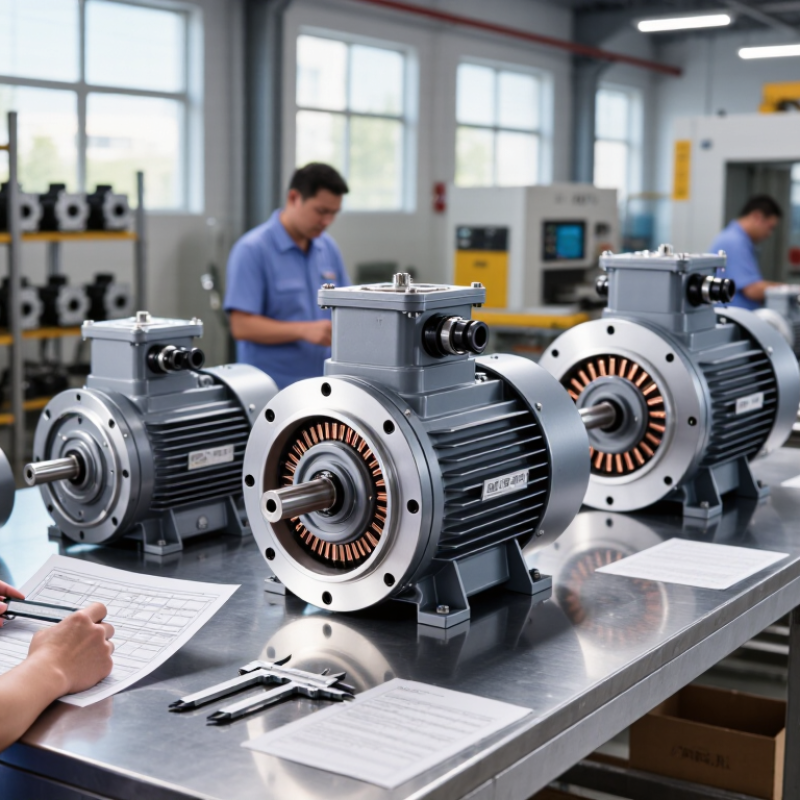
Exhaust fan motors convert electrical energy into shaft rotation. The rotating shaft drives the impeller, which creates a pressure difference and moves stale air out of a room or duct. At a workshop wall, you can see the result in a light plastic grille vibrating slightly as air passes through.
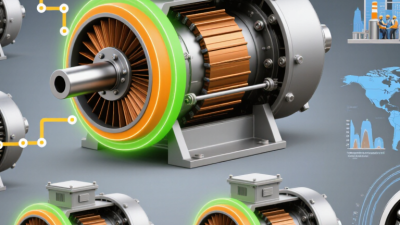
In a common AC induction motor, alternating current creates a rotating magnetic field in the stator. This field induces current in the rotor, producing torque. The rotor turns slightly slower than the magnetic field, a difference called slip. Smaller exhaust units may use electronically commutated motors, where an integrated controller switches current to regulate rotation. Speed control matters. Lower speed can reduce noise and airflow, but may also fail to meet ventilation needs.
The International Energy Agency’s 2011 report, Energy-Efficiency Policy Opportunities for Electric Motor-Driven Systems, estimates that motor-driven systems use about 45% of global electricity. This figure covers many applications, not exhaust fans alone. It shows why motor efficiency deserves attention. In practice, installers should match motor power and speed to duct resistance, then check airflow and temperature after commissioning. A motor that runs smoothly can still move too little air. That is easy to miss. Measuring airflow is more reliable than judging performance by sound. One simplification remains: real systems also depend on blade design, filters, and duct layout.
Common Types and Technical Specifications
Exhaust fan motors commonly use single-phase induction, three-phase induction, or electronically commutated (EC) designs. Small, low-pressure fans may use shaded-pole motors, though efficiency can be modest. IEA’s 2011 report, Energy-Efficiency Policy Opportunities for Electric Motor-Driven Systems, estimates these systems consume about 45% of global electricity. Motor efficiency matters.
Compare rated voltage, frequency, input power, speed, and duty rating. Typical Chinese-market ratings include 220 V single-phase and 380 V three-phase at 50 Hz; confirm the exact supply before selection. Check insulation class and IP rating too. IEC 60034-1 covers rotating-machine ratings and performance, while IEC 60529 defines enclosure protection levels.
For exhaust service, motor watts alone tell little. Match the fan’s airflow and static-pressure curve to the duct, grille, and filter resistance. A motor rated at 1,400 rpm may perform differently with another impeller or system pressure. Ask for operating-point test data, noise measurements, bearing type, and temperature limits. Catalogue figures can look neat; real installations are less tidy. Verify whether stated power means electrical input or shaft output, since confusing them can distort efficiency comparisons.
Top Exhaust Fan Motor Manufacturers in China — Common Types and Technical Specifications
Typical output-power ranges for common exhaust fan motor types. These indicative ranges vary by motor size, voltage, frequency, and fan application.
Shaded-pole motors are generally used in smaller fans, while permanent-split-capacitor (PSC), three-phase induction, and electronically commutated (EC/BLDC) motors cover a wider range of fan sizes and control requirements. The chart shows representative ranges, not limits for every product.
China’s Exhaust Fan Motor Manufacturing Industry
China’s exhaust fan motor manufacturing industry supports a wide range of ventilation needs, from compact bathroom units to larger commercial systems. Manufacturers commonly work with induction motors and permanent-magnet designs, matching power, speed, and mounting dimensions to the fan’s operating conditions. Production depends on several linked steps: winding copper wire, assembling rotor and stator parts, balancing rotating components, and checking insulation. Small details matter. A slightly uneven rotor can cause vibration, extra noise, and faster wear. Quality checks should therefore include running tests, temperature checks, and measurements under realistic loads—not just a quick visual inspection.
Tips: Compare rated voltage, power, speed, and duty cycle before requesting a sample. Ask for test data and dimensional drawings. Confirm how the motor performs with the intended fan blade and housing; a motor’s standalone rating cannot tell the whole story.
China’s manufacturing base benefits from established component supply chains and varied production capacity, but factory capabilities differ. Buyers should assess process control, traceability, and consistency across production batches. Energy efficiency and low noise matter, yet selecting the highest-rated motor is not always the right choice. A mismatch can reduce airflow or raise operating costs. Specifications may also look precise on paper while leaving important conditions unclear. Requesting a sample and checking it in the actual assembly can reveal gaps early.
Leading Chinese Manufacturers and Their Product Strengths
Chinese exhaust fan motor manufacturers often compete through broad product ranges and flexible engineering. A single supplier may offer shaded-pole, capacitor-run, or external-rotor motors for different fan designs. Options can include varied shaft lengths, mounting patterns, voltage ratings, and insulation classes. These choices help buyers match motors to compact bathroom fans or larger ventilation units. Details matter.
Tips: Request a sample and test it in the intended fan housing. Check airflow, noise, temperature rise, vibration, and current under realistic operating conditions. Ask for clear test records and a defined inspection process.
Product strengths also depend on manufacturing consistency. Precision winding, balanced rotors, reliable bearings, and controlled assembly can support quieter operation and longer service life. Some factories provide customization and technical support, but capabilities vary. A polished catalog is not proof of performance; actual results may differ with blade design, duct resistance, and installation. I would compare measured data, not just advertised efficiency. It is also worth discussing failure handling and replacement-part availability before placing a large order. A low initial price can be useful, but only when quality checks and communication remain dependable.
How to Evaluate and Select a Chinese Manufacturer
When evaluating Chinese exhaust fan motor manufacturers, compare documented performance, not catalog claims. The International Energy Agency’s 2011 report, Energy-Efficiency Policy Opportunities for Electric Motor-Driven Systems, estimates these systems use about 45% of global electricity. Efficiency deserves close scrutiny.
Ask for test results at the stated voltage, frequency, and load. Check efficiency, temperature rise, vibration, noise, and insulation class. Request the test method and calibration records; a single sample tells little about batch consistency. Ask how the factory traces copper windings, bearings, and finished motors through production. Small details matter. A clear nameplate and a dated inspection record are useful evidence, not decoration.
For fan applications, confirm the motor’s duty rating, protection level, mounting dimensions, and compatibility with the impeller and control system. Request a production sample, then compare its measured current and temperature with the datasheet under realistic operating conditions. Review warranty terms, spare-part availability, and lead-time history. Audits and certificates can help, but they do not replace testing. I would still leave room for doubt: supplier paperwork may be tidy while real-world performance varies.