How to Choose the Best AC Motor for Your Project?
When selecting an AC motor for your project, expertise is crucial. John Smith, a leading engineer in the AC motor industry, emphasizes, “Choosing the right AC motor can make or break your project.” With various options available, understanding the specific needs of your application is vital.
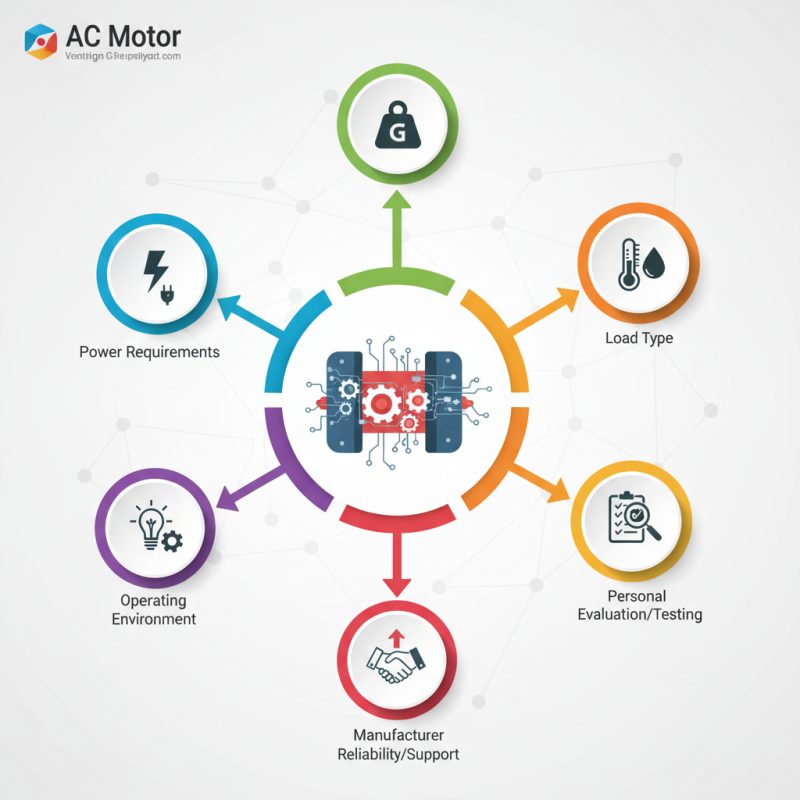
The AC motor you select impacts efficiency and performance. Consider factors such as power requirements, load type, and operating environment. Each detail counts. For example, a motor that excels in one scenario might underperform in another. It's essential to test different models, as personal evaluations can reveal nuances.
Don't overlook the reliability of the motor manufacturer. Established brands often provide better support and warranties. However, new technologies can offer surprising advantages, requiring thoughtful consideration. Balancing reliability and innovation is key in this decision-making process. Ultimately, the perfect AC motor hinges on informed choices that align with your project’s unique demands.
Understanding the Different Types of AC Motors Available
When selecting an AC motor, understanding the different types is essential. There are two primary categories:
synchronous and asynchronous motors.
Synchronous motors
run at a constant speed, synchronized with the supply frequency.
They are efficient and ideal for precise applications.
However, they can be more complex to control.
Asynchronous motors, often called induction motors, are more commonly used due to their simplicity and robustness.
They operate without needing a synchronous speed, making them versatile.
These motors come in single-phase and three-phase varieties.
Single-phase motors are suitable for lighter loads, while three-phase motors handle heavy industrial requirements.
Environmental considerations should also play a role in your decision.
Motors may need protection against dust, moisture, or extreme temperatures.
Reflect on your project's specific needs.
An inadequate motor selection could lead to inefficiencies or even failures.
This could result in costly downtime.
Always remember to assess performance requirements and compatibility with existing systems.
Key Specifications to Consider for Your AC Motor Selection
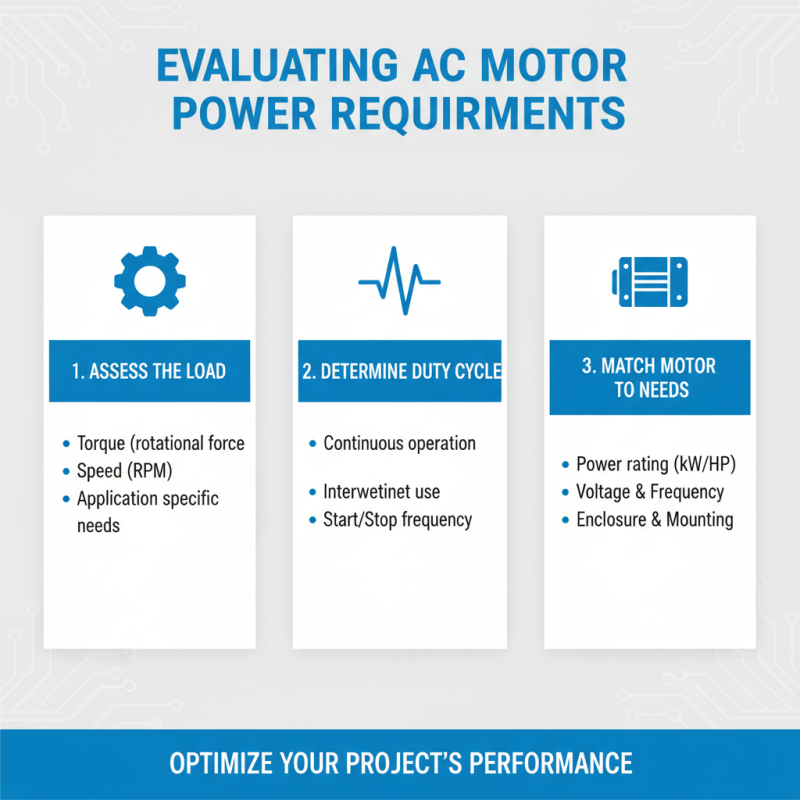
When selecting an AC motor for your project, focus on several key specifications. Power rating is crucial; it determines how much work the motor can perform. Look for a motor that matches your application’s demand without oversizing, which can lead to inefficiencies.
Torque is another essential factor. Depending on the load characteristics, different torque ratings will be suitable. Higher starting torque might be necessary for heavy loads. This consideration ensures the motor can start under load without stalling, which many overlook.
Tip: Always evaluate the operating environment. High temperatures can affect a motor's efficiency and lifespan. Choosing a motor with appropriate insulation can prevent failures.
Additionally, consider the speed control options available. Some applications require variable speed capabilities. A motor with integrated speed control can enhance flexibility. Ensure that your selected motor can adapt to changing requirements.
Tip: Don't underestimate the importance of compatibility with existing systems. Assess dimensions, mounting options, and connection types. These details can save time and costs during installation. Often, this aspect deserves more attention during the selection process.
Assessing the Operating Environment for Optimal Motor Performance
Assessing the operating environment is crucial when selecting an AC motor.
Temperature,
humidity, and exposure to dust or moisture can impact motor performance.
High temperatures may lead to overheating, while excessive humidity can cause corrosion.
It's essential to evaluate these factors carefully. A motor that works well in one environment might fail in another.
Consider the mounting position, too. Vertical versus horizontal placement can change airflow around the motor.
Proper ventilation can prevent overheating. Additionally, noise levels may vary based on the surrounding area.
In a quiet office, a loud motor could be disruptive.
Sometimes the motor specifications may not match the actual working conditions.
Certain environments may require more robust insulation or special coatings.
This mismatch can lead to increased maintenance costs down the line.
Always think about future needs. A motor suitable today might fall short tomorrow, so plan accordingly.
Budgeting for Your AC Motor: Cost Considerations and Options
Budgeting for an AC motor can be a daunting task, but understanding the cost components is crucial. The cost of an AC motor generally includes the purchase price, installation expenses, and maintenance fees. Prices can vary significantly based on the motor type, power rating, and efficiency. You might find a basic motor for a few hundred dollars, while high-performance options can run into thousands. Consider your project's requirements. Sometimes, spending more upfront can lead to long-term savings.
Additionally, installation costs can creep up if you're not prepared. Hiring an electrical engineer might be necessary. Their expertise can prevent costly mistakes during installation. Maintenance should also be factored in. A reliable motor generally requires less upkeep, but repairs can be expensive. Evaluate the total ownership cost over time. Some cheaper models might offer lower initial prices but higher operating costs. Always research and consider all angles before making a decision.
Reflecting on your budget can lead to better choices. If you're working on a tight budget, explore options. Used motors can be a cost-effective solution but come with risks. Ensure they meet your project’s specifications. Understand what you're sacrificing in terms of warranty and reliability. A little foresight can make a big difference in your project's success.