
WELCOME TO ZHEJING ZHUHONG!
e945ab7861e8d49f342bceaa6cc1d4b

7 Best Cast Iron Motors for Industrial Buyers?

Choosing the right Cast Iron Motor can protect production schedules, energy budgets, and maintenance teams. Industrial buyers need more than impressive horsepower figures. They must examine frame size, voltage, efficiency class, enclosure rating, duty cycle, and service conditions. A motor running beside a dusty conveyor faces different demands from one powering a clean water pump. Small details matter.

This guide reviews seven strong Cast Iron Motor options for industrial applications. The selection considers thermal performance, bearing quality, vibration control, corrosion resistance, and supplier documentation. Motors with IP55 protection may suit many indoor environments, while harsher locations may require stronger protection. Variable frequency drive compatibility also deserves careful attention. Not every model performs equally well at reduced speeds.

Experienced maintenance professionals usually inspect installation records, noise levels, and temperature readings before approving a purchase. They also compare warranty terms, spare-part access, and local technical support. Those details often become important after the first failure. A cheaper motor can create higher costs through downtime, rewiring, or repeated bearing replacement.

No ranking is perfect. Site conditions change the result. A reliable motor for one factory may disappoint another facility with poor ventilation or unstable loads. Buyers should verify manufacturer test data and consult qualified engineers before final selection. The following options offer practical starting points, but careful specification remains essential. The best choice is the one that performs consistently, fits the system, and remains serviceable for years.
7 Best Cast Iron Motors for Industrial Buyers?

What Makes Cast Iron Motors Suitable for Industrial Applications?

Cast iron motors suit industrial applications because their housings withstand demanding mechanical conditions. In a factory, a motor may face vibration, dust, heat, and repeated starting cycles. Cast iron provides strong structural support around the stator and bearings. This rigidity helps preserve alignment when machinery runs under load. It also reduces the risk of housing distortion during long operating periods. That matters near pumps, compressors, conveyors, and processing equipment.

Durability is only part of the decision. Cast iron can absorb vibration and protect internal components from accidental impacts. Its mass may also help stabilize equipment on a rigid base. However, the added weight complicates lifting and installation. Plan suitable supports and lifting points before delivery. Surface protection is important in humid or chemically active areas, because untreated cast iron can corrode. The motor’s enclosure rating must match the actual environment.

In practical selection work, I would examine load profiles, ambient temperature, mounting accuracy, and maintenance access. A motor that fits the power rating may still perform poorly with frequent overloads or poor ventilation. Check bearing service requirements and confirm that the frame matches the driven machine. Cast iron is not automatically the best choice. It may be excessive for clean, lightweight equipment. That is worth questioning. Engineers should compare efficiency, lifecycle cost, noise, and installation limits rather than choosing by material alone.

Seven Leading Cast Iron Motor Types for Industrial Buyers

7 Best Cast Iron Motors for Industrial Buyers?

Seven Leading Cast Iron Motor Types for Industrial Buyers

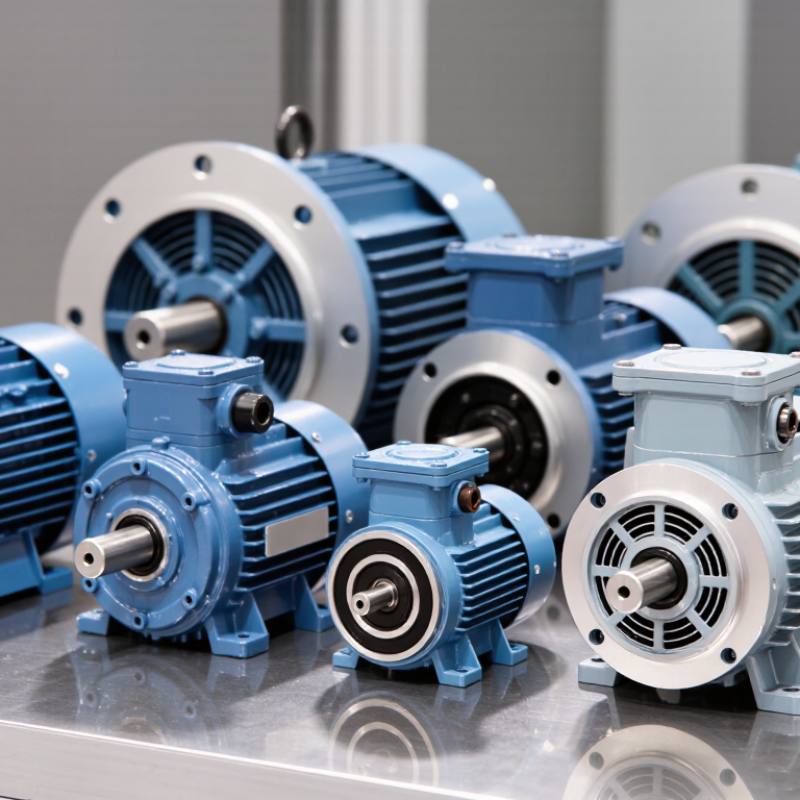
Cast iron motors suit demanding plants because their frames resist vibration, impact, and repeated thermal cycling. In my field experience, the right enclosure matters more than appearance. General-purpose TEFC motors handle conveyors, fans, and pumps in ordinary indoor areas. Severe-duty TEFC motors add stronger seals and coatings for dust, moisture, and outdoor exposure. Washdown-duty motors withstand frequent cleaning, although poorly aimed water can still damage bearings.

Industrial buyers should also compare inverter-duty motors, high-efficiency motors, vertical hollow-shaft motors, and brake motors. Inverter-duty designs manage variable-frequency drive operation and reduce insulation stress. High-efficiency models lower energy use during long production shifts. Vertical hollow-shaft motors fit many vertical pumps, where alignment must be checked carefully. Brake motors stop rotating equipment quickly, which helps with lifting and indexing applications. Each type solves a different problem.

Check horsepower, voltage, frequency, service factor, ambient temperature, and mounting dimensions before ordering. A larger frame is not automatically better. I have seen buyers overlook shaft height, then modify a base unnecessarily. Measure the coupling and shaft extension on site. Also verify enclosure ratings, bearing arrangements, and duty cycle with the motor supplier. Cast iron can protect the housing, but it cannot correct poor alignment, undersized cables, or inadequate ventilation. That part is often underestimated.

7 Best Cast Iron Motors for Industrial Buyers? - Seven Leading Cast Iron Motor Types for Industrial Buyers

Motor Type Typical Industrial Applications Common Power Range Typical Enclosure / Protection Key Operating Features Common Standards or Ratings Best Buying Consideration
General-Purpose Cast Iron TEFC Motor Fans, pumps, compressors, conveyors, machine tools and general material-handling equipment Approximately 0.75–375 kW Totally Enclosed Fan Cooled (TEFC); commonly IP55 or higher Rugged cast iron frame, external cooling fan, enclosed construction and suitability for continuous-duty service IEC 60034; commonly IE3 or IE4 efficiency classes; S1 continuous duty A practical default when the environment is industrial but does not require special washdown, hazardous-area or vertical-pump features
Severe-Duty Cast Iron TEFC Motor Mining equipment, aggregate plants, steel processing, outdoor conveyors and heavy process machinery Approximately 5.5–375 kW TEFC; typically IP55–IP66, depending on design and application Reinforced frame, improved bearing protection, sealed conduit openings and enhanced resistance to dust, vibration and moisture IEC 60034; often S1 duty; may include higher service factors and elevated ambient-temperature capability Check vibration limits, bearing arrangement, corrosion protection, ambient temperature and enclosure rating rather than relying only on the power rating
Hazardous-Area Cast Iron Motor Petrochemical plants, refineries, gas-processing facilities, solvent-handling areas and classified process zones Approximately 0.75–300 kW Certified explosion-protection enclosure; protection method depends on the hazardous-area classification Designed to limit ignition risk from internal arcs, sparks or hot surfaces; robust construction for continuous industrial duty IEC 60079; ATEX or IECEx certification where applicable; temperature class and gas or dust group must match the site Confirm zone, equipment protection level, gas or dust group, temperature class and local certification before purchase
Washdown Cast Iron Motor Food and beverage processing, chemical plants, packaging lines and equipment exposed to regular cleaning Approximately 0.75–90 kW Usually IP66 or IP67; may include a hygienic finish and stainless-steel hardware Improved gasket sealing, protected shaft seal, drain provisions and resistance to water, detergents and process contaminants IEC 60034; IP rating defined by IEC 60529; hygienic requirements depend on the plant and cleaning procedure Match the motor to water pressure, cleaning chemicals, washdown temperature, drain orientation and corrosion exposure
Cast Iron Brake Motor Hoists, cranes, conveyors, machine tools, elevators, indexing systems and equipment requiring controlled stopping Approximately 0.37–90 kW Commonly TEFC with an electrically released spring-applied brake Provides holding torque when power is removed; braking torque and stopping time depend on load, inertia and brake adjustment IEC 60034; brake performance and control requirements vary by equipment and regional safety regulations Select brake torque, duty frequency, stopping time, release voltage, manual release option and thermal capacity
Vertical Hollow-Shaft Cast Iron Motor Deep-well turbine pumps, municipal water systems, irrigation stations and vertical pumping installations Approximately 5.5–500 kW Vertical TEFC design; enclosure commonly IP55 or higher Hollow shaft permits pump-head adjustment; thrust bearings support the axial load generated by the pumping assembly IEC 60034; thrust and non-thrust ratings must be verified for the specific pump arrangement Verify thrust capacity, shaft dimensions, mounting arrangement, starting method and compatibility with the pump head
Inverter-Duty Cast Iron Motor Variable-speed pumps, fans, conveyors, extruders, mixers and automated production equipment Approximately 0.75–375 kW TEFC; commonly IP55 or higher, with insulation and bearing options for drive operation Designed for variable-frequency-drive operation, improved winding insulation and better control across a defined speed range IEC 60034; drive compatibility should address voltage spikes, minimum speed cooling and bearing-current protection Review the drive carrier frequency, speed range, load profile, cable length, shaft-grounding requirements and cooling performance

Note: Power ranges and protection levels are typical industry values for cast iron industrial motors. Actual specifications vary by frame size, pole count, voltage, frequency, duty cycle, certification and operating environment.

How to Compare Power, Efficiency, and Operating Performance

7 Best Cast Iron Motors for Industrial Buyers?

Choosing among the seven best cast iron motors requires more than comparing horsepower. Match rated power to the driven load, not the largest available frame. Oversizing can increase purchase cost, starting current, and energy waste. Check voltage, frequency, full-load amps, power factor, and efficiency at the expected load. A motor rated for continuous duty is usually safer for pumps, fans, compressors, and conveyors.

Efficiency figures need careful reading. Compare efficiency at 50%, 75%, and 100% load when data is available. A motor may look excellent at full load but perform poorly during long periods of partial loading.

Cast iron housings handle heat and vibration well, yet alignment remains critical. Measure shaft vibration after installation, inspect bearing temperature, and record current on each phase. Field conditions can challenge the specification sheet. Dust, high ambient heat, frequent starts, and voltage imbalance may reduce operating life.

Tips: Leave practical space for cooling. Confirm the service factor, but do not use it as normal capacity. Review the duty cycle before selecting power. Listen for unusual bearing noise. Recheck energy results after several weeks. A spreadsheet can mislead; real load measurements often change the decision. Minor installation errors can erase expected efficiency gains.

Selecting the Right Motor for Different Industrial Environments

7 Best Cast Iron Motors for Industrial Buyers?

Selecting the right cast iron motor starts with the environment, not the horsepower. In dusty workshops, choose a totally enclosed fan-cooled motor with an appropriate IP rating. Dust can enter through small gaps. It can also trap heat around the frame. For outdoor conveyors, check rain protection, ultraviolet exposure, and corrosion-resistant coatings. A weatherproof enclosure matters.

Wet processing areas need careful judgment. Cast iron handles impact well, but untreated surfaces may rust during repeated washdowns. Select sealed bearings, suitable shaft protection, and a verified washdown design. For high-temperature rooms, compare insulation class, ambient temperature, and service factor. In cold storage, confirm starting performance and lubricant suitability. Small details matter.

For crushers and pumps, prioritize vibration tolerance, bearing life, and continuous-duty ratings. Variable-frequency drives require compatible insulation and correct cable practices. In hazardous locations, use only motors certified for the specific classified area. A standard enclosed motor is not automatically safe there. That mistake is costly.

Seven practical choices emerge: dusty-duty, outdoor-duty, washdown-duty, high-temperature, cold-storage, heavy-vibration, and variable-speed cast iron motors. The “best” motor changes with the load and location. Bigger is not always better. I have seen oversized motors waste energy and operate poorly at light loads. Verify voltage, frequency, starting torque, mounting dimensions, and local electrical requirements before ordering. Manufacturers’ data should be checked against measured site conditions, because catalog assumptions rarely match every plant.

Installation, Maintenance, and Lifecycle Cost Considerations

When evaluating seven cast iron motors for industrial duty, installation details deserve early attention. A heavy frame reduces vibration, but it cannot correct a poor foundation. Level the base carefully. Use calibrated shims beneath each mounting foot. Check shaft alignment after tightening every bolt. Even a small angular error can heat couplings and damage bearings.

Experienced maintenance teams also verify grounding, cable glands, and insulation resistance before energizing the motor. Record baseline vibration, winding temperature, and current under normal load. These readings make later troubleshooting more reliable. Keep cooling passages clear, especially in dusty production areas. Grease intervals should follow load, speed, and operating temperature, not guesswork. Over-lubrication can be as harmful as neglect.

Lifecycle cost involves more than purchase price. Cast iron motors often tolerate harsh environments, but their weight increases handling time and lifting requirements. Budget for alignment tools, replacement bearings, seals, spare fans, and technician access. A five-minute inspection can prevent an unplanned shutdown. My earlier cost estimates focused too heavily on energy use. That was incomplete. Downtime, crane access, and delayed spare parts changed the calculation. Review those assumptions annually. Also question the maintenance schedule when vibration stays stable; fixed intervals may waste grease and labor. Reliability improves when records guide decisions, although records are often inconsistent. Keep them simple enough for every shift to update.