What Are the Best China Frequency Converter Manufacturers?
Choosing the best China Frequency Converter manufacturers requires more than comparing prices, power ratings, or factory photographs. A reliable supplier must demonstrate engineering depth, tested performance, stable component sourcing, and responsive after-sales support. These details matter on a factory floor, where a converter may control pumps, compressors, fans, or conveyors for thousands of hours each year.
The International Energy Agency reports that electric motor systems consume a substantial share of global electricity, often estimated at around 45% in industrial applications. Its energy-efficiency research also highlights motor control as a major opportunity for reducing unnecessary consumption. The U.S. Department of Energy similarly explains that variable-speed control can reduce energy use in applications with changing loads. Market reports support this direction. MarketsandMarkets has projected continued growth in the global variable-frequency-drive market, driven by industrial automation, infrastructure upgrades, and energy-saving requirements. Estimates vary, however. Definitions and regional coverage are not always consistent.
Dr. Peter Waide, a respected motor-systems efficiency specialist, has emphasized that “the motor is only one part of the system.” That principle should guide any manufacturer comparison. A high-quality Frequency Converter must match the motor, load profile, protection requirements, harmonic limits, and operating environment. It should also provide clear manuals, traceable testing, and practical commissioning support. No ranking is perfect. Some manufacturers publish impressive laboratory figures but offer limited field evidence. Others have strong factories but weak local service networks. This outline examines China’s leading manufacturers through measurable criteria, including product reliability, certifications, customization capability, delivery experience, and total operating cost.
What Is a China Frequency Converter Manufacturer?
A China frequency converter manufacturer is a company based in China that designs, produces, and tests equipment for controlling motor speed. A frequency converter changes fixed AC power into adjustable voltage and frequency. This allows a pump, fan, conveyor, or compressor to start smoothly and run at a controlled speed.
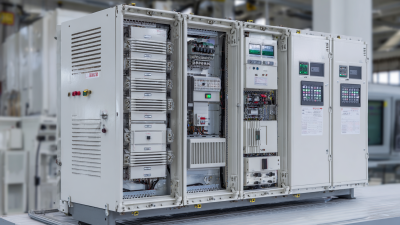
A genuine manufacturer normally has engineering teams, production lines, testing equipment, and technical documentation. Its work may include circuit design, heat management, enclosure assembly, software tuning, and load testing. In a factory inspection, look for test benches, finished control cabinets, serial records, and engineers who can explain protection settings clearly. Ask how the converter performs under high temperature, unstable voltage, dust, and frequent starts. These details matter more than polished product photographs.
The best manufacturers are not always the largest. A capable supplier should match power ratings, overload capacity, communication needs, and motor type to the actual project. A 22 kW pump may require different settings from a 22 kW crusher. Check efficiency data, EMC test evidence, warranty terms, spare-part access, and response time. Be cautious with catalog claims. Real performance can change with altitude, cooling conditions, and installation quality. I have found that clear manuals often reveal more than impressive promises. Some suppliers also need improvement, especially in software translation and after-sales consistency. That weakness deserves honest evaluation.
How to Evaluate Frequency Converter Manufacturers in China
What Are the Best China Frequency Converter Manufacturers?
Evaluating frequency converter manufacturers in China requires more than comparing catalog prices. During a site evaluation, inspect the assembly area, burn-in stations, and final testing records. A reliable manufacturer should explain how each unit handles overload, heat, voltage fluctuation, and motor acceleration. Ask for test reports linked to specific serial numbers. General certificates are useful, but they cannot replace product-level evidence.
Review the engineering team’s practical experience with pumps, conveyors, compressors, and other industrial loads. Request wiring diagrams, parameter guides, fault-code lists, and firmware revision records. Clear documents reveal technical maturity. Check whether the manufacturer can provide harmonic guidance, enclosure options, and communication support for your control system. A low price may hide weak components or limited customization.
After-sales support deserves equal attention. Test the response time with a detailed technical question before placing an order. Ask about spare parts, remote diagnosis, repair procedures, and training for local technicians. Visit a reference installation when possible. A polished factory tour proves little. I have seen impressive samples perform poorly when ventilation was ignored. Even experienced buyers can miss this point. Require a pilot batch, defined acceptance tests, and written warranty terms. Judge the manufacturer by evidence, not confident promises.
Which China Frequency Converter Manufacturers Lead the Market?
China’s leading frequency converter manufacturers are not defined by factory size alone. They lead through stable control, efficient production, and verified field performance. Industry reports from Fortune Business Insights estimate the global variable frequency drive market exceeded USD 20 billion in 2023. China remains a major production and consumption center, supported by manufacturing, infrastructure, and renewable energy investment.
The strongest Chinese manufacturers usually serve demanding industrial applications. Their products support pumps, conveyors, compressors, elevators, and machine tools. Look for ISO 9001 systems, EMC testing, thermal protection, and compliance with IEC standards. Independent test records matter more than impressive brochures. It should start quickly.
According to the International Energy Agency, electric motor systems consume nearly half of global electricity, while efficiency improvements can reduce substantial industrial energy use. This creates strong demand for Chinese suppliers offering low-harmonic designs, sensorless vector control, and remote diagnostics. Export-oriented manufacturers often provide wider voltage ranges and multilingual technical documents. However, some suppliers still overstate efficiency figures under ideal laboratory conditions. Buyers should request load-test data, failure rates, warranty terms, and local service response times before choosing a partner. Market leadership is therefore shared by large automation groups, specialized drive producers, and technically focused OEM factories with reliable after-sales support.
What Products and Industries Do These Manufacturers Serve?
China’s frequency converter manufacturers serve many applications, from simple pump control to complex factory automation. Their product ranges often include low-voltage variable frequency drives, medium-voltage converters, servo drives, soft starters, and regenerative units. Some manufacturers also develop cabinet systems, braking modules, remote monitoring tools, and customized control panels.
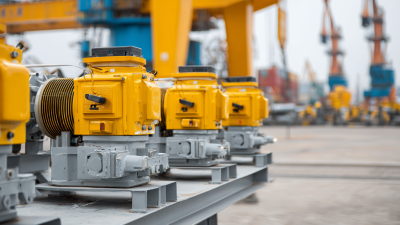
The details matter. A water treatment plant may need stable speed control for pumps, while a textile factory requires precise torque and smooth acceleration. Construction sites often use converters for cranes, hoists, and ventilation equipment. Mining operations demand reinforced enclosures, dust protection, and reliable cooling. Renewable energy projects may use grid-connected converters, energy storage interfaces, or motor drives for tracking systems. HVAC suppliers typically seek compact drives with clear fault records and easy parameter settings.
Practical evaluation should include factory testing, load simulation, thermal checks, and inspection of wiring quality. Ask for efficiency data, overload capacity, protection ratings, service manuals, and documented compliance with relevant standards. Communication protocols also matter when the converter must connect with PLCs or building systems. A low purchase price can hide weak after-sales support or difficult commissioning. That risk is real.
Not every catalog claim survives field use. A smaller supplier may offer excellent customization but limited spare parts. An established manufacturer may provide stronger documentation, yet respond slowly to unusual requests. Buyers should compare tested performance, application experience, training, and long-term support rather than products alone.
What Are the Best China Frequency Converter Manufacturers?
Products and industries commonly served by frequency-converter manufacturers
Low-Voltage VFDs
Typically used for pumps, fans, conveyors, compressors, HVAC systems, machine tools and general industrial automation.
Medium-Voltage Drives
Common in mining, cement, metals, water treatment, oil and gas, power generation and large-process industries.
Servo and Regenerative Drives
Designed for robotics, packaging, textile machinery, elevators, cranes, winding systems and applications requiring precise motion or energy recovery.
The chart shows representative rated-power ranges commonly associated with each frequency-converter product class. Actual voltage, power and overload limits vary by product design, motor type, duty cycle and industry requirements.
How to Choose the Right China Frequency Converter Supplier?
Choosing the right China frequency converter supplier requires more than comparing online prices. Start by checking whether the manufacturer understands your application, not just the product specifications. A converter for a water pump may need different control performance than one used in a conveyor system. Share your motor power, voltage, load pattern, operating temperature, and required protection level. A capable supplier should ask practical questions before sending a quotation.
Request clear technical documents, including efficiency data, overload capacity, wiring diagrams, communication protocols, and installation instructions. Ask for test records from an actual production unit. Factory experience matters here. A supplier with proper testing equipment can verify temperature rise, output stability, and fault protection before shipment. You may also arrange a video factory inspection or an independent audit. Photos alone are not enough.
Check the service process carefully. Can engineers respond during commissioning? Are spare parts available? Is the warranty written in plain language? Confirm delivery terms, packaging quality, payment stages, and how software updates are handled. A small sample order can reveal response speed and documentation quality. It may also expose weaknesses that a polished sales call hides. I would not choose the cheapest offer automatically. A low price can become expensive after repeated troubleshooting, especially when the supplier lacks local support. Communication can fail too, even with technically strong teams. Use simple drawings, confirmed specifications, and written change records to reduce that risk.