
WELCOME TO ZHEJING ZHUHONG!
e945ab7861e8d49f342bceaa6cc1d4b

Top Rv Gearbox Types You Need to Know About?

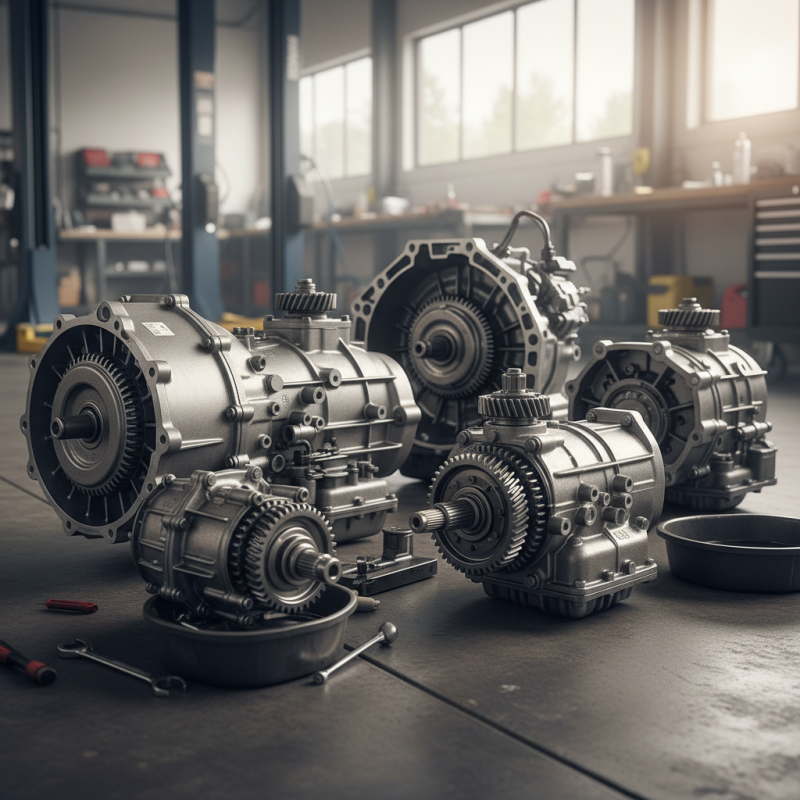
When exploring the world of RVs, understanding the different RV gearbox types is crucial. An RV gearbox plays a vital role in the overall performance of your vehicle. These gearboxes help manage power transfer from the engine to the wheels. They ensure smooth operation and reliable control, especially during challenging conditions.

Choosing the right RV gearbox can impact your driving experience. Some gearboxes enhance fuel efficiency, while others focus on power delivery. The performance of your RV largely depends on selecting the appropriate type. You might feel overwhelmed with the options available. It's essential to narrow down your choices based on your driving style and needs.

Also, considering the wear and tear on your RV gearbox is important. Regular maintenance can help extend its lifespan. There may be times when your gearbox needs more than just basic care. Being proactive about this can save you from costly repairs. Understanding the complexities of RV gearboxes is part of being a responsible RV owner.
Top Rv Gearbox Types You Need to Know About?

Understanding RV Gearbox Basics: Key Components and Functionality

Understanding RV gearboxes is essential for any RV owner. These devices convert engine power into motion for your vehicle. Key components include the input shaft, gear sets, and output shaft. The input shaft connects to the engine. It transfers power into the gearbox. The gear sets then modify this power, allowing for different speed and torque outputs. Finally, the output shaft delivers the adjusted power to the wheels.

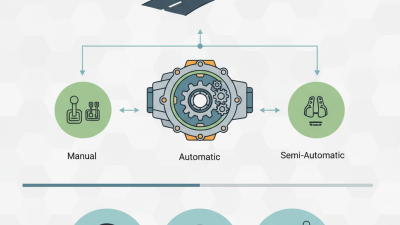
Different gearbox types exist to accommodate various needs. Manual gearboxes offer more control, while automatic options provide convenience. Each type has unique strengths. For example, a manual gearbox may give better engine braking. However, this can be a challenge for new drivers. Automatic gearboxes simplify the driving process but may lack certain performance advantages.

Understanding these basics can aid in maintenance and repairs. A well-maintained gearbox ensures safety and efficiency in travel. Misalignments or fluid leaks can lead to serious issues. Regular checks can prevent costly repairs down the line. Although they might require a little upkeep, grasping these concepts enhances your RV experience.
Types of RV Gearboxes: An Overview of Common Variants and Their Uses

Top Rv Gearbox Types You Need to Know About?

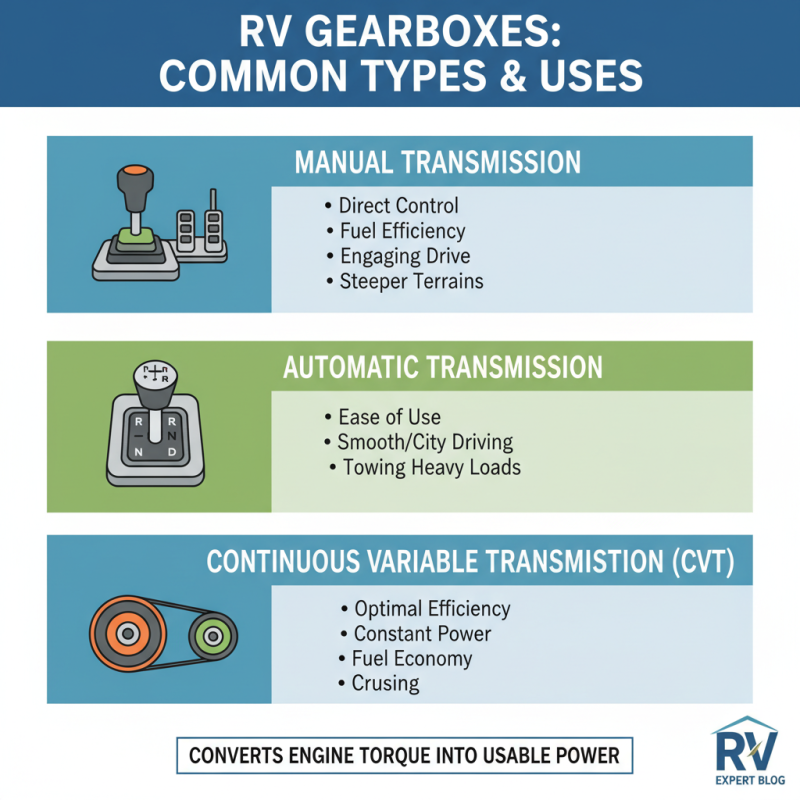
When it comes to RV gearboxes, understanding the different types can aid in optimizing performance. Gearboxes serve essential functions in converting engine torque into usable power. The most common types include manual, automatic, and continuous variable transmissions. Each type offers unique advantages based on driving conditions and personal preferences.

Manual gearboxes provide drivers with greater control over power delivery. This type often appeals to those who enjoy a hands-on driving experience. In contrast, automatic gearboxes simplify the driving process, making them ideal for beginners. They swiftly adjust gear ratios, enhancing comfort on long journeys. Continuous variable transmissions (CVTs) offer a smooth driving experience by seamlessly transitioning through gear ratios, ideal for both city and highway travels.

Despite their advantages, each gearbox type has its drawbacks. Manual transmissions can lead to fatigue in heavy traffic. Automatic gearboxes may falter under extreme conditions, requiring different maintenance. Meanwhile, CVTs might not be suitable for performance-oriented driving styles. Understanding these nuances helps RV owners choose the right gearbox for their travels. Reflecting on these options is crucial for enhancing your RV experience.

Performance Metrics: Evaluating Gearbox Efficiency and Durability Standards

When evaluating gearbox efficiency, several performance metrics come into play. Efficiency often hinges on gear design, material quality, and load capacity. A lightweight yet durable casing can enhance performance, leading to better overall efficiency. Durability standards often focus on material resistance to wear and tear, ensuring a longer service life.

Tips: Always consider the environment where the gearbox will be used. Extreme temperatures or moisture can drastically affect performance. Ensure that your chosen gearbox can withstand these conditions.

Another important metric is backlash, which refers to the play between gears. Excessive backlash can lead to reduced efficiency and increased wear. Gearbox alignment also plays a crucial role—misalignment can cause unnecessary strain and accelerate component failure.

Tips: Regular maintenance checks can help spot misalignment early. Use quality lubricants to reduce friction and heat buildup, further enhancing durability. Remember, every gearbox has a limit, pushing beyond it can lead to failure.

Top RV Gearbox Types Performance Metrics

Installation Insights: Best Practices for RV Gearbox Maintenance

Top Rv Gearbox Types You Need to Know About?

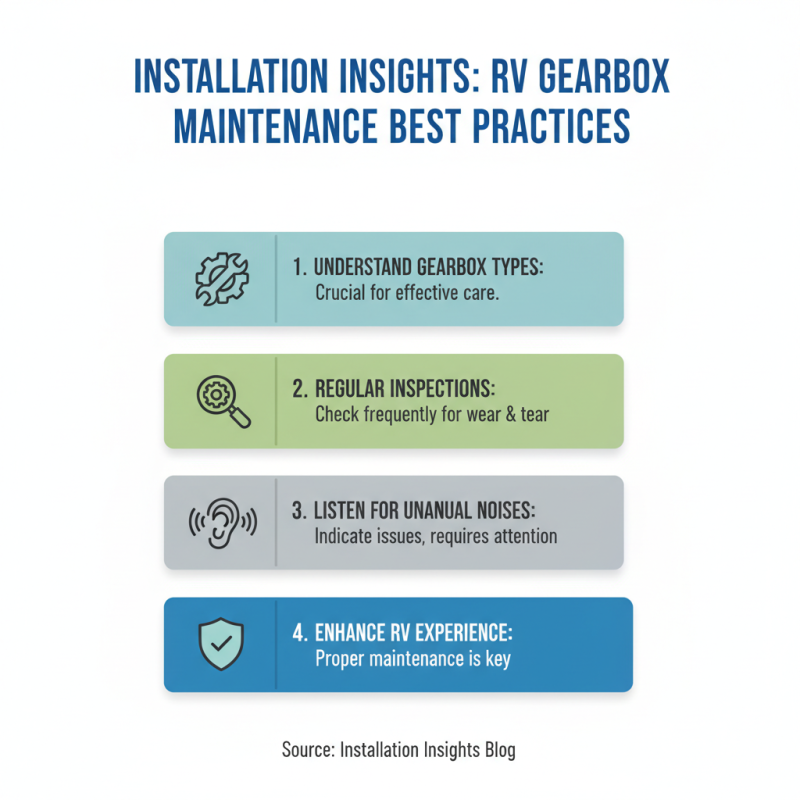
Proper RV gearbox maintenance can significantly enhance your RV experience. Understanding various gearbox types is crucial for effective care. Regular inspections are key. Check for signs of wear and tear frequently. Pay attention to unusual noises when driving. These can indicate underlying issues that need immediate attention.

Tips: Lubricate moving parts regularly. This can prevent friction-related damage. Use quality lubricants that suit your specific gearbox type.

Always keep the gearbox clean. Dirt and debris can lead to severe wear over time. A clean environment extends the lifespan of your gearbox components. Additionally, monitor fluid levels. Low fluid can result in overheating, potentially damaging the gearbox.

Tips: Document all maintenance work. This creates a reliable history for your RV and helps in future troubleshooting. If you're unsure about specific maintenance tasks, consult a professional. Seeking expert advice can prevent potential problems and save cost in the long run.

Future Trends: Innovations in RV Gearbox Technology and Design

The RV industry is witnessing exciting innovations in gearbox technology and design. Manufacturers are focusing on enhancing efficiency and performance. New automatic transmission systems are being developed to ensure smoother gear shifts. These advancements help improve fuel economy and reduce engine strain.

Electric and hybrid RVs are also influencing gearbox designs. Engineers are exploring ways to integrate electric motors with traditional gear systems. This fusion offers better torque management and can extend the vehicle's range. However, challenges remain. Balancing power output with weight and size is essential for optimal performance.

Furthermore, smart gearboxes are on the horizon. These systems will incorporate sensors to adjust performance based on driving conditions. Real-time data analysis will enhance driving experiences. However, reliability is a concern. Technology must be tested rigorously to avoid failures on the road. As the industry evolves, staying aware of these trends is crucial for both manufacturers and enthusiasts.