2026 Top Electrical Fan Motor Types and Their Benefits?
As we approach 2026, the electrical fan motor industry is evolving rapidly. Recent reports indicate that this sector will reach a market value of over $10 billion by 2025, driven by increasing demand in both residential and commercial applications. Electrical fan motors are vital for various appliances, ensuring efficient airflow and cooling in homes and workplaces.
Different types of electrical fan motors have emerged, each with distinct advantages. For instance, brushless DC motors offer longer lifespans and energy efficiency. Meanwhile, shaded pole motors are commonly used in low-cost fans. Such options reflect the diversity and specialization within the market. However, despite technological advancements, manufacturers face challenges, such as the need for sustainable production practices and addressing consumer concerns over energy consumption.
Understanding the range of electrical fan motor types and their respective benefits is crucial. It can enhance product performance and cater to specific needs. Yet, the industry must consider factors like reliability and environmental impact. As we delve deeper into these motor types, we recognize the potential for innovation while acknowledging areas for improvement.
Types of Electric Fan Motors Commonly Used in 2026
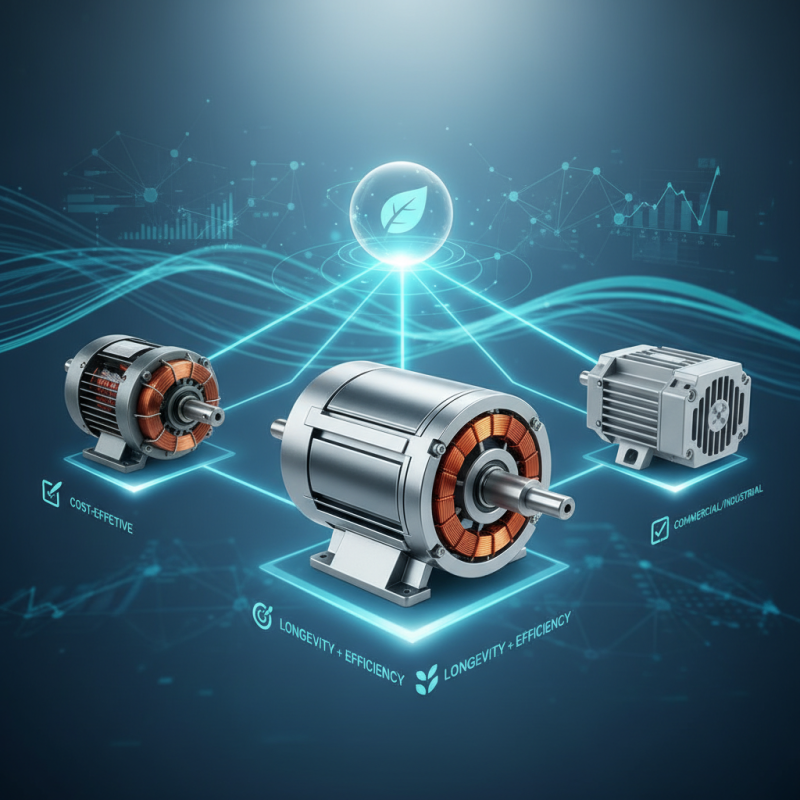
Electric fan motors are essential in various applications. In 2026, several types are widely used. Permanent split capacitor (PSC) motors are among the most common. They offer energy efficiency and easy installation. Their design helps reduce operational noise. Users appreciate these motors for their durability.
Another popular type is the shaded pole motor. It's often found in smaller fans. These motors are simple and cost-effective. However, they can be less efficient. This inefficiency might be a concern for energy-conscious users. Despite this, they are widely adopted.
Brushless DC motors are gaining popularity. They provide higher efficiency and longer lifespan. Their performance is impressive, especially in high-performance fans. However, they can be more expensive upfront. This cost may deter some consumers, leading to mixed feelings about their value. These options reflect the diverse needs of users in 2026.
2026 Top Electrical Fan Motor Types and Their Benefits
| Motor Type |
Benefits |
Common Applications |
| AC Induction Motor |
Durable, cost-effective, and low maintenance |
Ceiling fans, industrial exhaust systems |
| DC Brushless Motor |
High efficiency, quiet operation, longer lifespan |
Residential fans, computer cooling |
| Universal Motor |
Compact size, versatility, high speed |
Handheld fans, portable cooling devices |
| Synchronous Motor |
Constant speed, suitable for precision applications |
Air conditioning units, high-performance fans |
| Stepper Motor |
Precise control, suitable for applications that require positioning |
Smart fans, adjustable airflow systems |
Key Features and Specifications of Top Electric Fan Motors
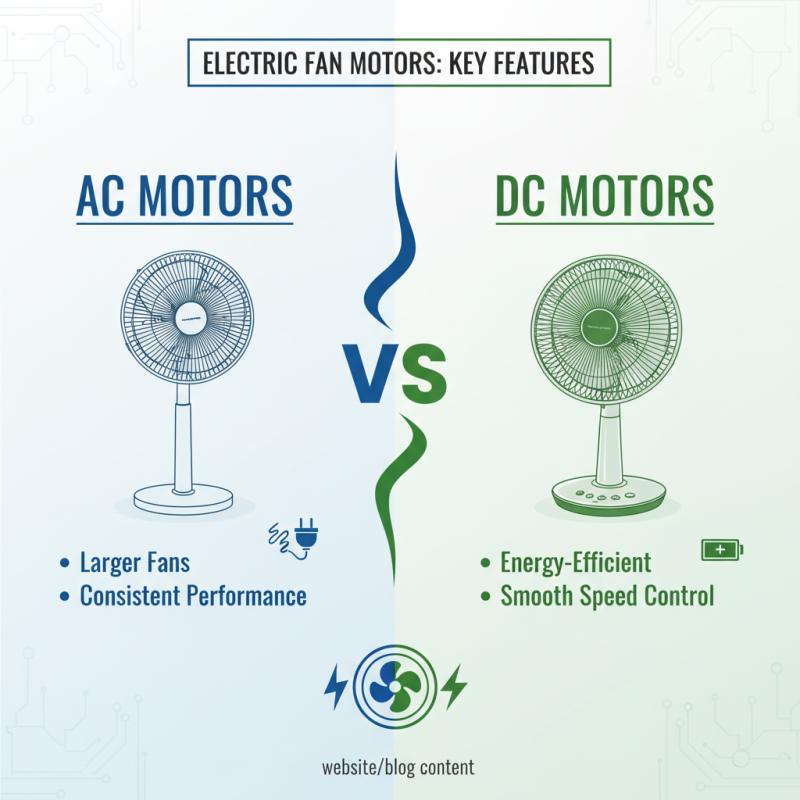
When selecting electric fan motors, understanding their key features is crucial. Many motors run on AC or DC power. AC motors are often used in larger fans. They provide consistent performance over time. DC motors, on the other hand, tend to be more energy-efficient. They can adjust speeds smoothly, offering better control.
In terms of specifications, the wattage of motors varies significantly. Some lower-power motors consume around 30 watts, while larger models may use up to 120 watts. Efficient cooling requires balancing power and efficiency. Noise levels are another critical factor. Many consumers prefer quieter motors, especially for home use. Not all manufacturers prioritize this, leading to variation in user experiences.
Design and durability matter as well. The materials used can impact the lifespan of the motor. Some motors are made with standard metals. Others employ advanced composites, improving resistance to wear. Yet, higher quality often comes at a cost. Consumers should weigh these benefits against their budget. The best choices often involve compromise and careful consideration.
Benefits of Brushless DC Motors for Electric Fans
Brushless DC motors have gained popularity in electric fans due to their numerous benefits. One major advantage is energy efficiency. These motors consume less power while providing effective airflow. They can reduce electricity bills over time. Additionally, they produce less heat, enhancing the overall lifespan of the fan. This feature makes them reliable over prolonged usage.
Noise reduction is another critical benefit. Unlike traditional motors, brushless DC motors operate quietly. This means that users can enjoy a peaceful environment, which is especially important in bedrooms or study areas. However, some users may notice a slight hum in certain settings. It’s a minor issue, but worth mentioning.
Tips: When selecting an electric fan, consider the motor type. Look for brushless options for optimal performance. Check the energy rating for efficiency. Be mindful that all motors can have slight variations in noise levels. Understanding these aspects can lead to better choices. An informed decision can enhance your comfort and satisfaction.
2026 Top Electrical Fan Motor Types and Their Benefits
Comparative Analysis of Induction Motors and Synchronous Motors
In the world of electrical fan motors, induction motors and synchronous motors are two of the most prominent types.
Induction motors are simpler in design, often leading to lower manufacturing costs. They operate on the principle of electromagnetic induction. According to industry reports, they account for nearly 70% of all electric motor sales globally. Their robustness and reliability make them suitable for various applications, including HVAC systems.
Synchronous motors, on the other hand, maintain a constant speed regardless of load variations. This characteristic can enhance energy efficiency, especially in large industrial settings. Data indicates that synchronous motors can achieve efficiency levels above 95%. However, the complexity of their construction and control systems can lead to higher initial costs. This raises questions about their viability for smaller applications.
Both motor types have their advantages and disadvantages. While induction motors are versatile, their performance can dip under high load conditions. Synchronous motors, despite their efficiency, may require additional maintenance due to their intricate designs. Deciding between the two involves a balance between cost-effectiveness and performance requirements. Users must evaluate their specific needs carefully.
Future Trends in Electric Fan Motor Technology for Enhanced Efficiency
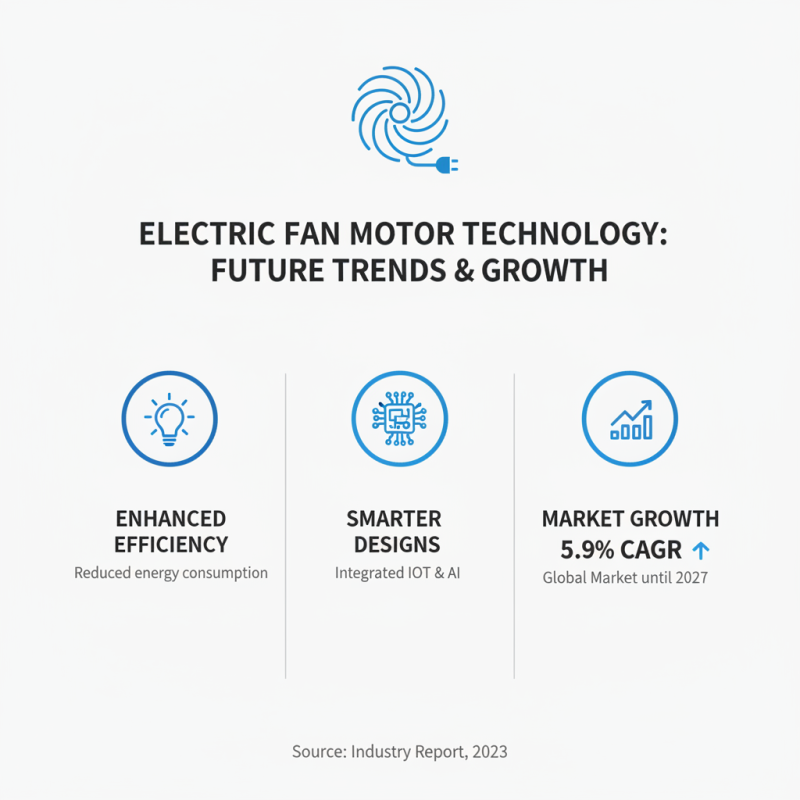
Electric fan motor technology is evolving rapidly. Future trends focus on enhanced efficiency and smarter designs. According to a recent industry report, the global electric fan market is projected to grow by 5.9% annually until 2027. This growth reflects increased demand for energy-efficient solutions.
One key trend involves the shift to brushless DC motors. These motors use advanced electronics. They achieve efficiency levels above 90%, significantly reducing energy consumption. A notable benefit is lower heat generation, which prolongs motor lifespan. Additionally, smart technologies are being integrated into fan motors. IoT-enabled fans can adapt to environmental changes, optimizing performance.
Tips: When selecting a fan, consider energy ratings. A higher rating often means savings on electricity bills. Also, evaluate noise levels. Quieter motors enhance comfort, especially in bedrooms and offices.
Another area of innovation is the use of renewable energy sources. As consumers become more eco-conscious, hybrid models are gaining traction. However, not all designs are perfect yet. Some hybrid fans still rely on traditional power sources, impacting overall sustainability. Therefore, businesses must continue researching and refining their approaches to achieve true energy independence.
Investments in research and development are crucial for the future. The industry must address these gaps. It’s our collective responsibility to demand better solutions. Embracing these trends will not only improve efficiency but also shape a greener future.