Why Choose a Single Phase AC Motor? Benefits and Applications Explained
In the world of electrical engineering and motor technology, the "Single Phase AC Motor" stands out as a pivotal component for various applications, particularly in residential and light commercial settings. Renowned expert in electrical motor systems, Dr. Jane Thompson, emphasizes the importance of these motors, stating, "Single phase AC motors are the backbone of countless household appliances, providing reliable performance where three-phase power isn't available." This assertion highlights not only the commonplace nature of single phase motors but also their critical role in efficient operation.
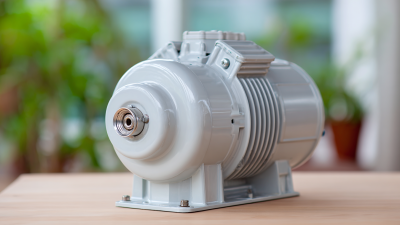
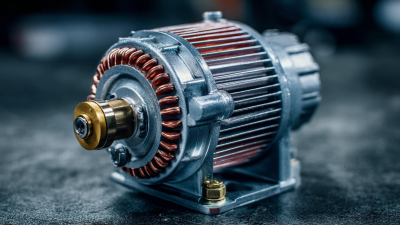
Single phase AC motors are distinguished by their simple design and operational versatility, making them an ideal choice for many users. From powering fans and pumps to operating small machinery, these motors serve a wide array of purposes, showcasing their adaptability in different environments. Their benefits extend beyond just functionality; they also offer cost-effectiveness and ease of installation, which further enhances their appeal to both homeowners and small businesses alike.
As we delve deeper into the benefits and applications of single phase AC motors, it becomes evident that their ubiquitous presence in our daily lives is not merely due to chance, but rather a result of their engineering excellence and user-friendly attributes. Understanding why these motors are so widely chosen reveals critical insights into their efficiency and reliability, ultimately making them a staple in the realm of electric motors.

Benefits of Single Phase AC Motors in Residential Applications
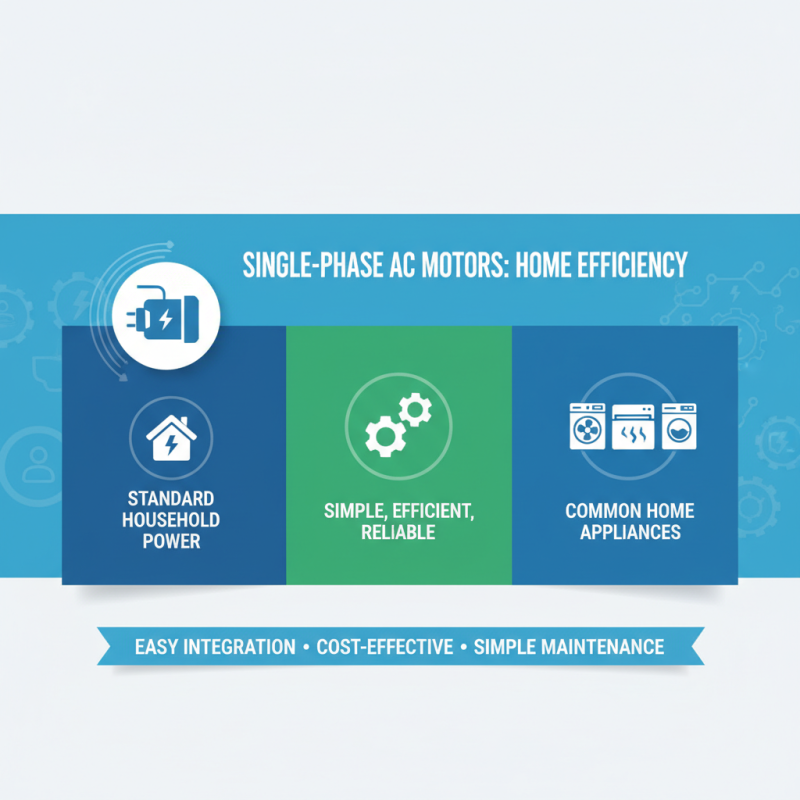
Single phase AC motors are widely utilized in residential applications for their simplicity and efficiency. One of the key benefits of these motors is their ability to operate on standard household electrical supply, making them particularly suitable for small appliances and equipment. This means homeowners can easily integrate these motors into many everyday devices, like fans, washing machines, and air conditioners, without the need for complex wiring or specialized electrical circuits. As a result, they are not only cost-effective but also straightforward to install and maintain.
Another advantage of single phase AC motors is their relatively low noise output compared to other types of motors. This makes them perfect for environments where noise reduction is essential, such as in homes where peace and tranquility are valued. Moreover, these motors are generally smaller and lighter than their three-phase counterparts, making them ideal for use in applications where space is limited. Their effectiveness in providing smooth operation at lower speeds allows for great adaptability in various household tasks, optimizing energy consumption while ensuring reliable performance.
Efficiency Ratings: Comparing Single Phase AC Motors to Three Phase Motors
When it comes to efficiency ratings,
single phase AC motors and three phase motors represent two distinct categories,
each with its own set of advantages and applications.
Single phase AC motors are typically used in residential and light commercial settings,
offering simplicity and ease of installation. They operate effectively at lower power levels,
making them ideal for applications such as fans, pumps, and small machinery in household contexts.
While single phase motors may not achieve the high efficiency ratings seen in their three phase counterparts,
they are still capable of delivering satisfactory performance for many common tasks.
In contrast,
three phase motors provide higher efficiency ratings due to their ability
to maintain a constant torque and deliver better overall performance in industrial settings.
They are particularly suited for heavy-duty applications such as conveyor systems, large pumps,
and industrial machinery. The efficiency of three phase motors stems from their design,
which effectively utilizes power more uniformly compared to single phase motors.
This leads to lower energy costs over time,
making them a preferred option for large-scale operations. However,
the complexity and cost of installing three phase systems often limit their use to environments
that require such performance, leaving single phase motors as an accessible and efficient choice
for lighter, everyday applications.
Common Applications of Single Phase AC Motors in Household Appliances
Single-phase AC motors are widely utilized in household appliances due to their efficiency and simplicity. These motors are suitable for powering devices that require moderate power levels, making them ideal for everyday use. In applications such as fans, refrigerators, air conditioners, and washing machines, single-phase motors deliver reliable performance. Their design allows for easy installation and maintenance, which is a significant advantage for homeowners.
When considering the use of a single-phase AC motor, it's crucial to understand your specific needs. For lighter applications, these motors are often preferable over their three-phase counterparts because of their lower initial cost and adequate performance in less demanding environments.
Tip: Ensure that the selected motor matches the power requirements and operational demands of the appliance. Oversizing a motor can lead to inefficiencies and increased energy consumption, so assess the load requirements carefully.
Common household applications also include small power tools and garden equipment. Single-phase motors enable these devices to start quickly and operate smoothly, providing functionality without the complexity of additional components.
Tip: Regular maintenance and checks can enhance the longevity of single-phase motors, making sure they run efficiently and reducing the chances of unexpected breakdowns.
Cost-Effectiveness of Single Phase AC Motors for Small-Scale Operations
Single-phase AC motors are a popular choice for small-scale operations due to their cost-effectiveness and ease of use. These motors are designed to efficiently convert electrical energy into mechanical energy, making them ideal for applications such as small pumps, fans, and household appliances. With simpler construction compared to their three-phase counterparts, single-phase motors typically have lower initial costs and require minimal maintenance, making them accessible for small businesses and DIY projects.
When considering a single-phase AC motor, it's important to evaluate the specific needs of your application. For example, if your operation doesn’t require high starting torque or continuous heavy-duty use, a single-phase motor can deliver the necessary power at a fraction of the cost. Additionally, they can be easily integrated into existing electrical systems, which simplifies installation and reduces overall project costs.
Tips: When selecting a single-phase motor, check for energy efficiency ratings to ensure long-term savings on your electricity bills. It's also beneficial to assess the load requirements of your application to choose the right size and type of motor. Finally, considering future scalability can help you make a smarter investment, ensuring your motor choice supports potential growth.
Technical Specifications and Performance Metrics of Single Phase AC Motors
Single phase AC motors are widely recognized for their versatility and reliability in various applications, making them an optimal choice for many consumer and commercial uses. The technical specifications of these motors often include characteristics such as voltage ratings, power output, and efficiency levels. Typically, single phase AC motors operate at standard voltages, such as 120V or 240V, which makes them suitable for residential environments. Additionally, their power output often ranges from a fraction of a horsepower to a few horsepower, making them ideal for small appliances, fans, and pumps.
Performance metrics are essential in evaluating the effectiveness of single phase AC motors. Key metrics include starting torque, running efficiency, and thermal performance under different load conditions. Starting torque is particularly important as it determines the motor's ability to start under heavy load. These motors are designed to maintain steady performance while minimizing energy consumption, often boasting efficiency ratings that comply with energy standards.
Moreover, thermal characteristics indicate how well the motor dissipates heat during operation, which is critical for longevity and reliability. With these specifications and performance metrics, single phase AC motors continue to be a preferred choice for various low-power applications.