How to Choose the Right Induction Motor for Your Needs?
Choosing the right induction motor can seem overwhelming. Many factors influence the decision. An induction motor's efficiency and performance can significantly impact your project. Understanding these factors is crucial.
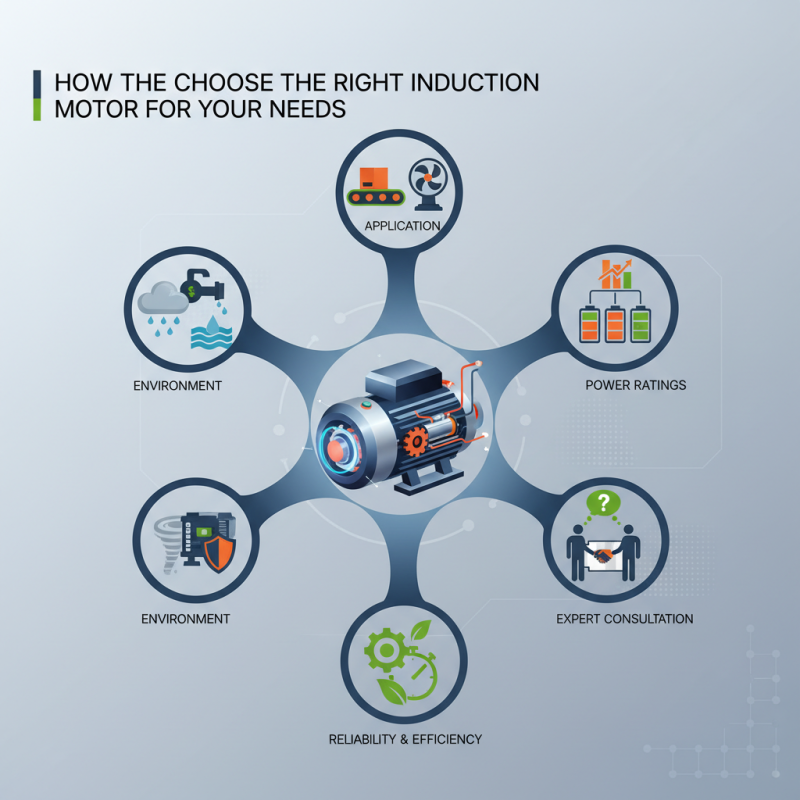
Start with the application. What will the motor power? Whether it's for a conveyor, pump, or fan, each task demands different specs. Consider the environment too. Dusty or wet conditions require specific protections for the motor.
Another essential aspect is power ratings. Motors come in various sizes and voltages. A mismatch can lead to inefficiencies. Consulting with experts can help clarify these needs. Remember, even minor miscalculations can lead to major setbacks. Thus, focus on reliability and efficiency when selecting your induction motor.
Understanding the Basics of Induction Motors
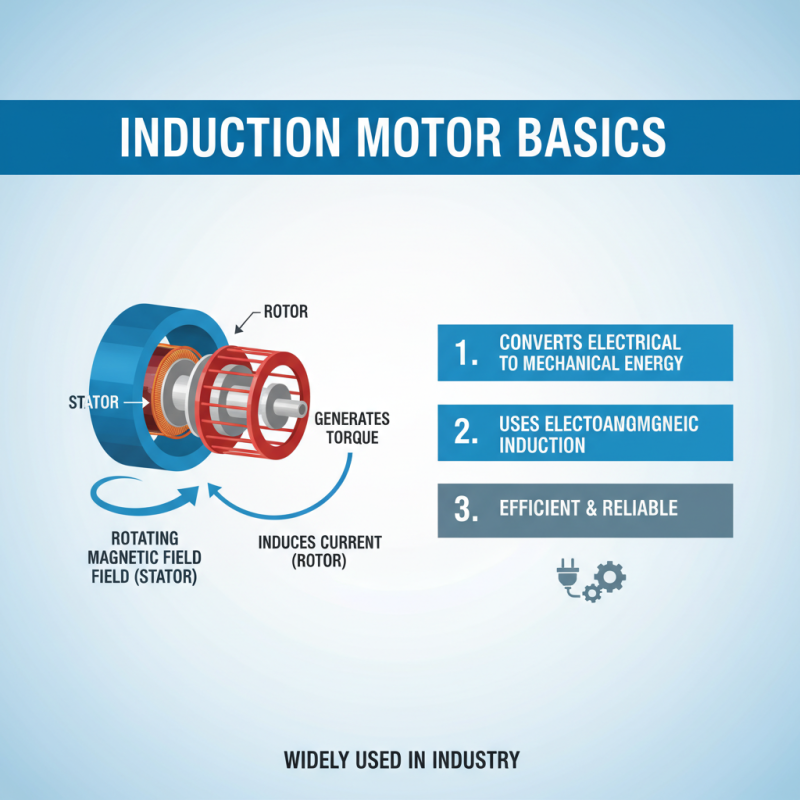
Induction motors are widely used in various applications due to their efficiency and reliability. Understanding their fundamental principles helps in selecting the right type. At their core, induction motors convert electrical energy into mechanical energy through electromagnetic induction. They consist of a stator and a rotor. The stator creates a rotating magnetic field, which induces current in the rotor. This interaction generates torque. It's a simple yet effective design.
When considering an induction motor, several factors come into play. First, evaluate the power requirements for your application. This involves understanding the load and operational conditions. The motor's efficiency rating matters as well. More efficient motors consume less energy, reducing long-term costs. Also, consider the environment where the motor operates. Harsh conditions may require specialized designs to ensure longevity.
Nonetheless, challenges exist when choosing the right motor. Some users may overlook specific application needs. For instance, a motor might excel in one condition but underperform in another. It is crucial to consider all operational specifics. Research may be necessary to gather data on various motor types. Seeking advice from experts can also provide insights into optimal choices. A thoughtful approach ensures better performance and reliability for your project.
Identifying Your Application Requirements and Specifications
Selecting the right induction motor relies heavily on understanding your application requirements and specifications. Different industrial applications demand specific motor characteristics. For instance, an elevator application may require a motor with a high starting torque. Meanwhile, pumps generally benefit from motors designed for variable loads. According to recent industry reports, nearly 50% of motor failures stem from mismatched applications.
**Tip:** Always assess the torque and speed requirements for your machinery. Consult with industry guidelines to ensure motor selection aligns with operational needs.
It’s crucial to consider environmental factors as well. Motors used in harsh conditions, like extreme temperatures or humidity, may need specialized protection. An ASHRAE study highlighted that motors operating in adverse conditions can experience reduced efficiency by up to 30%.
**Tip:** Review your operational environment. Make adjustments to your motor choice based on exposure risks and temperature variations.
By taking into account performance metrics, such as efficiency ratings and load characteristics, you can make a more informed decision. However, keep in mind that overly complex specifications can lead to confusion and misapplication. It’s important to strike a balance between technical details and practical usability.
Induction Motor Selection Criteria
Evaluating Motor Size and Power Ratings
Choosing the right induction motor is critical for optimizing performance in various applications. Evaluating motor size and power ratings is a key step in this process.
Begin by assessing the mechanical load requirements of your application. Understanding torque needs will guide your decision. Some applications may require higher starting torque, while others can function adequately with standard ratings.
Power ratings indicate how much electrical energy the motor consumes and its efficiency. Select a motor that matches the load's power requirements without exceeding them significantly. Oversizing can lead to inefficiency. For precise applications, consider factors like duty cycle and operating environment. Motors may need to operate in harsh conditions, affecting their longevity.
It's essential to consider both the size and the ratings critically. A common mistake is to prioritize just one factor without a holistic view. Reflect on the long-term implications of your choice. Will the motor maintain its efficiency over time? Understanding these details can prevent costly mistakes and enhance performance reliability. Balancing all these aspects may seem daunting, but it's crucial for optimal operation.
Considering Efficiency and Performance Characteristics
When selecting an induction motor, efficiency and performance are crucial. Industry data shows that motors with a high efficiency rating can save up to 20% in energy costs over their lifespan. This is particularly important for applications requiring continuous operation. The efficiency of induction motors is often classified by IE ratings, with IE3 and IE4 being considered high-efficiency levels. Opting for a motor in this category can lead to significant energy savings.
Performance characteristics such as starting torque and speed regulation heavily influence motor choice. Applications with variable loads require motors that maintain consistent performance despite changes in demand. A study by the Electric Power Research Institute highlights that motors with superior torque capabilities reduce downtime during operation. However, highly efficient motors may come with higher initial costs, which can be a drawback for smaller operations.
It is also essential to consider the motor's operational environment. For instance, motors subjected to extreme temperatures may perform below expected efficiency levels. Regular audits of performance can help identify inefficiencies and areas for improvement. Engaging with industry experts can provide insights into selecting the ideal motor tailored to specific needs while ensuring reliability and performance.
How to Choose the Right Induction Motor for Your Needs? - Considering Efficiency and Performance Characteristics
| Parameter |
Low Power Motor (≤1kW) |
Medium Power Motor (1kW - 10kW) |
High Power Motor (>10kW) |
Typical Efficiency Range (%) |
Typical Starting Torque (%) |
Typical Service Factor |
Common Applications |
| NEMA Frame Size |
42/48 |
56/143 |
254/364 |
75 - 85 |
150 - 250 |
1.15 - 1.25 |
Small pumps, fans, compressors |
| Rated Speed (RPM) |
2800 - 3600 |
1400 - 3600 |
900 - 1800 |
80 - 90 |
150 - 300 |
1.0 - 1.25 |
Conveyors, blowers, mixers |
| Efficiency Class |
IE1 (Standard) |
IE2 (High Efficiency) |
IE3 or IE4 (Premium/Ultra Premium) |
85 - 96 |
150 - 350 |
1.0 - 1.4 |
Industrial drives, heavy machinery |
| Power Factor |
0.75 - 0.85 |
0.85 - 0.92 |
0.92 - 0.98 |
-- |
-- |
-- |
General industrial use |
| Typical Starting Current (% of rated) |
600 - 700 |
500 - 650 |
400 - 550 |
-- |
-- |
-- |
Heavy load starting scenarios |
| Service Life (years) |
10 - 15 |
15 - 20 |
20 - 25+ |
-- |
-- |
-- |
Continuous industrial operation |
Assessing Cost, Maintenance, and Reliability Factors
When selecting an induction motor, cost, maintenance, and reliability are crucial factors. Understanding these elements can lead to informed decisions. Detailed industry reports highlight that nearly 30% of operational costs in industrial settings are related to motor maintenance. Thus, investing in motors with lower upkeep needs can save money in the long run.
The total cost of ownership is vital. A study by the U.S. Department of Energy indicates that energy costs account for about 85% of the total lifecycle cost of an electric motor. Choosing an energy-efficient motor can significantly impact overall expenses. However, many users overlook this, focusing solely on upfront purchase prices.
Reliability is also paramount. A reliable motor minimizes unexpected downtimes. Data from the Electric Power Research Institute shows that machinery failure can lead to losses of approximately $260,000 per incident. Investing in quality motors with robust performance ratings could reduce these risks. However, many professionals still wrestle with the balance between performance and initial investments.