How to Choose the Right Low Speed Motor for Your Needs?
Choosing the right Low Speed Motor for your applications is crucial. Various industries rely on these motors for optimal performance. According to a report by the Global Low Speed Motor Market Research Team, the demand for low-speed motors is projected to grow at 5.7% annually. This growth reflects the increasing reliance on efficient and reliable motor solutions.
Experts highlight the significance of matching motor specifications with application needs. "Selecting the appropriate Low Speed Motor can lead to enhanced efficiency and reduced operational costs," says Dr. Alan Foster, a leading authority in motor technology. These insights remind us that not all motors are created equal. The specifics of torque, speed, and load capacity must align with your project requirements.
Keep in mind, while many options exist, finding the perfect motor can be challenging. Buyers can easily overlook important factors such as thermal management and noise level. Therefore, a thorough evaluation is essential. Making a well-informed decision on a Low Speed Motor ensures long-term success in any industrial setting.
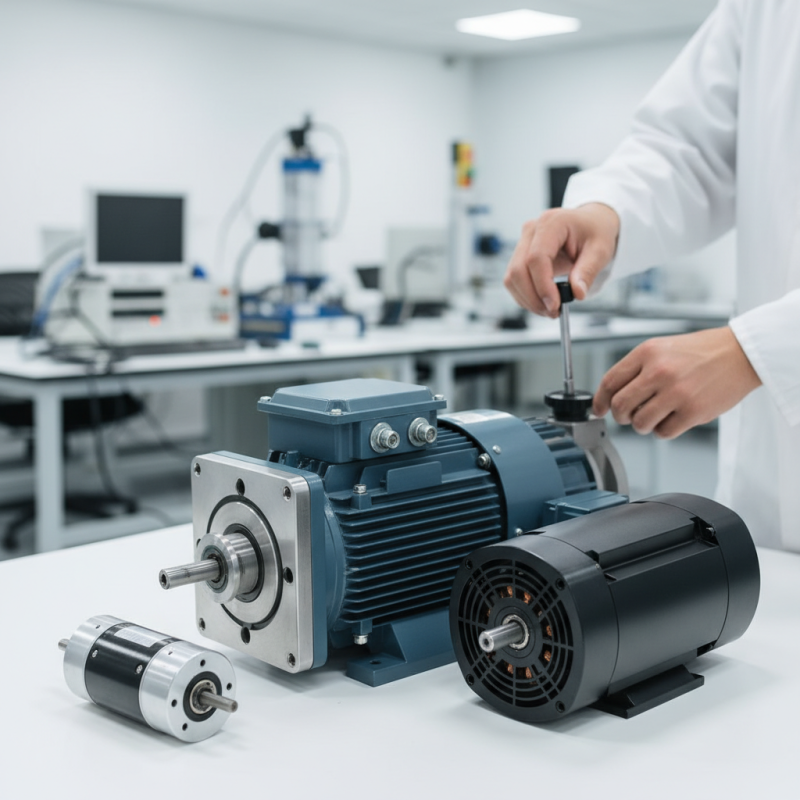
Understanding Low Speed Motors and Their Applications
Low speed motors are essential in various industries, offering unique advantages for specific applications. These motors typically operate at speeds of 100-1000 RPM. Common uses include conveyor systems, mixers, and agricultural machinery. According to a report by the International Energy Agency, low speed motors can achieve efficiency rates up to 90%. This high efficiency translates into lower operational costs and reduced energy consumption.
Selecting the appropriate low speed motor involves understanding the application needs. For example, in material handling, the torque requirements significantly influence the motor choice. A report from the U.S. Department of Energy noted that matching motor performance to load profile improves effectiveness. Inadequate specifications can lead to overloading and premature failure. Users should also consider factors like environmental conditions and maintenance needs.
Technical specifications play a critical role. Think about the voltage, current, and thermal properties. Many users overlook these details, leading to inefficiencies. Interested buyers should regularly review energy audits and performance assessments. Reports show that businesses who invest in these analyses see a 15% increase in overall productivity. Effectively choosing the right low speed motor requires a balance of expertise and careful evaluation of both application requirements and operational contexts.
Key Factors to Consider When Selecting a Low Speed Motor
Choosing the right low-speed motor requires careful consideration of several key factors. Start with the application requirements. Different tasks demand specific torque and speed settings. For example, a conveyor system needs a motor that offers consistent torque at lower speeds. Assessing these needs will guide you in making an informed choice.
Another vital aspect is the environment in which the motor will operate. Motors used in harsh conditions, such as high humidity or temperatures, require specific materials for durability. Look for corrosion-resistant coatings or enclosures. Noise levels can also be an issue; some motors produce more sound than others. Choose accordingly if noise reduction is essential for your space.
Lastly, efficiency should not be overlooked. An energy-efficient motor can lead to significant cost savings over time. While low-speed motors often consume less power, it's crucial to analyze their ratings. Sometimes, opting for a slightly higher-rated motor may provide better longevity. Reflect on these factors to ensure that your motor aligns with your unique operational needs.
Types of Low Speed Motors and Their Characteristics
When selecting a low-speed motor, understanding the different types is essential. Various motors serve specific functions based on torque and speed requirements. The two main categories are brushed and brushless motors. Brushed motors are often simpler, using brushes for operation. However, they require more maintenance and have a shorter lifespan. Brushless motors, while more complex, offer greater efficiency and longevity, with reduced maintenance needs.
Another key type is the stepper motor. This motor divides a full rotation into smaller steps. It provides precise control, which is beneficial in applications like 3D printers. However, they can lose steps under high loads, leading to inaccuracies. Also, the torque drops at higher speeds. Knowing these characteristics helps in making an informed choice.
Gear motors combine a low-speed motor with a gearbox. This transition allows for higher torque at reduced speeds. However, the added complexity can sometimes lead to failure points. It's vital to consider your specific needs versus the motor's design to avoid potential pitfalls. Each motor's unique traits will dictate its suitability for your task. Identifying the right motor can significantly impact overall effectiveness.
Analyzing Performance Specifications for Your Needs
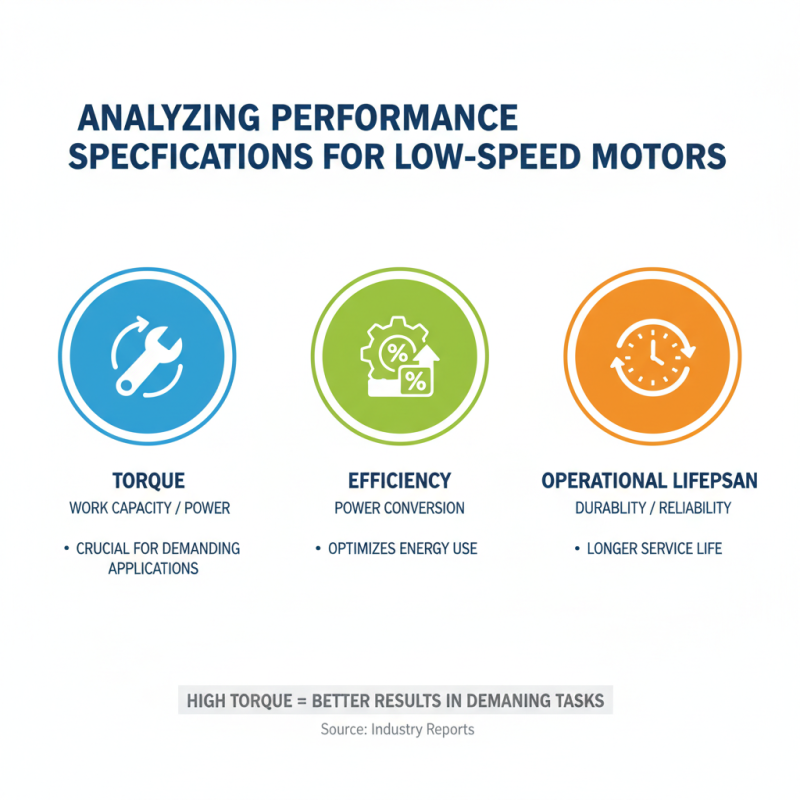
When selecting a low-speed motor, performance specifications are crucial. Key metrics include torque, efficiency, and operational lifespan. Torque determines how much work the motor can perform. A motor may boast high RPM, but insufficient torque could hinder application performance. According to industry reports, motors with high torque ratings often yield better results in demanding applications.
Efficiency is another vital aspect. Options vary widely, with efficient models operating above 80%. Choosing a motor with higher efficiency can significantly reduce energy costs over time. Research shows that efficient motors can save 10-30% on energy usage compared to standard models. Low-speed motors must also be evaluated for their operational lifespan, typically measured in hours before failure. Some designs claim over 30,000 hours of use, but actual performance may vary. User testimonials often highlight discrepancies between advertised and real-world lifespans.
Assessing specifications is not only about checking boxes. You need to consider the application environment, load conditions, and compatibility with existing systems. Real-world experiences indicate that an ideal motor for one application may underperform in another. Users frequently express the need for real-world validation of specs. Ensure the motor you choose aligns with both theoretical performance and practical application in your specific context.
Cost Considerations and Budget Planning for Low Speed Motors
When planning a budget for low-speed motors, it's essential to consider several factors. According to a recent industry report, low-speed motors can vary significantly in cost, depending on their design and application. Basic models may start around $100, while more specialized motors can exceed $5,000. A thorough analysis of your specific needs can help pinpoint which motor suits your budget.
Installation and operational costs also impact your bottom line. A 2022 study found that installation costs can add up to 30% of the motor's price. Regular maintenance is another factor. Some motors require frequent servicing, whereas others might have lower upkeep costs. This variability means decisions should not be made hastily.
You should also reflect on the total cost of ownership. Lower initial costs may lead to higher expenses in maintenance and energy consumption. The Energy Efficiency Ratio (EER) is vital here. Motors with a higher EER can save considerable amounts in energy bills over time. Ultimately, striking the right balance between initial investment and long-term savings is crucial for maximizing value.
How to Choose the Right Low Speed Motor for Your Needs? - Cost Considerations and Budget Planning for Low Speed Motors
| Motor Type |
Power Rating (kW) |
Torque (Nm) |
Efficiency (%) |
Estimated Cost ($) |
| Permanent Magnet Motor |
5 |
32 |
90 |
1200 |
| Induction Motor |
7.5 |
45 |
85 |
1500 |
| Stepper Motor |
1.2 |
10 |
80 |
300 |
| Gear Motor |
4 |
25 |
82 |
800 |
| Brushless DC Motor |
6 |
36 |
92 |
1300 |