
WELCOME TO ZHEJING ZHUHONG!
e945ab7861e8d49f342bceaa6cc1d4b

10 Tips for Choosing the Right Centrifugal Pump Motor for Your Needs?

Choosing the right Centrifugal Pump Motor is crucial for optimal performance in various applications. A proper selection can enhance efficiency and reliability. However, many users overlook key factors in this decision-making process.

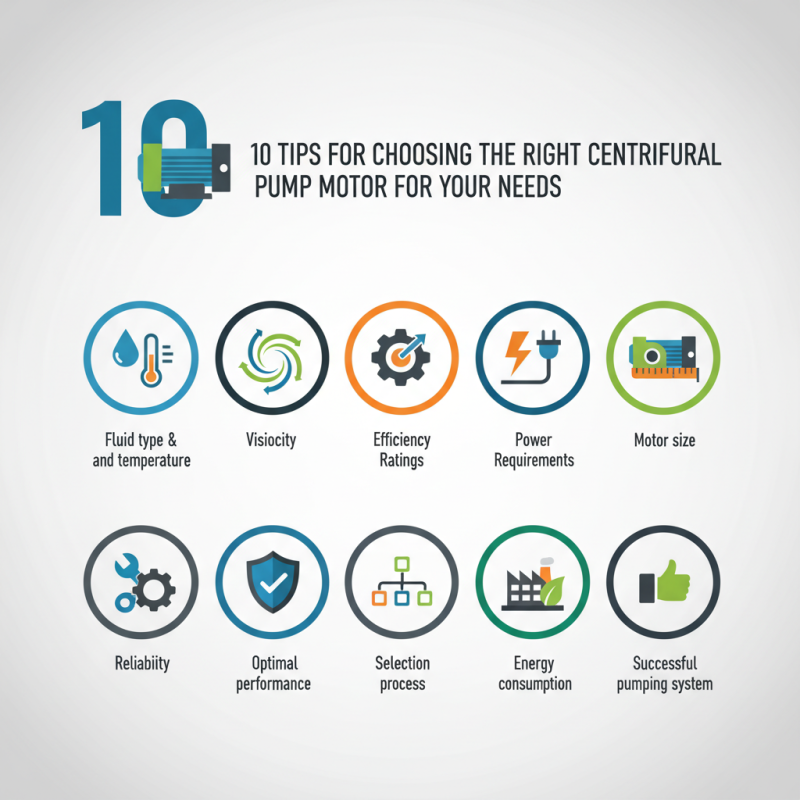
Understanding the specifications of your Centrifugal Pump Motor ensures it fits your needs precisely. Consider the fluid type, temperature, and viscosity. These details matter. Selecting a motor that can handle the specific demands of your setup is vital. Inadequate choices can lead to operational failures.

Additionally, evaluating efficiency ratings and power requirements is equally important. The right motor should provide sufficient power without excessive energy consumption. Don't underestimate the impact of motor size, also. An oversized motor may waste energy, while an undersized motor may fail under pressure. Reflecting on these aspects will guide your decision, ultimately leading to a successful pumping system.
10 Tips for Choosing the Right Centrifugal Pump Motor for Your Needs?

Understanding Centrifugal Pump Motors: A Basic Overview
10 Tips for Choosing the Right Centrifugal Pump Motor for Your Needs?

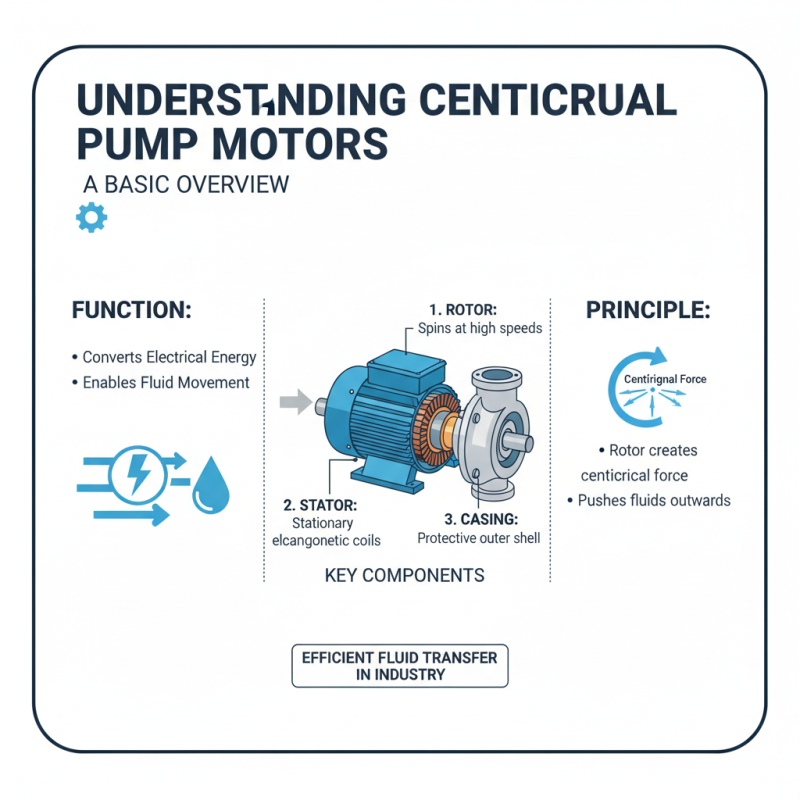
Centrifugal pump motors play a crucial role in various industries. They convert electrical energy into mechanical energy, enabling fluid movement efficiently. Understanding their basic components is essential for effective selection. Typically, these motors consist of a rotor, stator, and casing. The rotor spins at high speeds, creating centrifugal force to move fluids.

Proper sizing of the motor is critical. A motor too small may overheat or fail under load. Conversely, an oversized motor leads to energy waste and increases operational costs. It's also vital to consider the motor's efficiency rating. Higher efficiency means lower energy consumption and operational expenses.

Selecting the right motor isn't always straightforward. It involves assessing flow rates, head pressure, and fluid types. Each application can bring its own challenges. Occasionally, users might overlook installation conditions or maintenance needs, leading to performance issues. Reflection on past experiences can guide future choices, enhancing both reliability and efficiency in pump operations.
Factors to Consider: Pump Specifications and Requirements

10 Tips for Choosing the Right Centrifugal Pump Motor for Your Needs?

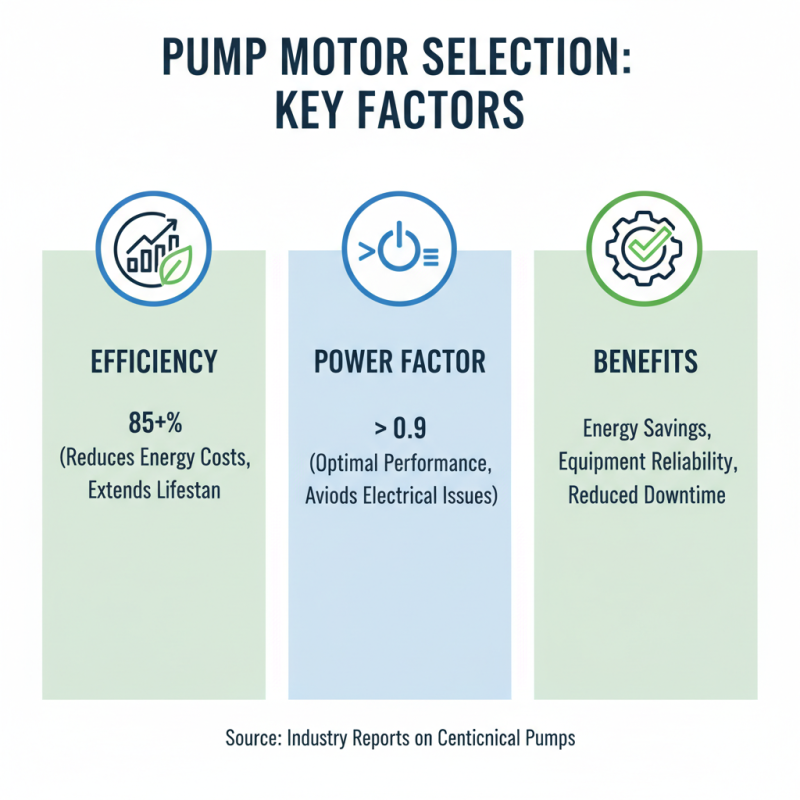
When selecting a centrifugal pump motor, several key specifications should guide your decision. Efficiency is crucial; recent industry reports indicate that pump motors should ideally operate at 85% efficiency or higher. This not only reduces energy costs but also extends the motor's lifespan. Additionally, motors with a power factor above 0.9 are recommended for optimal performance, helping to avoid electrical issues that can arise from poor power quality.

Another vital aspect is the motor's service factor. A motor with a service factor of 1.15 or greater can handle occasional overloads better, ensuring reliability under varying operational conditions. It's important to analyze the specific application, as pump demands can vary significantly, impacting the required horsepower. A detailed understanding of the fluid being pumped is essential too; for example, higher viscosity fluids may necessitate different motor capabilities than those used for standard water transfer.

Don't overlook environmental factors such as temperature and humidity. Motors rated for harsh environments may offer better durability. While manufacturers provide guidelines, real-world conditions can vary. Thus, it's wise to consider the motor's operational limits and potential adaptations required for your specific setup. Balancing these factors is critical for making an informed choice.

Selecting the Right Power Rating for Optimal Performance

Choosing the right power rating for a centrifugal pump motor is crucial. Power rating affects the pump’s ability to handle specific tasks. If the power rating is too low, the pump may struggle and overheat. If it’s too high, it could waste energy and lead to unnecessary costs.

Consider the flow rate and head height for your application. These factors influence the required power. Matching the motor's power to the application ensures efficiency. Some users may overlook how environmental factors impact performance. Temperature and viscosity of the fluid can change the demands on your system.

In addition, evaluating the pump's duty cycle matters. Different applications have varied running times. A motor rated for continuous duty might not be necessary for intermittent use. It's essential to think about long-term efficiency and operational costs. Ignoring these details may lead to performance issues and higher expenses. Always assess the specific requirements before making a decision.

Evaluating Efficiency Ratings and Energy Consumption

When selecting a centrifugal pump motor, assessing efficiency ratings is crucial. Efficiency directly impacts energy consumption and operating costs. According to the U.S. Department of Energy, an efficient motor can reduce energy use by up to 5% to 10%. Motors with higher efficiency ratings usually offer better performance while minimizing energy waste. This aligns with the trend toward more sustainable energy practices.

Understanding various efficiency metrics is essential. The motor's service factor, full load efficiency, and operational conditions all play roles. A motor running continuously at full load will perform differently than one operating intermittently. The National Electrical Manufacturers Association (NEMA) provides guidelines on efficiency classes, helping in the decision-making process. However, not all applications require the highest-rated efficiency. Balancing cost and performance is necessary to avoid overspending.

Beyond efficiency ratings, energy consumption patterns deserve attention. Monitoring usage over time helps in identifying areas for improvement. Some motors, despite their high efficiency, may still consume more energy in specific applications. Consider the application requirements carefully. Reflecting on these factors ensures that the selected motor meets operational demands while maintaining energy efficiency.

10 Tips for Choosing the Right Centrifugal Pump Motor for Your Needs

Tip Description Efficiency Rating Estimated Annual Energy Consumption (kWh) Operating Cost ($)
1. Assess Your Requirements Determine the flow rate and head required for your application. N/A N/A N/A
2. Consider Motor Type Choose between AC, DC, or variable frequency drives based on your needs. 85% - 95% 3000 $450
3. Check Efficiency Ratings Select a motor with a higher efficiency rating to reduce energy costs. IE3 or Higher 2500 $375
4. Analyze Energy Consumption Estimate the total energy consumption to assess long-term costs. N/A 3000 - 5000 $675
5. Evaluate Duty Cycle Know how often the pump will operate to choose a suitable motor. N/A N/A N/A
6. Consider Environmental Conditions Evaluate factors like temperature and humidity affecting motor performance. N/A N/A N/A
7. Review Maintenance Needs Opt for motors that require less maintenance to enhance uptime. N/A N/A N/A
8. Choose the Right Voltage Ensure voltage compatibility with existing electrical systems. N/A N/A N/A
9. Understand Regulatory Compliance Make sure the motor meets local regulations and standards. N/A N/A N/A
10. Budget for Installation Factor in installation costs along with the motor purchase price. N/A N/A $200

Understanding Motor Compatibility with Pump Design and Materials

When selecting a centrifugal pump motor, understanding compatibility with pump design is crucial. The motor must match the pump’s operational parameters. Consider factors such as flow rate and pressure requirements. A mismatch can lead to inefficiency or premature failure. Always analyze the motor's torque curve in relation to the pump’s requirements.

Materials also play a critical role in compatibility. Corrosive fluids demand specific materials for both motor and pump. If the motor uses inadequate materials, it can degrade quickly. Pay attention to temperature ratings as well. Motors that overheat can damage seals and bearings.

Keep in mind that not all pumps are designed for high-performance motors. In some cases, a less powerful motor can provide better efficiency. Reflect on your specific application needs. It’s essential to find the right balance for optimal operation. An informed decision can save costs and extend equipment lifespan.

Motor Compatibility with Pump Design and Materials