
WELCOME TO ZHEJING ZHUHONG!
e945ab7861e8d49f342bceaa6cc1d4b

How to Choose the Best Inverter Motor for Your Needs?

Choosing the right Inverter Motor is key to enhancing efficiency in various applications. These motors vary greatly in features and specifications. They are known for their energy efficiency and superior performance.

Consider your specific needs before making a choice. Think about the power requirements and the environment where the motor will be used. If the application demands high torque, not all Inverter Motors will fit the bill. This can lead to underperformance or energy wastage.

Many buyers overlook the importance of compatibility. An Inverter Motor may excel in one task but struggle in another. Pay attention to the brand reputation and user reviews. Knowing the experiences of others can guide your decision-making. Ultimately, a thoughtful approach will help in choosing the best Inverter Motor for your unique situation.

How to Choose the Best Inverter Motor for Your Needs?

Understanding Inverter Motors: Definition and Functionality

Inverter motors are essential components in many modern appliances. They are designed to provide better efficiency compared to traditional motors. An inverter motor uses a variable frequency drive to control the motor’s speed. This allows for precise operation, making it suitable for diverse applications.

Understanding how inverter motors function can enhance your equipment's performance. The core principle involves adjusting the motor's speed based on demand. This adaptability leads to energy savings. However, some users might overlook the need for proper installation and maintenance. Neglecting these factors can result in suboptimal performance and increased wear.

Consider the environments where these motors will operate. High humidity or temperature extremes can affect longevity. It is vital to assess your specific needs before making a choice. Taking the time to understand these nuances can make a real difference in efficiency and overall satisfaction.

How to Choose the Best Inverter Motor for Your Needs?

Specification Description
Power Rating 1 HP to 5 HP
Efficiency Up to 95%
Speed Control Variable Speed
Noise Level Low Noise Operation
Mounting Type Foot Mount or Flange Mount
Control Type PWM Controller
Applications Pumps, Fans, Compressors
Temperature Range -10°C to 50°C

Key Factors in Choosing an Inverter Motor for Your Application

How to Choose the Best Inverter Motor for Your Needs?

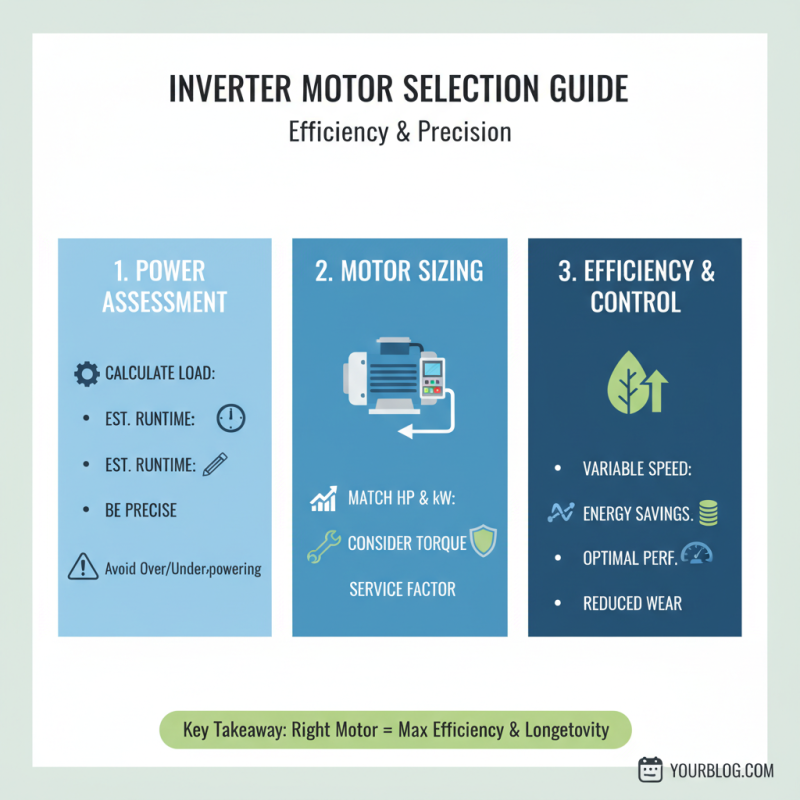
Choosing the right inverter motor is crucial for efficiency. Start by assessing the power requirements of your application. This involves calculating the load and the expected runtime. Be precise. An over- or underpowered motor can lead to inefficiency.

Next, consider energy efficiency ratings. A higher rating can significantly reduce operating costs over time. Look for features like thermal protection or overload capability. These factors increase the motor's lifespan and reliability. It's important to weigh these aspects against your budget.

Pay attention to the motor's size and compatibility with your existing systems. Ensure the mounting dimensions fit well. Sometimes, miscalculations hinder performance. Lastly, evaluate the noise levels. A quieter motor may be essential in sensitive environments. Balancing all these elements will help you choose the best inverter motor for your needs.

Comparing Inverter Motor Efficiency Ratings: IE3 vs IE4 Standards

When comparing inverter motor efficiency ratings, the IE3 and IE4 standards provide crucial insights. IE3 motors already meet high efficiency levels. They can save significant energy over their lifespan. However, they may not be sufficient for all applications. Some industries demand even higher efficiency for operational cost reduction. This is where IE4 motors come into play.

IE4 motors exceed the efficiency of IE3, offering up to 10 percent more output for the same energy input. This increase can lead to substantial long-term savings. However, the initial investment in an IE4 motor may deter some buyers. Not everyone sees the immediate benefit in energy savings. Sometimes, the older standards still meet general needs.

Choosing between these ratings requires careful consideration of your specific needs. If high efficiency is crucial, IE4 is the better choice. For less demanding applications, IE3 might suffice. Weighing these factors can lead to more informed decisions. It's essential to assess both your budget and operational requirements.

Comparison of Inverter Motor Efficiency Ratings: IE3 vs IE4 Standards

Common Applications of Inverter Motors in Industry and Household

How to Choose the Best Inverter Motor for Your Needs?

Inverter motors are becoming increasingly popular in various applications, both in industry and household settings. These motors are highly efficient and can operate at different speeds, making them versatile. In factories, they are often used in conveyor systems. The ability to adjust speed can improve production rates and reduce energy consumption. A slight delay in response might occur due to fluctuations in power supply, but this can often be mitigated with proper setup.

In residential settings, inverter motors are common in appliances like air conditioners and refrigerators. Their energy-saving capabilities can lead to lower electricity bills. However, if not chosen wisely, they may perform poorly under certain conditions. Noise levels can vary, and some models might be noisier than others. Users should consider this when making a selection.

In addition, inverter motors can be used in pumps and fans for heating and cooling systems. They provide precise control over operation, which is essential for maintaining comfortable environments. Yet, improper installation may lead to inefficiencies. It is crucial to ensure that the right motor size is selected to avoid energy waste. Small adjustments can make a significant difference in effectiveness and performance.

Maintenance Tips for Maximizing the Lifespan of Inverter Motors

Inverter motors are efficient but require proper care to ensure longevity. Regular maintenance can significantly enhance their lifespan. According to industry reports, well-maintained inverter motors can last up to 15 years, compared to 7 years for those neglected. Keeping the motor clean is essential. Dust and debris can cause overheating, leading to premature failure.

Here are a few tips for maintenance:

1. Regularly inspect and clean the air filters. Clogged filters hinder airflow and increase strain on the motor.
2. Maintain proper lubrication on moving parts. This reduces friction and enhances efficiency.
3. Monitor the operating conditions. Excessive heat can shorten the engine's life.

Ensure that the motor operates within the manufacturer's recommended parameters. Overloading machinery can also lead to mechanical failures. Inverter motors can sometimes exhibit faults, signaling the need for a closer look. Pay attention to unusual noises or vibrations; these often indicate deeper issues.

Lastly, consider scheduling professional evaluations at least once a year. Such proactive steps can save on costs and prevent unexpected breakdowns. Regular attention to your inverter motor can make a significant difference in reliability and performance over time.