Why Choose the Right Pump Motor for Your Business Needs?
Choosing the right Pump Motor is crucial for business efficiency. An expert in the field, John Smith, once stated, "The wrong motor can cost you more than just money." This highlights the significance of selecting the appropriate motor for your specific needs.
Pump Motors play a key role in various industries, from manufacturing to water management. They directly affect operational efficiency and productivity. Picking the right motor not only boosts performance but also enhances longevity. However, many businesses underestimate the importance of this choice.
Investing in the right Pump Motor can save costs in the long run. Yet, businesses often make hasty decisions. Understanding the specifications and requirements is vital. A small oversight can lead to inefficiency or breakdowns. Reflection on past choices can prevent future mistakes. Selecting the right Pump Motor is not just a task; it’s a strategic decision that can define a business’s success.

Understanding the Importance of Pump Motors in Business Operations
In many industries, pump motors play a crucial role in ensuring efficient operations. According to a report by the Hydraulic Institute, pump systems account for about 20% of global electricity consumption. This highlights the significance of choosing the right pump motor tailored to specific business needs. Selecting a motor that matches the system’s requirements can lead to reduced energy costs and improved productivity.
The efficiency of a pump motor affects the overall operational cost. Studies show that improperly sized or selected motors can result in energy waste and decreased performance. For example, a motor that operates at only 50% efficiency can double your operational costs over time. This is where expertise in pump selection comes into play. Businesses often overlook the long-term impact of their choices, focusing instead on immediate costs.
When evaluating pump motors, consider factors like flow rate, pressure, and the fluid type being pumped. This targeted approach ensures that your operations run smoothly. However, it’s easy to make choices based on superficial data. Proper analysis and consultation with experts can greatly enhance decision-making. Investing time in understanding pump specifications leads to better outcomes for your business.
Identifying the Different Types of Pump Motors Available in the Market
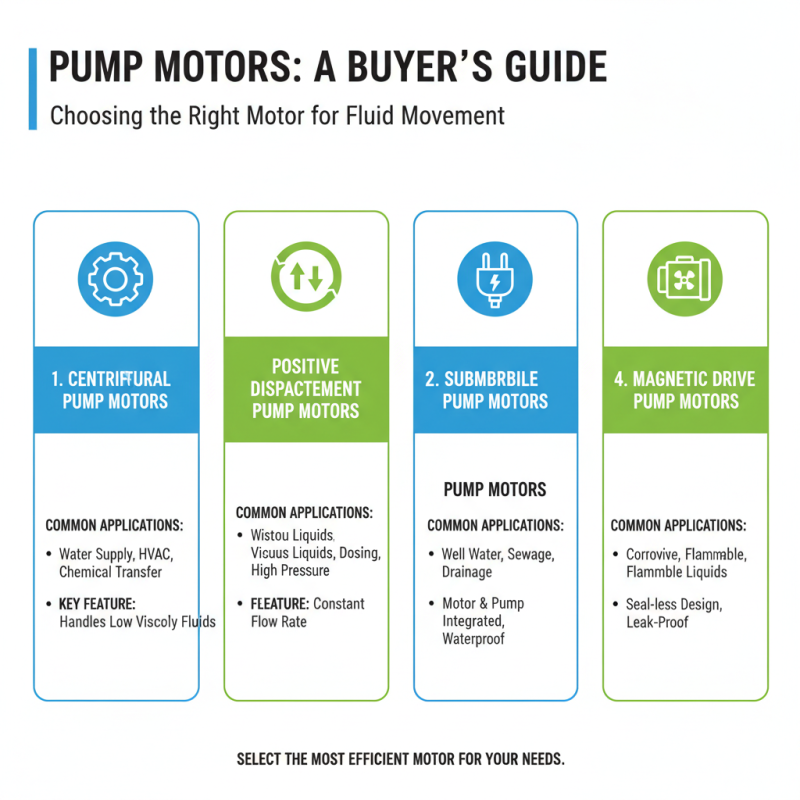
Choosing the right pump motor is crucial for any business that relies on fluid movement. There are various types of pump motors available, each designed for specific applications. Understanding these categories helps in selecting the most efficient motor for your needs.
AC motors are common in many industries. They are simple, efficient, and durable. However, they may require more energy for some applications. On the other hand, DC motors offer better speed control, making them ideal for precise operations. Yet, they can be more expensive and less reliable over time.
Submersible motors are designed to operate underwater, making them suitable for wells and deep applications. In contrast, vertical motors are great for large systems where space is limited. While these types provide clear benefits, installation can be complex. It's crucial to assess the operational environment and maintenance expectations, as these factors greatly impact performance and longevity.
Evaluating Specific Business Needs for Pump Motor Selection
When selecting a pump motor, understanding specific business needs is crucial. Many industries, such as manufacturing and agriculture, rely heavily on efficient pump systems. According to the Hydraulic Institute, improper pump selection can lead to energy waste, costing businesses up to 30% more in operational expenses annually. Evaluating your unique requirements is essential to avoid these unnecessary costs.
Consider the application of the pump. Different processes may require varying flow rates and pressures. For example, water treatment facilities often need motors that can handle corrosive liquids. This affects motor material and performance. A report from the U.S. Department of Energy highlights that optimized motors can improve efficiency by 10-20%. This data emphasizes the importance of aligning pump specifications with business needs.
Maintenance also plays a role in motor selection. Choosing a motor that is easy to service can reduce downtime. Surveys show that 55% of businesses experience delays due to maintenance issues. Weighing initial costs against long-term productivity is a delicate balance. Sometimes, investing in a more robust motor pays off in the long run, even if the upfront cost is higher.
Why Choose the Right Pump Motor for Your Business Needs?
| Business Need |
Recommended Pump Motor Type |
Power Rating (HP) |
Efficiency Rating (%) |
Application Example |
| Irrigation |
Submersible Pump Motor |
5 HP |
90% |
Agricultural Water Supply |
| Industrial Processing |
High-Pressure Centrifugal Pump Motor |
10 HP |
92% |
Chemical Processing |
| Water Treatment |
Submersible Wastewater Pump Motor |
3 HP |
89% |
Sewage Systems |
| HVAC Systems |
Variable Speed Electric Motor |
2 HP |
94% |
Air Conditioning Units |
| Pharmaceutical Manufacturing |
Diaphragm Pump Motor |
1 HP |
87% |
Fluid Transfer |
Key Factors to Consider When Choosing a Pump Motor
Choosing the right pump motor can significantly impact your business operations. One key factor to consider is the power requirements. Assess the horsepower needed based on the pump's application. This ensures efficiency and durability. An undersized motor may lead to frequent failures. Over-sizing can waste energy and increase costs.
Another crucial aspect is the motor's environment. Consider factors like temperature and humidity. Motors used in harsh conditions require specific protective features. Corrosion-resistant materials can extend the life of the motor. Think about the installation space too. Compact motors are handy in tight areas, but ensure they can manage required loads.
Finally, evaluate the motor's efficiency ratings. High-efficiency motors save energy and reduce operational costs. However, they may come with a higher initial cost. Balancing upfront expenses with long-term savings is vital. Reflect on your operational needs regularly, as they may change over time. Rethink your choices to align with evolving business goals.
Assessing Cost-Effectiveness and Energy Efficiency of Pump Motors
When selecting pump motors, assessing their cost-effectiveness and energy efficiency is crucial. According to the U.S. Department of Energy, electric motors account for nearly 70% of industrial electricity consumption. An efficient pump motor can drastically reduce operational costs. A motor may have a higher initial purchase price but can save up to 30% in energy costs over its lifespan.
Choosing motors that meet the latest energy efficiency standards, such as NEMA Premium, often results in long-term savings. Consider that replacing older motors can yield a return on investment in under two years. Furthermore, new technology in motor design can enhance performance significantly. However, companies must assess maintenance and repair costs, as they can offset initial savings.
Investing in advanced motors might involve a steep price but requires a detailed analysis. Energy savings reports often show an inefficiency in older systems. Without proper evaluation, businesses may overlook potential savings. Balancing upfront costs with operational expenses requires meticulous planning. Decisions should be data-driven to ensure optimal efficiency and reliability over time.
Cost-Effectiveness and Energy Efficiency of Pump Motors