2026 How to Choose the Right Gearbox Motor for Your Needs?
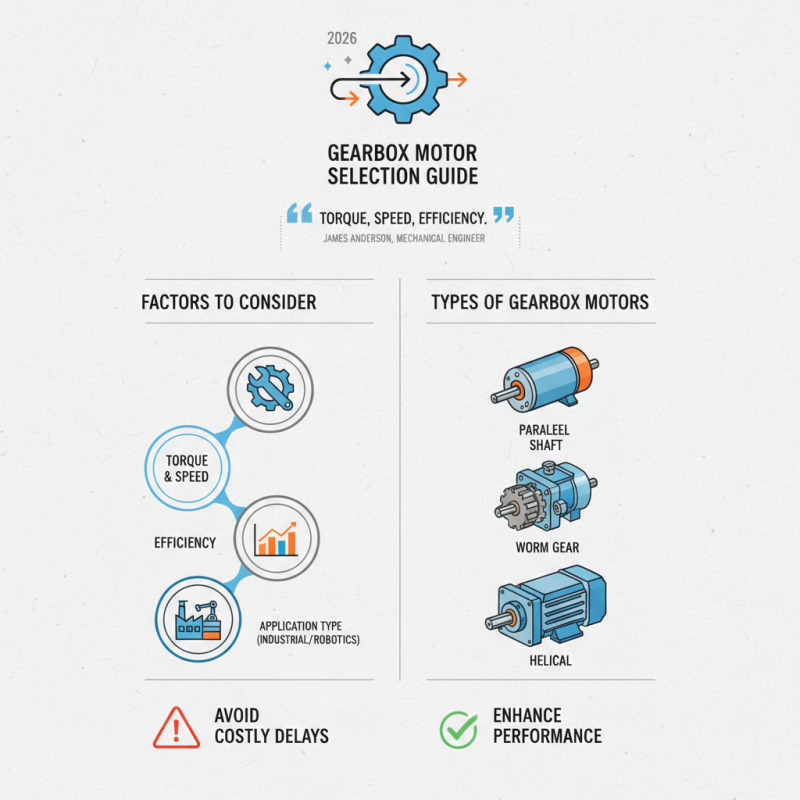
Choosing the right Gearbox Motor can significantly impact your project’s success. James Anderson, a noted expert in mechanical engineering, once said, “A Gearbox Motor must fit your specific needs, or it will underperform.” Understanding the complexities of Gearbox Motors is essential for any application, from industrial machinery to robotics.
Different applications require different specifications. Your choice might depend on torque, speed, or efficiency. Selecting an appropriate motor involves many variables. Overlooking details can lead to inefficient operations or mechanical failures.
Gearbox Motors come in various sizes and types. Each design serves unique purposes. This diversity offers options but also creates confusion. It's crucial to evaluate your requirements carefully. Consider all factors to avoid potential pitfalls. Remember, a well-chosen Gearbox Motor can enhance performance. A poor choice, however, can lead to costly delays. Always approach your selection process thoughtfully and critically.
Understanding Gearbox Motors: Types and Applications
Gearbox motors come in various types, each suited for specific applications. Understanding these types can greatly impact performance and efficiency. For instance, worm gear motors are known for their high reduction ratios. They provide excellent torque in a compact design, making them ideal for applications like conveyors and lifting devices.
On the other hand, planetary gear motors are recognized for their robustness and durability. They allow for higher precision and are commonly used in robotics and automated machinery. However, they can be more complex and may require careful consideration during installation. It’s crucial to assess the load requirements and desired speed before making a choice.
Choosing the right gearbox motor can sometimes feel overwhelming. There’s often a trade-off between size, weight, and power. A small motor might save space but could struggle under heavy loads. Consequently, reflecting on your specific needs and constraints is essential. Balancing these factors ensures better reliability and performance in your final application.
Key Factors to Consider When Selecting a Gearbox Motor
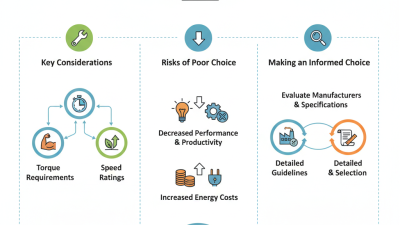
Choosing the right gearbox motor involves several critical factors. Understanding the application is essential. Consider the required torque, speed, and load conditions. Matching these parameters ensures performance efficiency. A gear motor with inadequate torque can lead to failures. It’s vital to assess the operational environment. High temperatures, humidity, or dust may affect the motor's reliability.
Another aspect is the motor’s mounting options. Different installations can alter how effectively the gearbox functions. Selecting the right mounting type can enhance stability and efficiency. You might also reflect on the maintenance needs. Some gearbox motors require frequent servicing, while others are more durable. This could impact costs in the long run.
Finally, consider the efficiency rating. An efficient gearbox motor reduces energy consumption. This impacts overall operational costs. It's a complex decision, and it's easy to overlook factors like efficiency and mounting. Evaluate all variables to make a well-informed choice.
2026 How to Choose the Right Gearbox Motor for Your Needs? - Key Factors to Consider When Selecting a Gearbox Motor
| Key Factor |
Description |
Impact on Selection |
| Load Requirements |
Determine the torque and load that the motor will need to handle. |
Essential for choosing a motor that can deliver the necessary power. |
| Speed |
Identify the required speed for your application. |
Affects the selection of gears and overall motor configuration. |
| Efficiency |
Consider the efficiency ratings of the gearbox motor. |
Higher efficiency can reduce operational costs. |
| Size and Weight |
Assess the available space and weight constraints. |
Critical for installations where space is limited. |
| Environment |
Evaluate the environmental conditions the motor will operate in. |
Determines the need for special coatings or enclosures. |
| Cost |
Consider the budget for the gearbox motor. |
Balance between initial cost and long-term efficiency. |
| Maintenance |
Understand the maintenance requirements of the gearbox motor. |
Important for minimizing downtime and prolonging lifespan. |
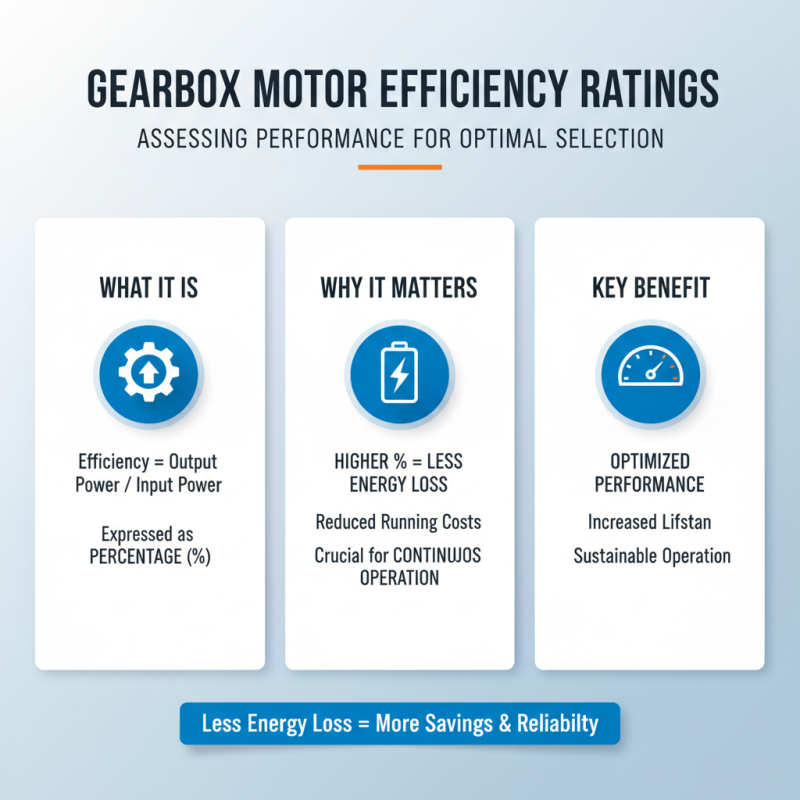
Efficiency Ratings: How to Assess Gearbox Motor Performance
When selecting a gearbox motor, efficiency ratings play a critical role in assessing performance. Understanding how these ratings work can significantly impact your decision. Efficiency is often quantified as a percentage. A higher percentage indicates less energy loss. This is crucial for operations running continuously.
Think about your application. If it requires constant speed, an efficient gearbox motor will save costs in the long run. However, some motors may appear efficient but underperform in real-world conditions. It's essential to review both laboratory specifications and field tests. Practical performance can often differ from theoretical ratings.
Consider the integrated design of the motor and gearbox. If the gearbox is mismatched, efficiency can drop dramatically. Additionally, be wary of overstated claims. Look for independent evaluations. Real user experiences can illuminate hidden issues. It's about more than just checking the box; efficiency requires continuous monitoring.
Torque and Speed Requirements: Finding the Right Balance
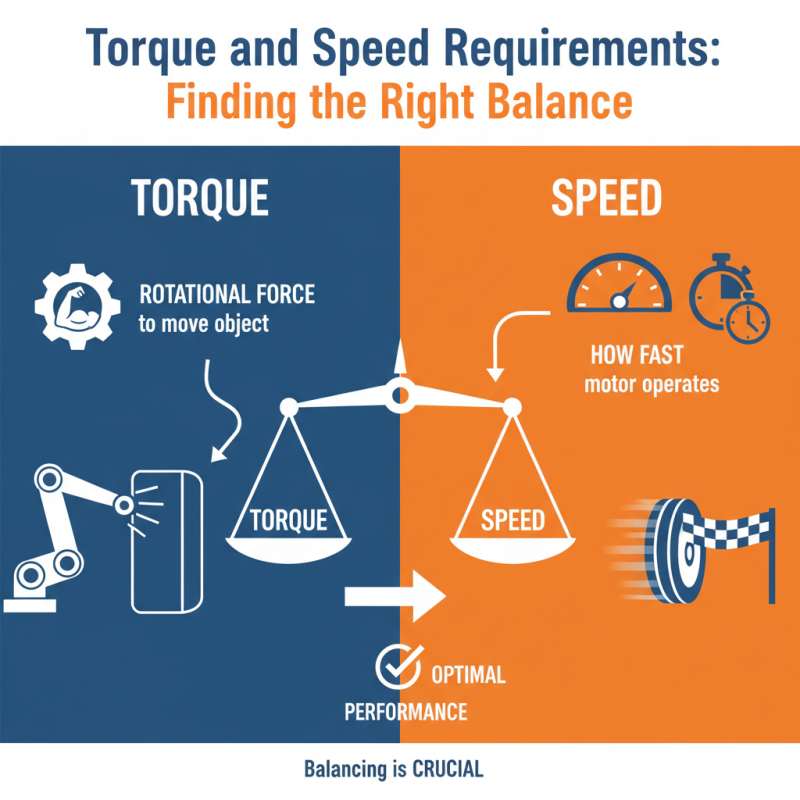
Choosing the right gearbox motor involves understanding both torque and speed requirements. Torque reflects the rotational force necessary to move an object. Speed indicates how fast the motor should operate. Balancing these two factors is crucial for optimal performance.
For instance, a heavy load requires significant torque. Therefore, a motor with high torque is essential. On the other hand, applications such as conveyor belts need speed to avoid delays. Here, a gearbox that prioritizes higher rotational speed is vital. However, one might overlook that a trade-off exists. High speed often comes at the expense of torque. This balance is not always straightforward.
Consider the environment where the motor will operate. A high-torque motor might be inefficient in a light-duty situation. Reflecting on your specific needs is essential. Does the gear ratio enhance or hinder your process? Evaluating real-world performance helps in making informed decisions. Always test under actual working conditions. This ensures the motor meets both torque and speed requirements effectively.
Common Mistakes in Gearbox Motor Selection and How to Avoid Them
Choosing the right gearbox motor can be challenging. Many make common mistakes that could impact performance. One frequent error is ignoring load requirements. Underestimating the load can lead to motor failure or inefficiency. It is crucial to analyze the application thoroughly before making a selection.
Another mistake is selecting the wrong gear ratio. The gear ratio affects speed and torque. A mismatch can cause the motor to operate outside its optimal range. Users must consider both the desired speed and torque for their specific needs. Often, people overlook the environment in which the gearbox motor will operate. Factors such as temperature and humidity can affect performance. Ignoring these aspects can lead to failures down the line.
Finally, many forget to factor in maintenance requirements. Some motors are harder to maintain than others. A lack of maintenance can shorten the lifespan of the gearbox motor. It is prudent to research and understand the upkeep needed for various options. Investing time in these considerations leads to better choices and improved outcomes.
Common Mistakes in Gearbox Motor Selection