How to Choose the Right Exhaust Fan Motor for Your Home Needs
Choosing the right Exhaust Fan Motor for your home is crucial for maintaining optimal air quality and energy efficiency. According to the U.S. Department of Energy, proper ventilation can reduce indoor air pollutants and improve overall comfort, making it essential to select the appropriate motor that meets your specific needs. In fact, the energy consumption of ventilation systems can account for up to 30% of a household's total energy usage, emphasizing the importance of both functionality and efficiency when choosing an exhaust fan motor.
When evaluating options, factors such as motor power, noise levels, and durability should be considered to ensure that the chosen exhaust fan motor effectively addresses your home’s ventilation requirements. The National Association of Home Builders reports that homes with insufficient ventilation can lead to increased humidity levels and mold growth, further highlighting the significance of making an informed decision. By understanding the specifications and operational characteristics of various exhaust fan motors, homeowners can make choices that promote a healthier living environment while also being mindful of energy consumption.
Understanding the Basics of Exhaust Fan Motors
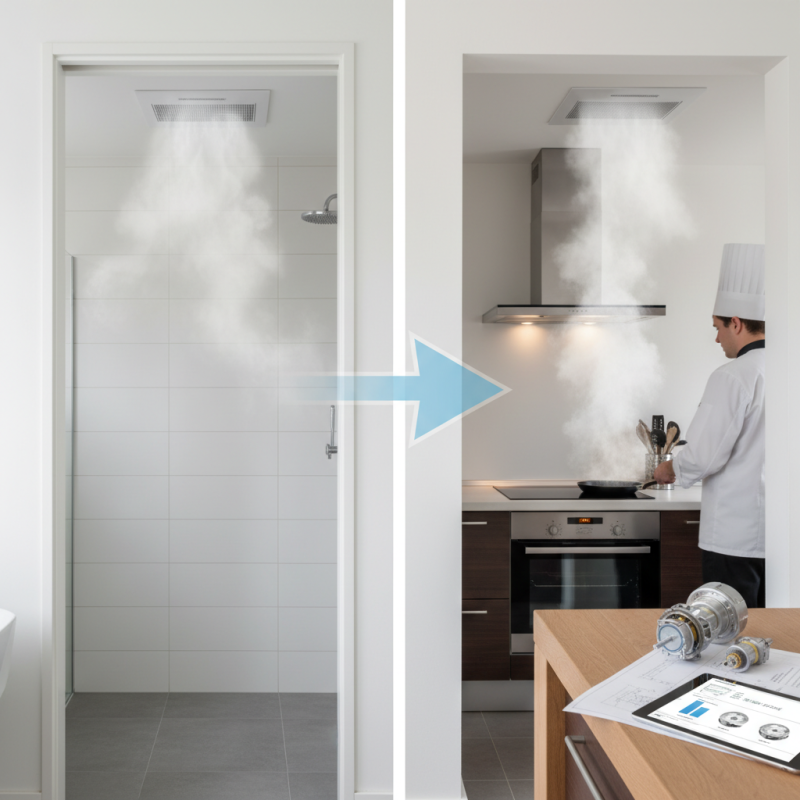
Exhaust fan motors play a crucial role in maintaining indoor air quality by removing excess moisture, smoke, and odors, particularly in kitchens and bathrooms. Understanding the types of motors available is essential for selecting the right exhaust fan for your home needs. Generally, there are two main types of motors: shaded pole and permanent split capacitor (PSC) motors. Shaded pole motors are typically less efficient and are often found in lower-power applications. In contrast, PSC motors offer higher efficiency and better performance, making them suitable for a variety of residential uses. According to a report by the U.S. Department of Energy, motors account for approximately 65% of the total electricity consumption in commercial buildings, emphasizing the importance of choosing an efficient motor.
Another significant factor to consider when selecting an exhaust fan motor is the airflow capacity, measured in cubic feet per minute (CFM). The Association of Home Appliance Manufacturers (AHAM) recommends that bathrooms should have a fan with at least 1 CFM per square foot of space for effective moisture control. Additionally, for kitchens, a more powerful motor might be necessary due to cooking odors and smoke; typically, a fan should have a CFM rating that corresponds to the size and ventilation needs of the kitchen. By understanding these basic principles of exhaust fan motors, homeowners can make informed choices that enhance comfort and energy efficiency in their living spaces.
Exhaust Fan Motor Power Ratings
This bar chart illustrates the power ratings (in Watts) of different types of exhaust fan motors commonly used in residential settings. Understanding these ratings can help homeowners choose an exhaust fan motor that fits their specific needs.
Identifying Your Home's Specific Ventilation Needs
When choosing an exhaust fan motor for your home, understanding your specific ventilation needs is crucial. Start by assessing the areas in your home that require ventilation, such as kitchens, bathrooms, and laundry rooms. Each of these spaces has unique requirements; for example, kitchens may need a more powerful fan due to cooking odors and moisture, while bathrooms primarily need to remove humidity. Evaluate the square footage and airflow needs of these rooms to ensure you select a motor that can effectively handle the tasks at hand.
Tips: One effective method for identifying your ventilation needs is to calculate the required airflow in cubic feet per minute (CFM). You can do this by measuring the size of the room and considering how many air changes are necessary per hour. Generally, kitchens should have about 15 air changes per hour, while bathrooms need approximately 8 to 10. This calculation will guide you in choosing the right fan motor that not only fits your space but also meets performance expectations.
Additionally, consider the noise level of the exhaust fan motor. A quieter motor can improve your comfort, especially in spaces like bedrooms or quiet offices. Look for models with noise ratings that suit your tolerance, as this can greatly enhance your overall satisfaction with the ventilation system. Selecting the right motor doesn't just depend on performance; it should also align with your family's lifestyle and comfort preferences.
Comparing Different Types of Exhaust Fan Motors
When comparing different types of exhaust fan motors, it's vital to understand their fundamental differences and how these variations can impact your home ventilation needs. The most common types of motors include shaded pole, split-phase, and permanent split capacitor (PSC) motors.
Shaded pole motors are simple and cost-effective, making them suitable for low-demand situations. However, they tend to have lower efficiency and shorter lifespans, which might be a drawback for prolonged use in larger spaces.
On the other hand, split-phase motors offer greater starting torque and are generally more efficient, making them an excellent choice for larger exhaust fans or applications with higher airflow requirements. In contrast, PSC motors are renowned for energy efficiency and quieter operation, making them ideal for residential environments where comfort and noise reduction are priorities.
When selecting an exhaust fan motor, consider factors such as the size of the space, desired airflow, energy consumption, and noise levels to ensure that the fan effectively meets your home ventilation demands.
Evaluating Energy Efficiency and Noise Levels
When selecting an exhaust fan motor for your home, two pivotal factors to consider are energy efficiency and noise levels. According to the U.S. Department of Energy, motors account for about 70% of the total electricity consumption in industrial settings, and though residential use is less extensive, the importance of energy-efficient motors cannot be underestimated. Choosing a model with a higher energy efficiency rating not only reduces electricity costs but also contributes to a lower carbon footprint. In recent years, advances in motor technology have led to the development of more efficient models, with some claiming up to 40% less energy consumption than older counterparts.
Noise levels are another critical aspect to evaluate when choosing an exhaust fan motor. A study from the Association of Home Appliance Manufacturers indicates that noise complaints can arise in settings where continuous or intermittent ventilation occurs, particularly in spaces like kitchens and bathrooms. Exhaust fans typically operate within a sound range of 50 to 70 decibels; thus, selecting a motor designed for quiet operation can significantly enhance comfort levels in your home. It is advisable to seek out products with sound ratings below 50 decibels, as they provide adequate airflow without the disruptive noise associated with less optimized models. By prioritizing both energy efficiency and low noise, homeowners can create a more pleasant living environment while being mindful of energy use.
Installation Considerations for Exhaust Fan Motors
When installing an exhaust fan motor, several critical considerations must be taken into account to ensure optimal performance and safety. Firstly, the size and capacity of the motor should match the space it is intended to serve. A motor that is too small will fail to adequately ventilate the area, leading to lingering odors and humidity, while an oversized motor can lead to higher energy consumption and excessive noise.
Moreover, the placement of the exhaust fan is essential. It should be installed in a location where it can effectively remove air, such as near cooking appliances or bathrooms, to target areas with high moisture or odors. Proper ducting is also crucial; ensuring that ducts are of appropriate length and diameter can significantly impact the efficiency of the exhaust system. Additionally, whether the installation requires a wall-mounted, ceiling-mounted, or inline fan can influence both performance and ease of installation, making it vital to assess the specific layout of your home before proceeding.