
WELCOME TO ZHEJING ZHUHONG!
e945ab7861e8d49f342bceaa6cc1d4b

What Is the Best Type of Electric Motor in 2026?

Choosing the best Electric Motor in 2026 starts with a practical question: best for what? A motor lifting a heavy load all day has different needs from one spinning a quiet household fan. Efficiency matters, but so do torque, speed control, purchase price, maintenance, and the equipment’s operating environment. Context matters.

Permanent-magnet motors often offer compact designs and strong efficiency, especially when paired with suitable electronic controls. Induction motors remain a dependable choice for many industrial applications, where ruggedness and familiar maintenance practices can outweigh a smaller efficiency advantage elsewhere. Brushless DC motors suit many appliances and compact machines. Synchronous reluctance motors may appeal where reduced reliance on permanent magnets is valuable, though system design and control still affect performance. No type wins every category.

This guide compares the main motor families and explains the trade-offs behind their real-world performance. It looks at duty cycle, load profile, temperature, available power, drive compatibility, and expected service life—not just a headline efficiency rating. For example, a pump running steadily may reward different characteristics than a conveyor that starts and stops repeatedly. These details can change the choice.

There is no neat winner. That can feel unsatisfying. Still, a careful comparison is more useful than a universal recommendation. Manufacturer specifications, testing conditions, and installation quality deserve close attention; ratings alone do not guarantee the same results in every machine. Some applications also involve compromises that are easy to overlook. By matching motor type to the actual task, readers can narrow their options and ask better questions before selecting a system.
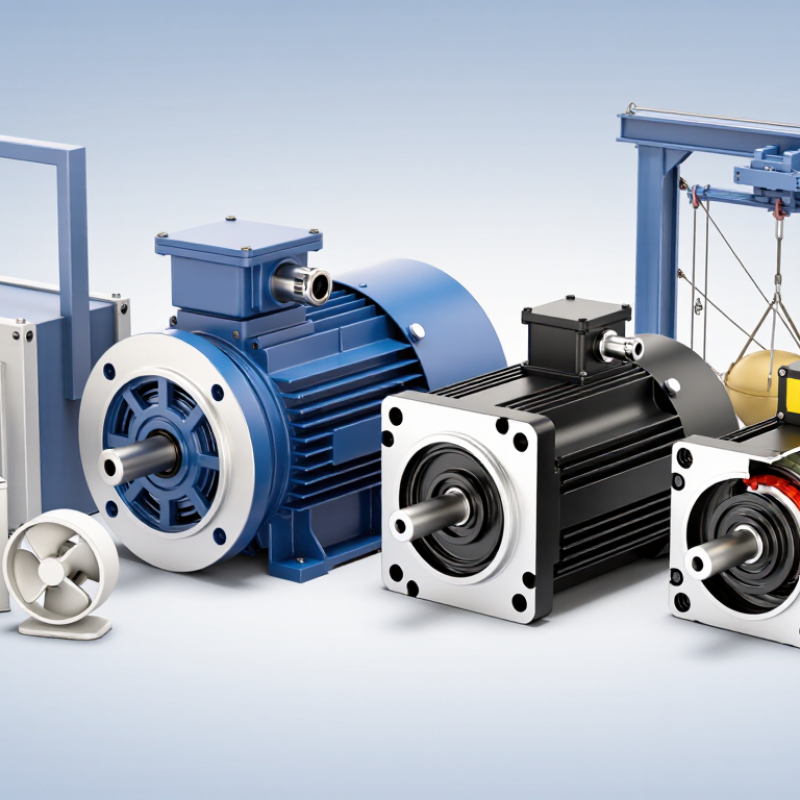
What Is the Best Type of Electric Motor in 2026?

What “Best” Means in 2026: Efficiency, Torque, Cost, and Duty Cycle

“What Is the Best Type of Electric Motor in 2026?”

“Best” depends on what the motor must do, and for how long. The International Energy Agency estimates that electric motor-driven systems use about 45% of global electricity. That makes efficiency more than a catalogue number: a small difference can matter across thousands of operating hours. The U.S. Department of Energy likewise reports that motor systems account for roughly 69% of U.S. industrial electricity use. Check the whole drive system, not just the motor rating.

For steady-speed pumps and fans, an efficient induction motor may offer a sensible balance of purchase cost, durability, and serviceability. Where space, precise control, or high torque at low speeds matter, permanent-magnet synchronous motors can be compelling, though magnets and drive electronics may raise costs. Synchronous-reluctance designs avoid permanent magnets, but their performance depends on a suitable variable-speed drive. There is no universal winner.

Duty cycle changes the calculation. A motor that runs continuously under heavy load rewards efficiency; one used briefly may not recover a higher purchase price. Match the torque curve to the real load, including startup and changing speeds. Then compare lifecycle energy, maintenance, cooling, and drive costs. A spreadsheet helps, but field conditions are messy. Dust, heat, and frequent starts can upset tidy estimates.

What Is the Best Type of Electric Motor in 2026?

What “Best” Means in 2026: Efficiency, Torque, Cost, and Duty Cycle

Efficiency bands are representative engineering ranges, not guaranteed ratings. Actual results depend on motor size, operating speed and load, controller, cooling, and measurement conditions; motor-only efficiency does not include drivetrain losses.

How to choose: Permanent-magnet synchronous motors often deliver high efficiency and torque density, but magnet materials and control can increase cost. Induction motors are widely used and avoid permanent magnets, making them a practical choice where robustness and cost matter. Brushless DC motors suit compact, controllable applications; brushed DC motors can be simple to control but require brush maintenance. Switched-reluctance motors can tolerate demanding conditions, though acoustic noise and control requirements may matter. For any type, check continuous torque and thermal ratings against the real duty cycle—not just peak torque.

Motor Families Compared: Induction, PMSM, BLDC, and Switched-Reluctance

What Is the Best Type of Electric Motor in 2026?

Motor Families Compared: Induction, PMSM, BLDC, and Switched-Reluctance

There is no neat winner. The best motor depends on the load, operating speed, cooling, control system, and budget. Induction motors are rugged and avoid permanent magnets, making them a practical fit for pumps, fans, and many industrial drives. They can run less efficiently at partial load, though. That detail matters when a machine spends hours running lightly.

PMSMs deliver strong torque and efficiency, especially where compact size matters. They use permanent magnets and precise electronic control, which can add cost and design complexity. BLDC motors also use permanent magnets, but their control and back-EMF characteristics are often described differently; terminology can overlap in real product specifications. Switched-reluctance motors have a simple, magnet-free rotor and can tolerate demanding conditions. Their torque ripple and acoustic noise may need careful attention. Quiet operation is not automatic.

Tips: Compare efficiency across the actual duty cycle, not just peak ratings. Check the drive, cooling, noise, and maintenance requirements together. Ask for measured performance at your expected speed and load. Then verify it. A spreadsheet can miss vibration, heat, or an awkward control response. Even a well-chosen motor may disappoint if the application assumptions were wrong.

Compare Standard Motor Efficiency Using IEC 60034-30-1 IE1–IE4 Classes

The “best” motor cannot be chosen by efficiency class alone. IEC 60034-30-1 ranks standard line-operated AC motors from IE1 to IE4, but the required efficiency depends on rated power, pole count, and supply frequency. Check the exact operating point, not just the label.

For a 50 Hz, four-pole, 7.5 kW motor, IEC table values are approximately 87.0% for IE1, 90.1% for IE2, 91.7% for IE3, and 92.6% for IE4. The gain from IE1 to IE4 is 5.6 percentage points. In real use, load and operating hours matter too. A motor running lightly for short shifts may not repay its higher purchase cost quickly. Small details count.

The International Energy Agency’s report Energy-Efficiency Policy Opportunities for Electric Motor-Driven Systems estimates that motor-driven systems use 43–46% of global electricity. That makes even modest efficiency improvements worth assessing at system level. Include the driven load, controls, maintenance, and annual run time in the comparison. One caveat: nameplate efficiency is a test-point value, not a promise of identical savings in every installation. A little uncertainty remains.

Why Efficiency Matters: IEA Estimates Motors Use About 45% of Global Electricity

Why Efficiency Matters: IEA Estimates Motors Use About 45% of Global Electricity

The International Energy Agency’s report, Energy-Efficiency Policy Opportunities for Electric Motor-Driven Systems, estimates that motors use about 45% of global electricity. A huge load. That figure covers equipment in factories, buildings, water systems, and everyday appliances. Even small efficiency gains can therefore reduce electricity demand across many sectors.

The U.S. Department of Energy’s 2023 motor-systems sourcebook reports that motor-driven systems account for about 69% of electricity use in U.S. manufacturing.

So, what is the best motor type in 2026?

There is no universal winner. High-efficiency induction motors suit many steady-duty applications because they are robust and widely supported. Permanent-magnet motors can perform well where variable speed and compact size matter. The right choice depends on operating hours, load profile, control method, and maintenance conditions. A motor’s nameplate efficiency is useful, but it cannot tell the whole story. Real operating conditions can disappoint a tidy spreadsheet.

Tips: Check the actual load before replacing equipment. Match the motor and drive to the machine’s speed needs, and compare lifetime energy costs—not just purchase prices. Measure power use after installation; assumptions deserve a check.

Choose by Application: PMSMs for Compact Drives, Induction Motors for Rugged Loads

In 2026, the best electric motor is the one that fits the load, duty cycle, and available space. For compact drives, a permanent magnet synchronous motor (PMSM) can deliver high torque from a relatively small frame. That matters in a tight machine enclosure, where every millimeter affects cooling and service access. Quiet, too.

PMSMs often suit robotics, precision conveyors, and equipment that starts and stops frequently. Their magnets support efficient operation, but the drive needs compatible controls and careful thermal design. Heat still matters. A cramped cabinet can shorten component life, even when the motor itself is efficient. I would check the full operating range, not just the peak efficiency figure; real loads rarely behave like a clean test curve.

For rugged loads, induction motors remain a practical choice. Their simple rotor construction handles demanding industrial duty, and they avoid permanent magnets. Consider pumps, fans, or dusty workshop equipment that runs for long shifts. They may use more energy than a well-matched PMSM, especially under light loads, so compare expected operating hours and electricity costs. The frame, insulation, bearings, and cooling method matter as much as motor type. A tough motor can still be the wrong fit. Read the load profile, then choose.

What Is the Best Type of Electric Motor in 2026? Choose by Application: PMSMs for Compact Drives, Induction Motors for Rugged Loads
Selection Factor Permanent-Magnet Synchronous Motor (PMSM) Induction Motor Practical Choice
Operating principle Permanent magnets on the rotor create the magnetic field; the drive synchronizes rotor motion with the stator field. Current induced in the rotor creates its magnetic field; the rotor normally runs slightly below synchronous speed under load. Choose based on the required efficiency, drive system, and operating environment—not motor type alone.
Efficiency Often highly efficient, particularly in compact drives and across variable-load operation; actual results depend on motor size, design, and control. Efficiency varies by design and load. High-efficiency models are widely available, including motors classified under applicable IE efficiency standards. PMSM can be advantageous where energy use is high or the motor runs for many hours; compare certified efficiency data at the expected duty point.
Power and torque density Typically provides high torque and power for its size, making it suitable where space and weight are constrained. Often requires more motor volume for comparable output, although robust, application-optimized designs are available. PMSM for compact machinery, mobile equipment, and space-limited drives.
Speed control Usually operated with an electronic drive and position or sensorless control; precise speed and torque control are possible. Can run directly from a suitable AC supply or be controlled over a wide speed range with a variable-frequency drive. PMSM for compact, precise, high-performance variable-speed systems; induction for flexible general-purpose drive systems.
Starting and drive requirements Typically requires a compatible electronic drive for startup and operation. Squirrel-cage designs can often start directly on line when the electrical supply and application permit; a drive can be added for speed control. Induction may simplify conventional fixed-speed installations. Include the drive in the cost and space comparison for either type.
Ruggedness and maintenance Brushless construction avoids brush wear, but magnets and the control system must be suitable for the operating temperature and environment. Squirrel-cage construction is mechanically simple and widely used in demanding industrial service; bearings and insulation still require maintenance. Induction is a common choice for rugged loads and harsh service, provided the motor enclosure and protection match the site conditions.
Cost considerations Motor and drive costs depend on design and volume. Permanent-magnet materials and specialized controls can affect initial cost and supply considerations. Broadly available in many standard industrial ratings; initial system cost can be attractive, especially for conventional applications. Compare total lifecycle cost, including purchase, drive, energy, maintenance, and replacement—not just motor price.
Typical applications Robotics, compact servos, precision machinery, selected traction systems, and space-constrained variable-speed equipment. Pumps, fans, compressors, conveyors, and other general-purpose industrial loads, including applications prioritizing ruggedness. Match the motor to the load profile, required control accuracy, environment, and available electrical infrastructure.
Bottom line Best suited when compact size, high torque density, or precise controlled operation is a priority. Best suited when a simple, robust, widely used motor is needed for general-purpose or demanding industrial loads. There is no universal winner: select by application, duty cycle, efficiency requirements, controls, and lifecycle cost.
Note: Performance and efficiency depend on motor rating, design, operating point, cooling, and drive setup. Confirm specifications against the manufacturer’s published data and the applicable local efficiency requirements.