
As global buyers plan 2026 equipment investments, motor selection deserves more than a catalog comparison. A suitable Centrifugal Pump Motor must match the pump curve, duty point, fluid conditions, and operating environment. Small mismatches can increase vibration, energy use, and unplanned maintenance.
This guide examines common motor types, including three-phase induction motors, permanent magnet motors, synchronous reluctance motors, and explosion-protected models where applicable. It considers efficiency classes, starting methods, variable frequency drive compatibility, enclosure ratings, insulation systems, and regional electrical requirements. IEC and NEMA practices provide useful reference points, but buyers should confirm current certification requirements with qualified local professionals. Nameplate data matters. So does the factory test report.
Field experience shows that the cheapest motor is rarely the lowest-cost choice over its service life. A dusty water-treatment room, a humid coastal plant, and a clean indoor booster station create very different demands. Bearing quality, cooling performance, shaft alignment, and spare-parts access can influence reliability as much as rated power. Even a well-written datasheet may hide assumptions about temperature, altitude, or overload conditions. That deserves scrutiny.
There is no universal best motor. A high-efficiency design may require compatible controls and better commissioning discipline. An advanced motor may also be difficult to repair in a remote market. Buyers should compare lifecycle cost, supplier experience, documented testing, warranty terms, and after-sales support. Use evidence, not promises. The final decision should balance efficiency, compliance, maintainability, and real operating conditions. Mistakes happen. Careful verification reduces their cost.
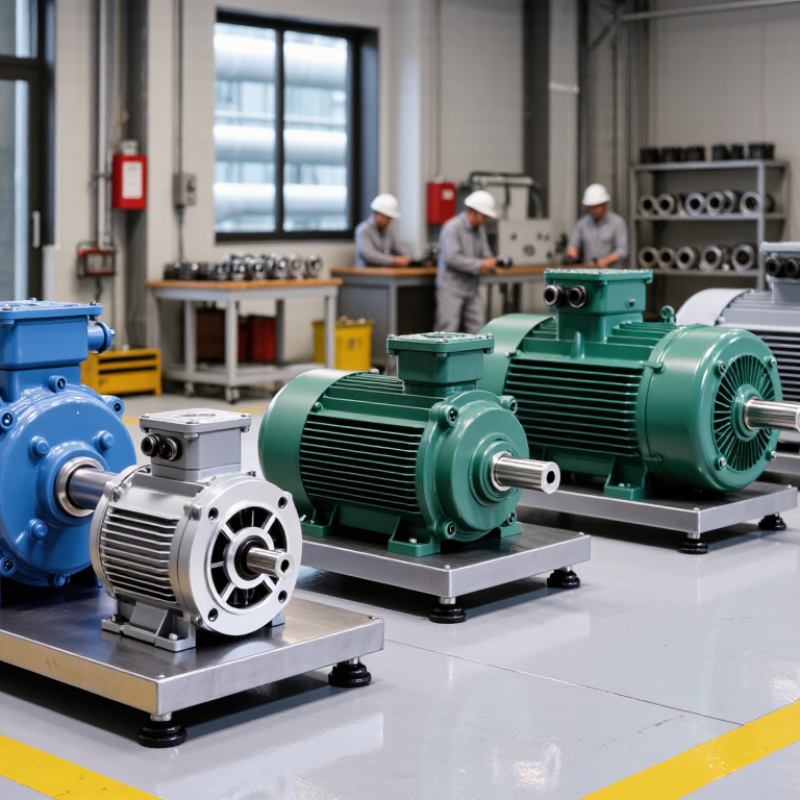
2026 Top Centrifugal Pump Motor Types for Global Buyers
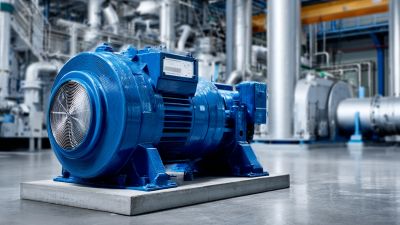
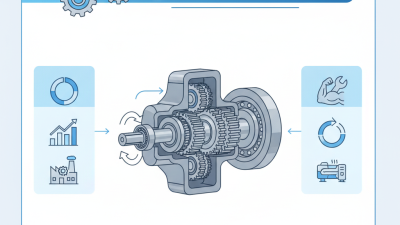
Centrifugal pump motors convert electrical energy into rotational force. The rotating shaft drives the impeller inside the pump casing. As the impeller spins, it accelerates liquid and raises pressure for movement through pipes. This design supports water supply, cooling systems, irrigation, chemical processing, and general industrial circulation.
Three motor types commonly serve these pumps. Induction motors remain practical for many installations because they are durable, widely serviced, and cost-conscious. Synchronous motors can maintain stable speed under changing loads. Permanent-magnet motors may reduce energy losses, especially during variable-speed operation. However, their control systems and replacement requirements need careful review. Efficiency figures alone can mislead buyers.
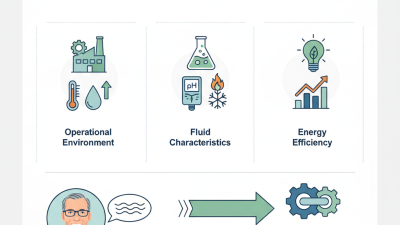
Application conditions matter more than catalog labels. A clean-water booster system may need a compact, fixed-speed motor. A wastewater station faces moisture, solids, starts, and unpredictable loading. Food processing may require smooth surfaces and careful washdown protection. Mining systems demand stronger enclosures and reliable cooling. Check voltage, frequency, duty cycle, starting current, ambient temperature, and protection rating. Small errors here become expensive downtime. This choice is rarely perfect at first. Actual flow measurements may challenge the original design. Global buyers should request verified performance data, installation guidance, and service access before approving a motor-pump package.
In 2026, centrifugal pump buyers still rely heavily on squirrel-cage induction motors. They are durable, widely available, and relatively simple to service. These motors suit water transfer, cooling circulation, irrigation, and many general industrial duties. When paired with a variable frequency drive, they can adjust pump speed as demand changes. That flexibility often reduces throttling losses and mechanical stress.
Synchronous motors provide stable speed under changing loads. They can support precise flow control and improve power factor in larger installations. Permanent magnet synchronous motors are compact and efficient, especially where operating hours are high. However, their controllers and replacement procedures may require more specialized knowledge. Synchronous reluctance motors offer another option, with fewer rotor losses and good efficiency across suitable speed ranges. Their performance depends strongly on correct drive matching.
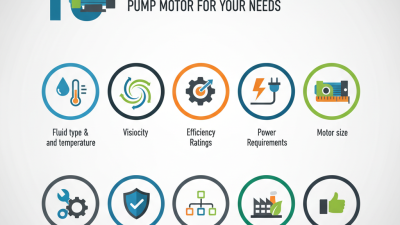
Motor selection should follow the pump curve, duty cycle, starting method, site temperature, and maintenance capacity. A motor that looks efficient on paper may perform poorly when oversized or operated far from its rated load. Field checks should include voltage quality, shaft alignment, bearing temperature, and actual flow. I have seen projects focus on rated efficiency while overlooking frequent starts. That decision can shorten service life. The safest choice is not always the most advanced motor. It is the type that matches the system, operators, and local technical support.
| Motor Type | Typical Power Range | Common Supply and Speed | Efficiency and Speed Control | Main Advantages | Key Limitations | Typical Centrifugal Pump Applications | Global Buyer Considerations |
|---|---|---|---|---|---|---|---|
| Three-Phase Squirrel-Cage Induction Motor | Approximately 0.12 kW to several MW, depending on the low-voltage or medium-voltage design | 50 or 60 Hz AC; commonly 200–690 V for low-voltage systems. Synchronous speed is typically 3,000/3,600 rpm for 2-pole, 1,500/1,800 rpm for 4-pole, and 1,000/1,200 rpm for 6-pole motors at 50/60 Hz | Usually selected with IEC efficiency class IE3 or IE4 where required. Fixed-speed operation is common; variable-frequency-drive operation is widely available | Robust construction, relatively low purchase cost, simple maintenance, broad international availability, and good compatibility with direct-on-line, star-delta, soft-starter, and inverter starting | Starting current can be high without a starter. Efficiency and power factor may decrease at light load. Actual rotor speed is slightly below synchronous speed | Water supply, irrigation, HVAC, municipal pumping, general industrial service, process water, and standard end-suction or split-case pumps | Confirm local voltage, frequency, efficiency regulations, enclosure rating, ambient temperature, altitude, mounting arrangement, and required certification |
| Single-Phase Induction Motor | Typically fractional horsepower to approximately 5–10 hp, although the practical range depends on the design and supply system | Single-phase AC supplies commonly used in residential, light-commercial, and small agricultural installations; 50 or 60 Hz | Usually fixed speed. Capacitor-start, capacitor-run, and permanent-split-capacitor designs are common | Works where three-phase power is unavailable, easy to install for small pumps, and suitable for intermittent or light-duty service | Lower starting capability and efficiency than many three-phase alternatives; generally unsuitable for large pumps or demanding continuous-duty installations | Small domestic water pumps, booster pumps, drainage pumps, garden irrigation, and light-duty HVAC circulation | Check starting torque, voltage tolerance, thermal protection, duty cycle, and compatibility with the available single-phase electrical infrastructure |
| Permanent-Magnet Synchronous Motor | Commonly used from small fractional-kilowatt pump packages to hundreds of kilowatts; larger engineered systems are also possible | Usually supplied through an inverter or integrated electronic drive. Available for 50/60 Hz systems with variable operating speed | High efficiency and power factor over a broad operating range when correctly controlled; speed is normally adjusted by a variable-frequency drive | High power density, low rotor losses, strong part-load performance, reduced operating energy in variable-flow applications, and compact package dimensions | Higher initial cost, dependence on electronic controls, and greater sensitivity to drive setup, thermal management, and service expertise | High-efficiency HVAC pumps, booster systems, water treatment, variable-flow process systems, and compact integrated pump packages | Evaluate total lifecycle cost, drive compatibility, permanent-magnet material supply, service capability, EMC requirements, and local electrical standards |
| Synchronous Reluctance Motor | Commonly available for low-voltage industrial pump drives from a few kilowatts to several hundred kilowatts | Three-phase AC with an inverter; variable-speed operation is normally used. The supply may be 50 or 60 Hz before conversion | High efficiency and good power factor are achievable across a wide load range with suitable control; not normally operated directly from the line | No rotor windings or permanent magnets, low rotor losses, good part-load efficiency, and reduced dependence on rare-earth magnetic materials | Requires a matched drive and correct commissioning. The motor-drive combination may have higher engineering complexity than a standard induction motor | Variable-speed HVAC, water distribution, industrial circulation, and energy-conscious pump systems with extended operating hours | Compare the complete motor-drive package rather than motor nameplate data alone; verify control software, service support, and harmonic performance |
| Wound-Rotor Induction Motor | Generally used for medium- and high-power applications where high starting torque or controlled acceleration is important | Three-phase AC, commonly medium voltage for large installations; speed is below synchronous speed and may be controlled through rotor-resistance equipment | Typically lower efficiency than modern high-efficiency squirrel-cage or synchronous alternatives because of rotor-circuit losses; variable-speed options are possible | High starting torque, controlled starting current, and useful acceleration control for high-inertia pump trains or weak electrical networks | Slip rings, brushes, and external starting equipment increase maintenance, footprint, and lifecycle cost | Large vertical pumps, high-inertia pump sets, heavy-duty water infrastructure, and installations where reduced starting stress is essential | Consider this type mainly for specialized large-drive requirements; verify brush maintenance access, spare parts, starting sequence, and grid limitations |
| Medium-Voltage Squirrel-Cage Induction Motor | Typically hundreds of kilowatts to multiple megawatts, depending on the pump duty and electrical network | Three-phase medium-voltage supplies commonly range from approximately 3.3 kV to 13.8 kV, with 50 or 60 Hz operation | Often selected for fixed-speed service; medium-voltage soft starters or drives can be used when the system requires controlled acceleration or variable flow | Suitable for large power ratings, lower full-load current than an equivalent low-voltage motor, and proven construction for continuous industrial service | Requires specialized switchgear, protection, insulation coordination, installation procedures, and trained maintenance personnel | Large water-transfer stations, desalination, district cooling, power facilities, mining water systems, and major process plants | Confirm grid voltage, short-circuit level, starting method, motor protection, hazardous-area requirements, local testing rules, and maintenance resources |
| Submersible Pump Motor | Commonly from less than 1 kW to several hundred kilowatts, with larger engineered systems available | Usually single-phase or three-phase AC at 50 or 60 Hz; many designs use water-filled or oil-filled motors and may operate with a drive | Efficiency depends on motor, pump, cooling, and operating point. Variable-frequency operation requires confirmation of minimum speed, cable, and cooling limits | Compact submerged installation, effective motor cooling from the surrounding liquid, and suitability for wells, drainage, sewage, and dewatering | Access for repair can be difficult; sealing, cable integrity, liquid compatibility, and motor cooling must be carefully maintained | Borehole pumps, wastewater pumping, stormwater drainage, construction dewatering, flood control, and submerged transfer systems | Check submergence depth, liquid temperature, solids content, ingress protection, cable length, seal design, lifting equipment, and local installation regulations |
| Explosion-Protected Motor | Available across a wide range from small industrial pumps to large process-pump motors | Usually three-phase AC at 50 or 60 Hz; fixed-speed or inverter-fed versions may be available subject to certification conditions | Efficiency class and speed depend on the underlying motor design. Certified operation with a variable-frequency drive requires approval for the complete combination | Designed for locations where flammable gases, vapors, dust, or fibers may be present, when correctly selected and installed | Higher cost, more detailed certification requirements, and restrictions on repair, cable glands, temperature rise, and drive parameters | Chemical processing, oil and gas, solvent handling, fuel transfer, wastewater gas zones, and other classified hazardous areas | Match the motor certification to the site classification, gas or dust group, temperature class, protection method, ambient conditions, and national approval system |
Note: Actual motor performance depends on rated power, pole count, load profile, ambient conditions, installation method, pump duty point, supply quality, and applicable regional standards. IEC efficiency classes such as IE3 and IE4 apply to defined motor categories and rating ranges; buyers should verify the current legal requirements in the destination market.
When comparing centrifugal pump motors in 2026, nameplate efficiency is only a starting point. Measure performance across the pump’s actual duty range, not only at full load. A fixed-speed induction motor remains rugged and widely serviceable. It suits steady flow and simple controls. A permanent-magnet synchronous motor often performs better at partial load with a variable-frequency drive. Yet its electronics and replacement process may require more specialized support.
Starting torque, speed range, and heat deserve equal attention. Check the pump curve against the motor torque curve during startup and throttling. Synchronous-reluctance designs can reduce rotor losses, but control settings and commissioning quality affect results. Ask for test data under matching voltage, frequency, and temperature conditions. Laboratory figures can mislead. Weather changes. Power quality also matters, especially where drives may introduce harmonics or voltage distortion.
For outdoor stations, compare IP protection, insulation class, corrosion resistance, and cooling performance. In dusty or humid rooms, a small efficiency advantage may disappear through blocked filters or poor ventilation. Acoustic output matters near offices and residential areas. Maintenance teams should review bearing access, sensor availability, spare-part lead times, and local technical support. Field commissioning reports often show efficient motors underperforming when operators bypass speed control. Record bypass events during acceptance testing. A lifecycle cost review should include electricity, controls, maintenance labor, downtime, and disposal requirements.
For 2026 projects, buyers commonly compare IE3 and IE4 induction motors, synchronous reluctance motors, and permanent-magnet motors. The International Energy Agency estimates motor-driven systems consume about 46% of global electricity. Efficiency selection therefore affects operating cost, not only purchase price. IEC 60034-30-1 defines international motor efficiency classes, while NEMA MG 1 supports North American performance requirements. Buyers should confirm whether the pump package follows IEC or NEMA testing methods. Mixing assumptions can create misleading comparisons.
An IE3 induction motor remains practical for fixed-speed centrifugal pumps. IE4 models can reduce losses, but payback depends on load hours and electricity prices. Synchronous reluctance and permanent-magnet motors offer strong efficiency at variable speeds. They may require compatible drives and more careful commissioning. EU Ecodesign rules also set minimum efficiency requirements for many motors and variable-speed drives. However, regulations change. Verify the current market requirement before ordering.
Tips: Check voltage, frequency, duty point, ambient temperature, and enclosure rating together. IP55 may suit sheltered industrial areas, but outdoor sites often need stronger protection. Align the motor and pump precisely. Poor alignment causes vibration and shortens bearing life. A variable-frequency drive needs correct cable shielding, grounding, and harmonic review. Installation manuals are useful, but site conditions often expose gaps. A small mistake can erase a large efficiency gain.
Selecting the right centrifugal pump motor starts with the market, not the catalog. Confirm local voltage, frequency, phase, and installation rules before comparing motor types. A three-phase induction motor suits many industrial systems because it is durable, serviceable, and widely supported. However, its starting current may challenge weak electrical networks.
For variable flow, evaluate a variable-frequency drive with the motor. It can reduce throttling losses and improve control. Permanent-magnet or synchronous reluctance motors may deliver higher efficiency, especially during long operating hours. Yet their controls, maintenance skills, and replacement costs can differ between regions. Match motor power to the pump curve, not only the pump nameplate. Check flow, total head, liquid temperature, altitude, and duty cycle. Oversizing seems safe, but it can increase energy waste and unstable operation.
Tips: Request test data at the actual duty point. Verify enclosure protection for dust, water, and outdoor exposure. Ask whether local technicians can repair the motor. Review spare-part availability before purchase. A small voltage variation may matter. Do not assume the most efficient motor is always the best commercial choice; lifecycle cost depends on electricity, controls, labor, and downtime. In practice, selection is rarely perfect. Recheck the assumptions with measured site data before approval.
0086-13586199782